
Celebrity, politics, and grief
ISSUE NO. 57 // Edwin Booth’s return to stage
It’s been a while since I’ve had a guest!
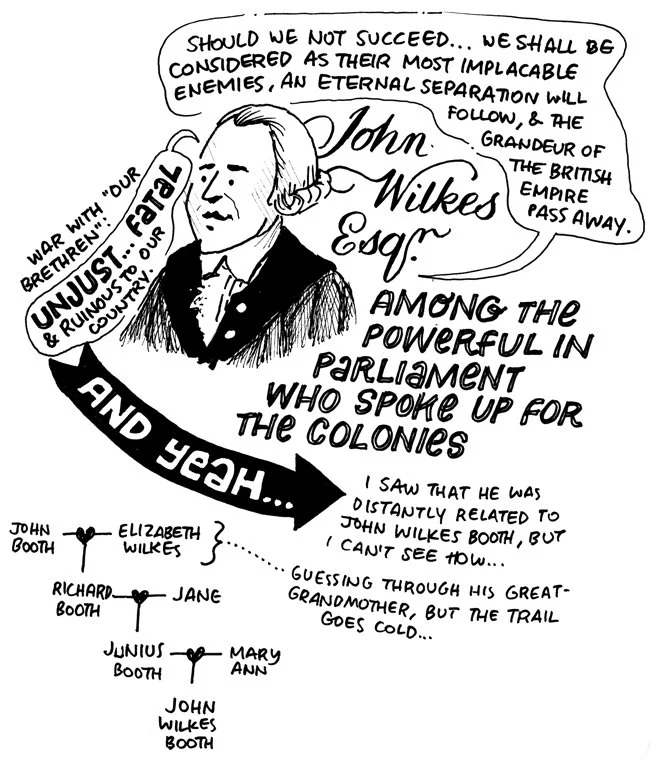
I started following Elizabeth Reese after she was a panelist at a Lafayette 200 event. Then a few months ago, I posted doodle wondering if John Wilkes Booth (you know, the guy who assassinated President Lincoln) was related to John Wilkes, Esq… a British politician who popped up in David McCullough’s 1776.
Elizabeth answered!
With a disappointing answer, but still.
I worked up the courage to ask her if she’d like to collaborate sometime — and she said yes! And here we are.
Elizabeth is working on a book about Edwin booth and grief.
Am I going to use this as a segue to mention that:
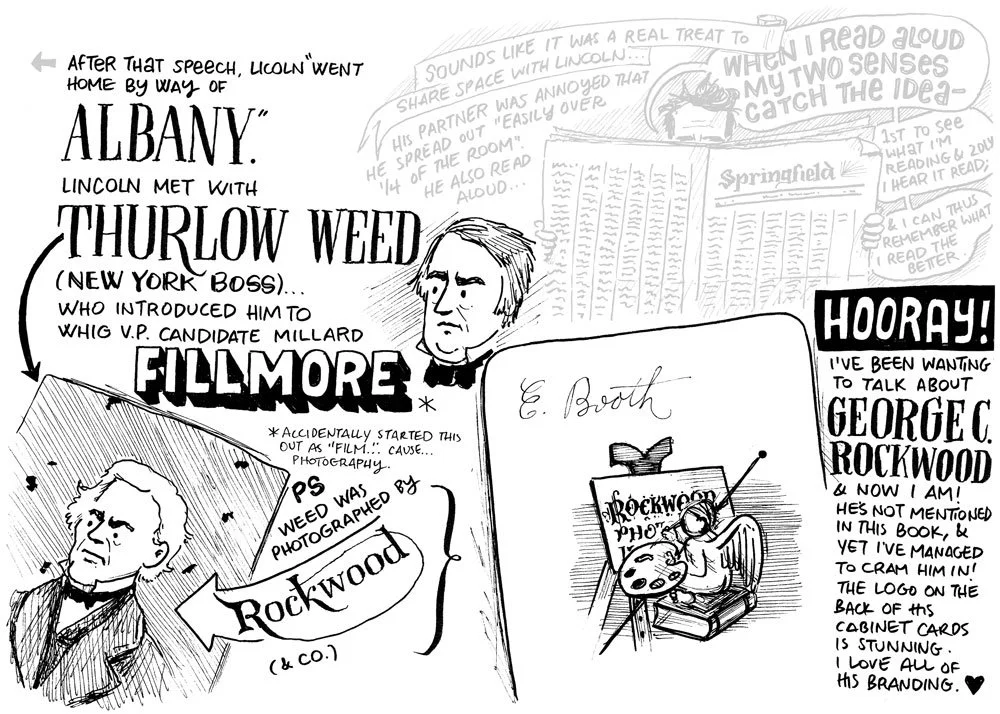
a prolific celebrity photographer I’m distantly related to photographed Edwin Booth?
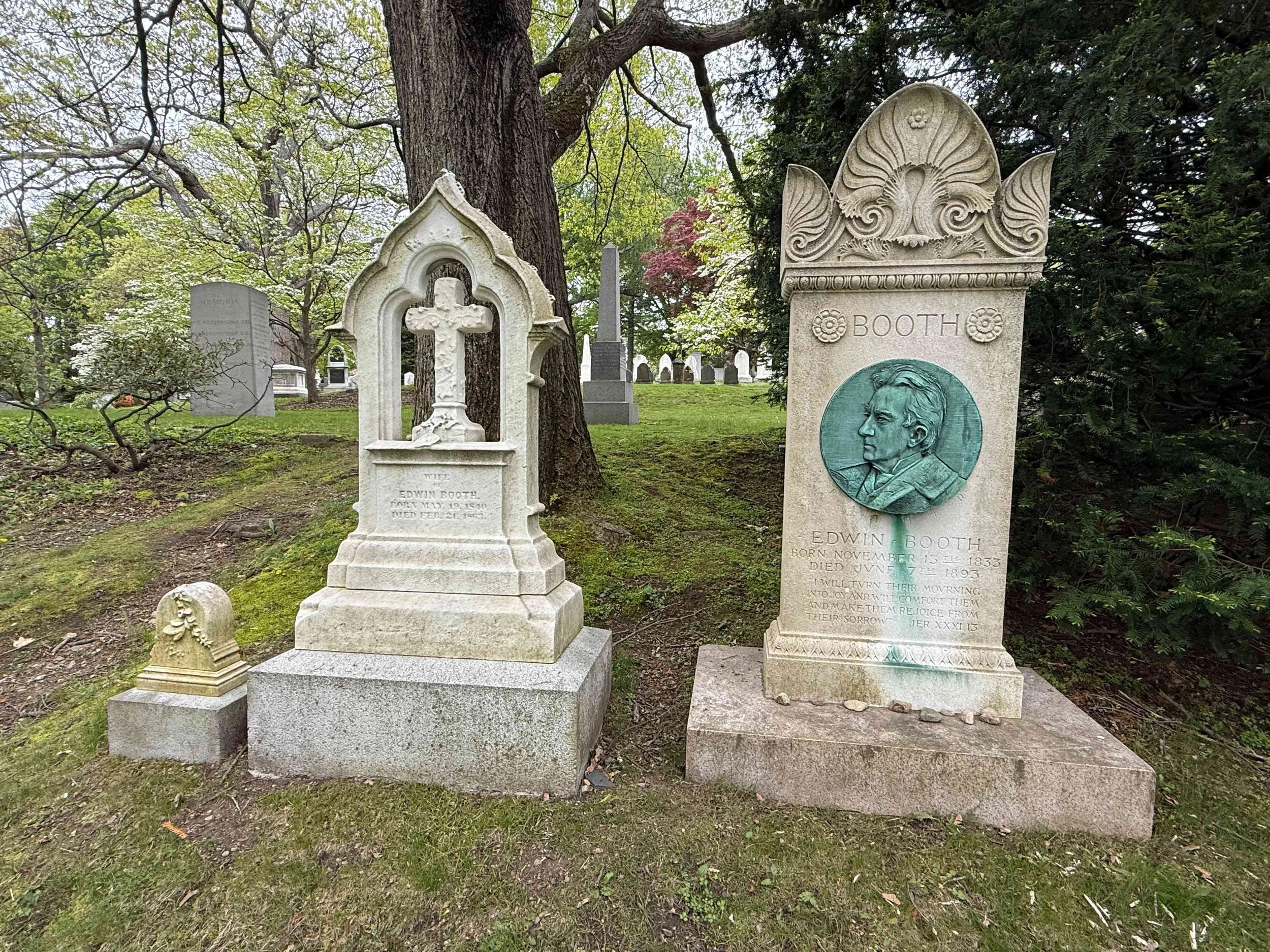
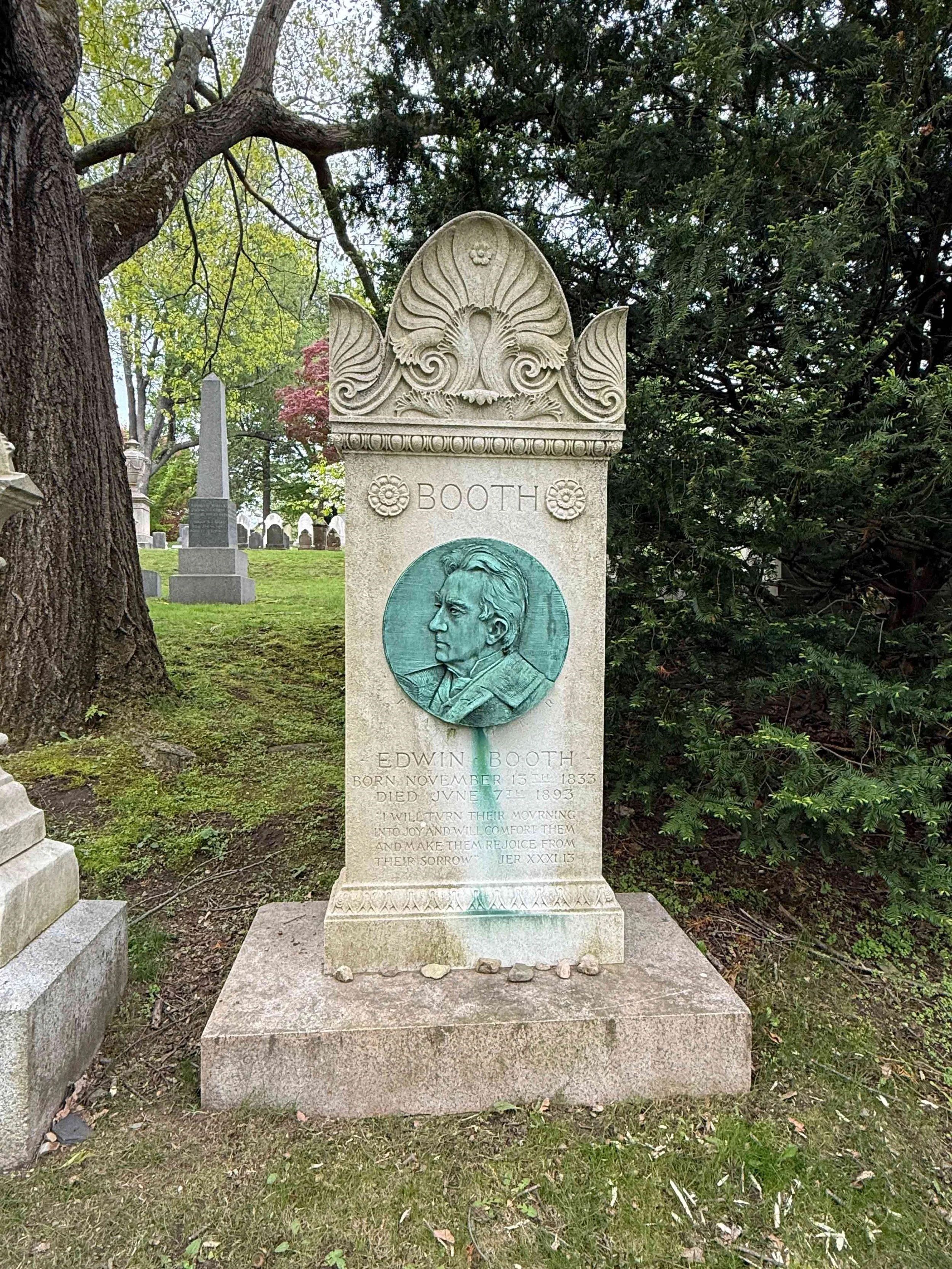
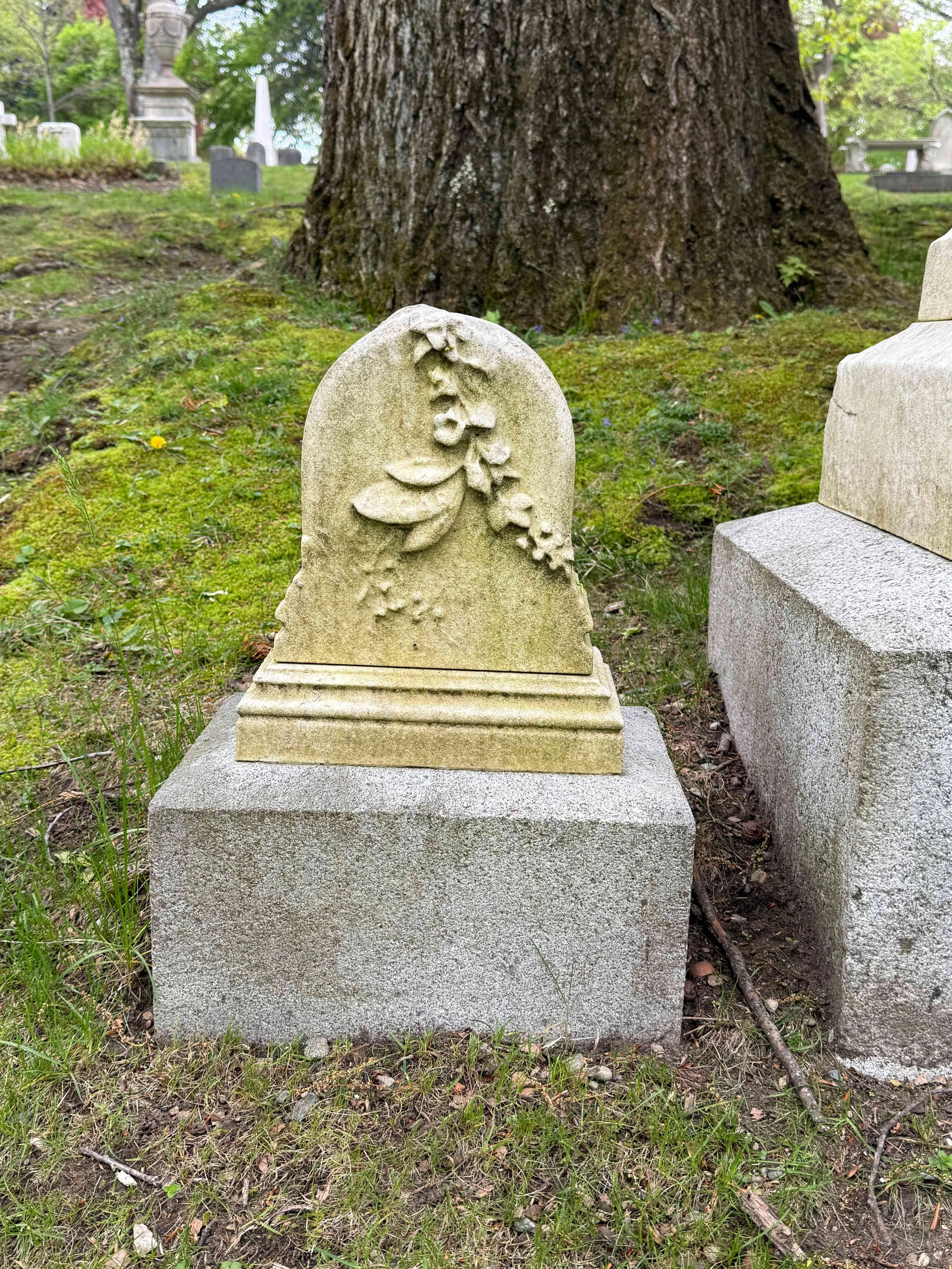
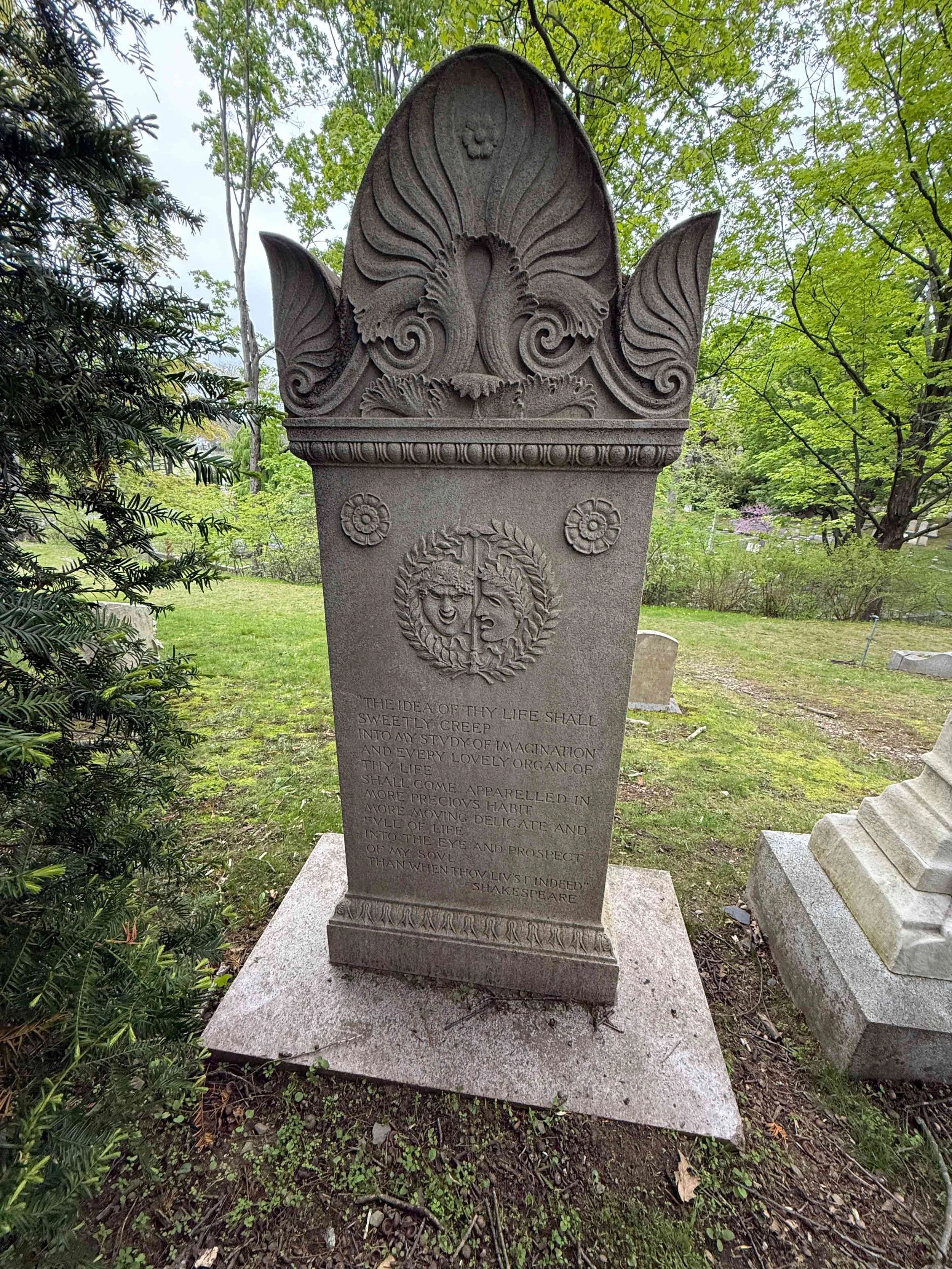
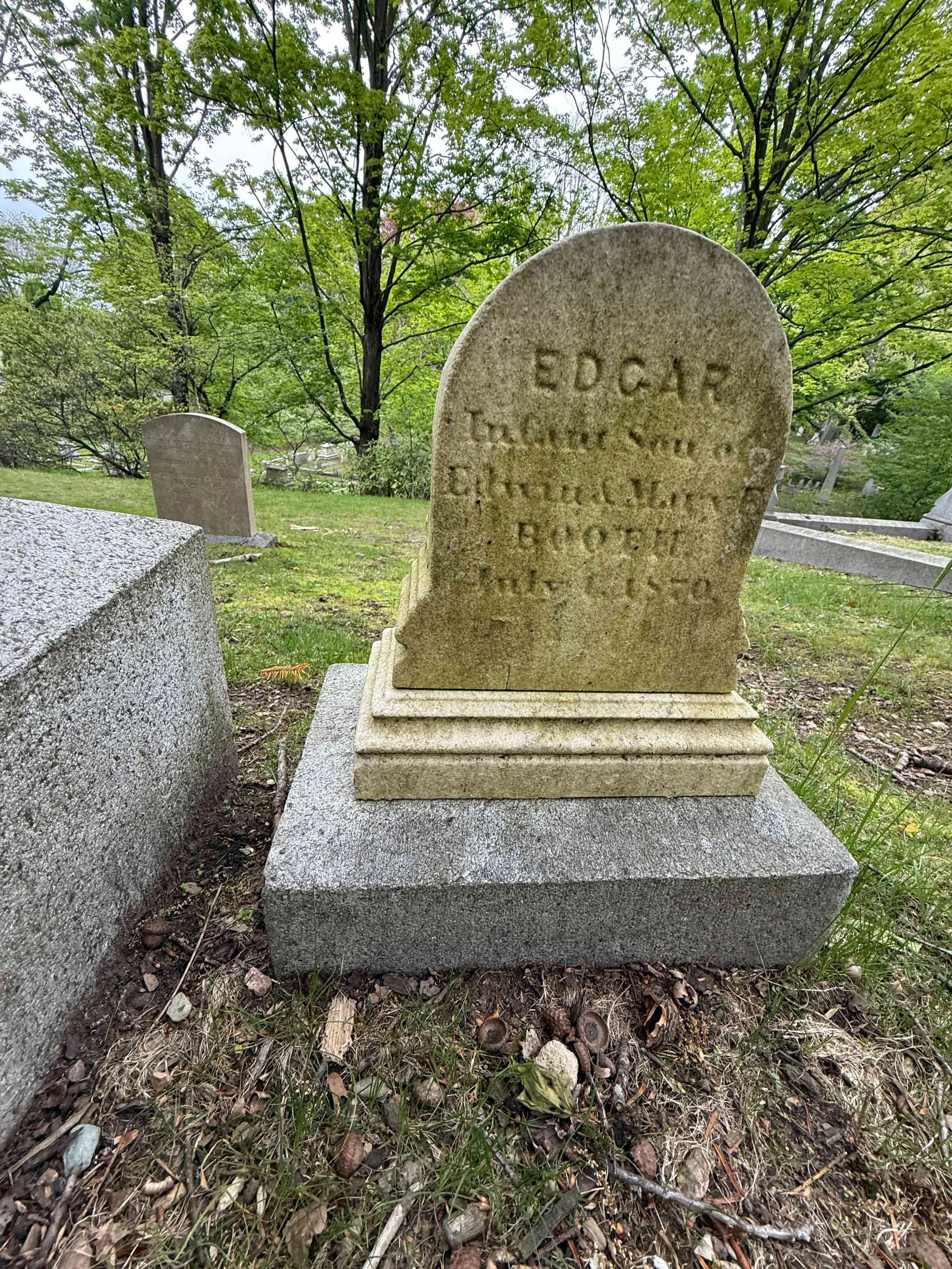
I accidentally stumbled on Booth’s grave this spring while wandering through a cemetery in Cambridge with friends?
you should read the incredible historical fiction novel Booth?
Absolutely not.
We’re just going to dive right in.


Presidential Doodler
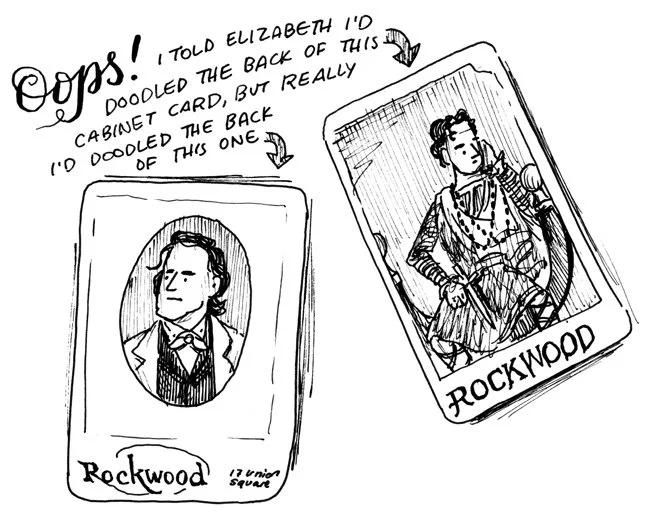
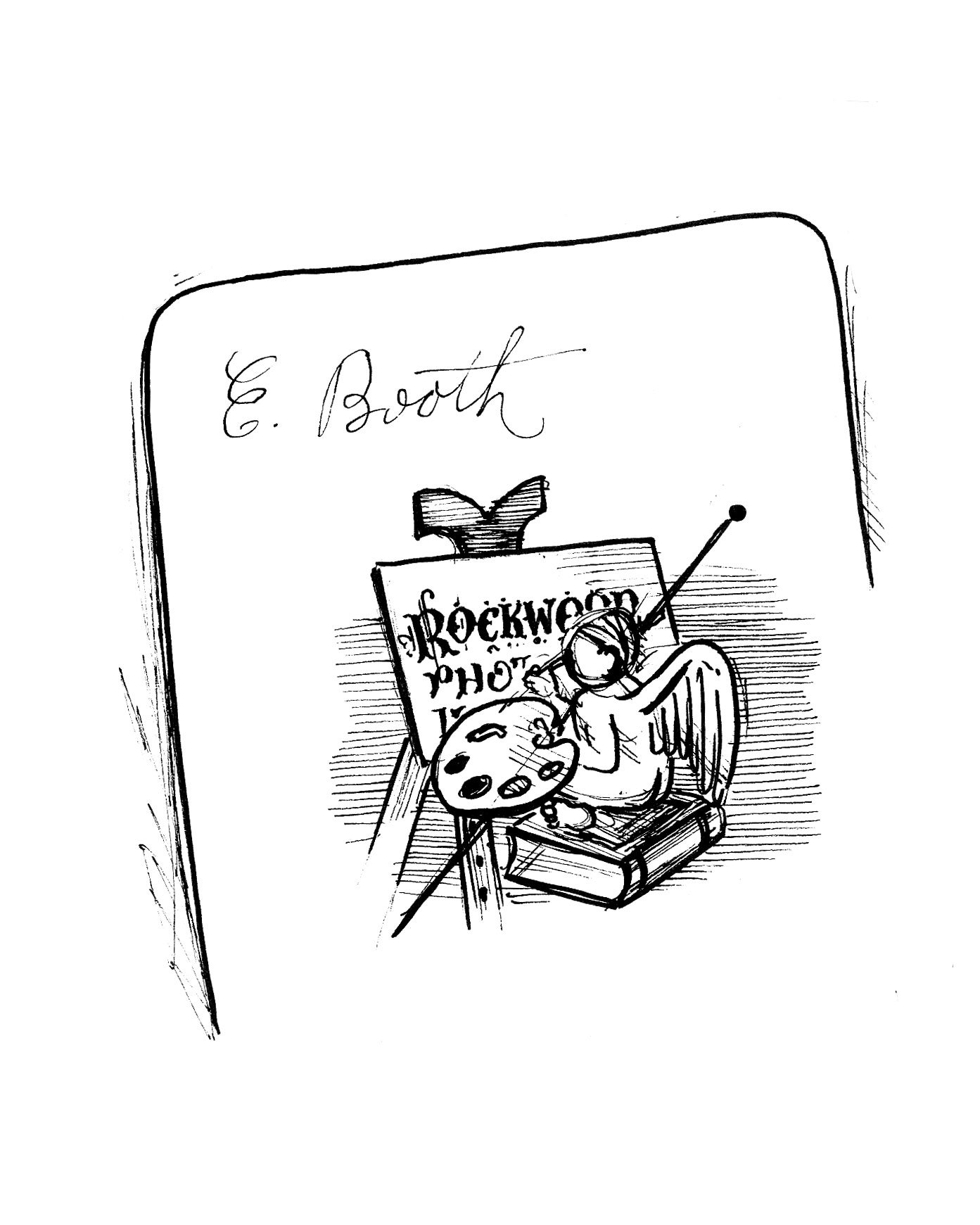
PS Elizabeth posted a fabulous cabinet card featuring Edwin Booth and I giddily shared that I’d doodled the back of that card. Nope. I was wrong. It was this one. Still — both were photos taken by George G. Rockwood.


January 3, 1866. New York City.
A crowd had gathered outside the Winter Garden Theatre in Lower Manhattan, so large that extra police units were called before the box office had even opened. Pedestrians ogled the sea of people, huddled and pushing their way into the lobby, hoping to be one of the lucky few to secure tickets to that night’s performance. Edwin Booth, brother of the most infamous man in the nation, would be returning to the stage for the first time since President Lincoln’s assassination nine months before.
New York had been a haven for the performing arts since the early 18th century—the first purpose-built theatre in the city opened on Nassau Street in 1732. George Washington was an avid fan of the theatre and attended numerous comedies and tragedies throughout his first term as president. During the Civil War, New York’s theatre scene thrived despite, or perhaps because of, national tragedy. After all, the theatre has always been a place where strangers gather in an attempt to understand the human experience. But the city was not exempt from the crosshairs of war.

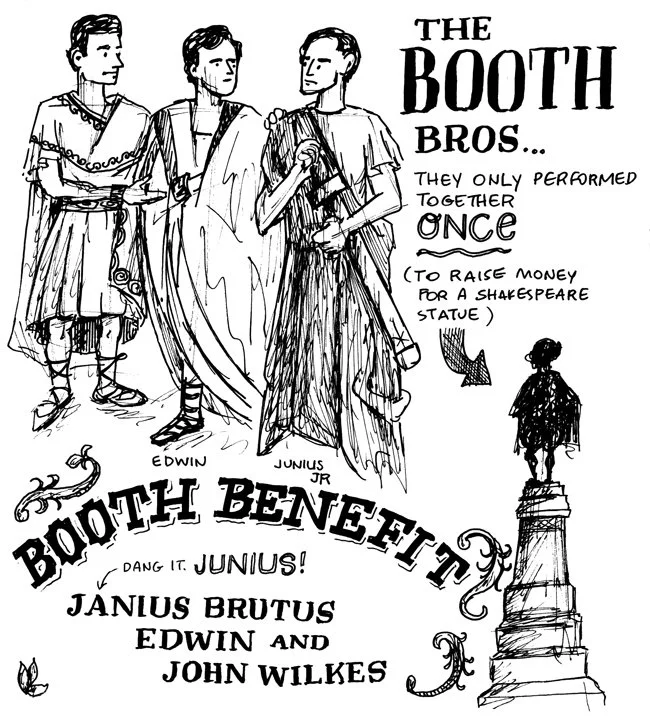
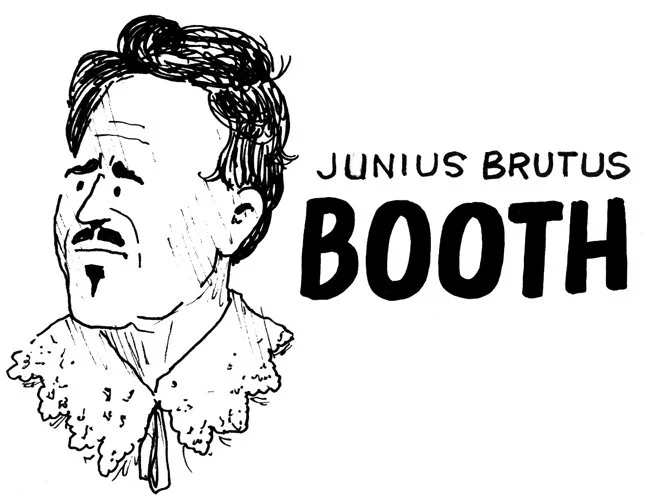
Junius Booth and his three sons (Junius Brutus, Jr., Edwin, and John Wilkes) were all actors
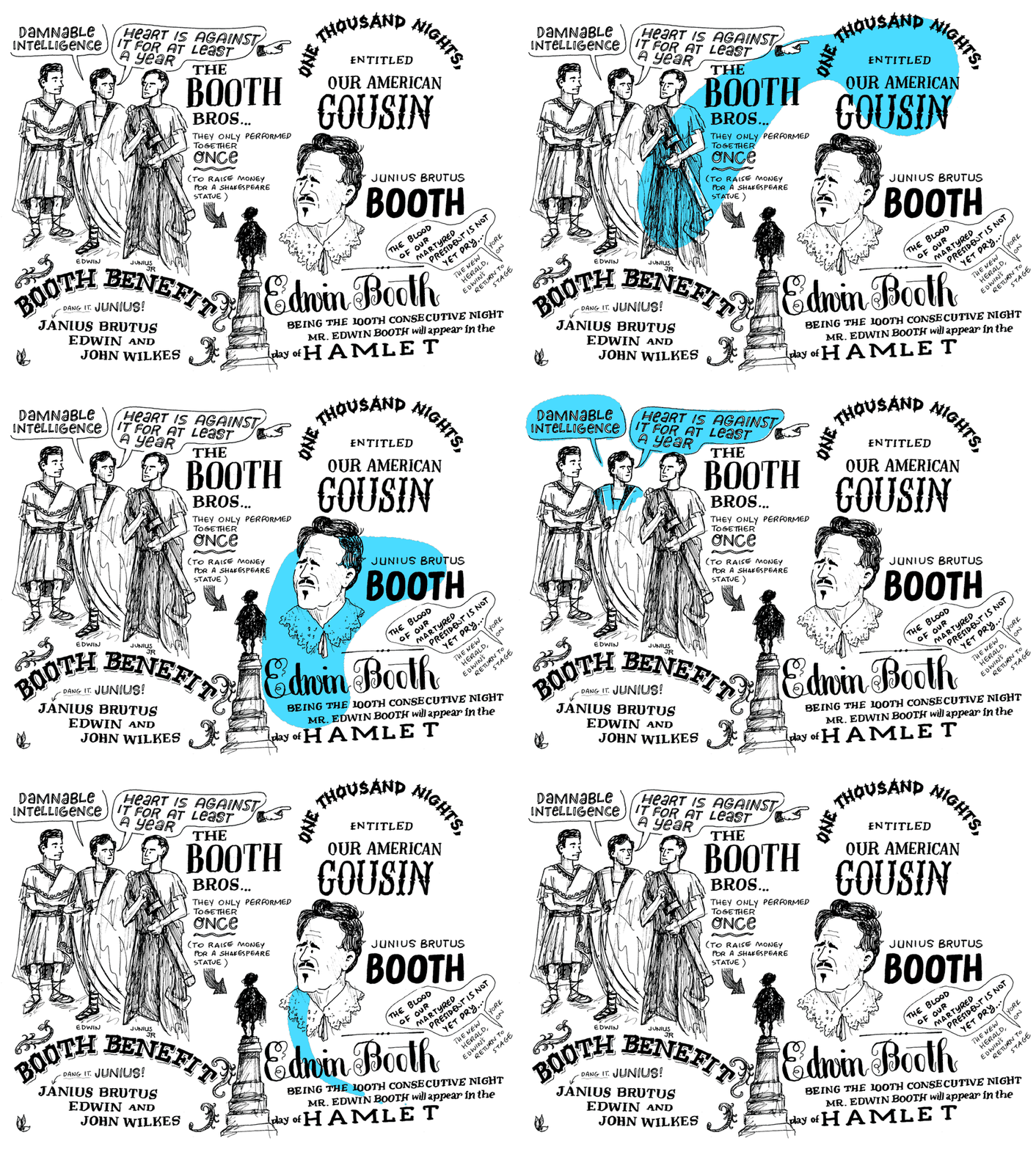
On November 25, 1864, it was on this very same stage—the Winter Garden— where the three Booth brothers performed together for the first and only time. The occasion was a benefit performance to raise the funds for a statue of William Shakespeare in Central Park, the start of the famous Literary Walk. The brothers performed Julius Caesar, with Junius as Cassius, John as Marc Antony, and Edwin as Brutus. The performance was interrupted near the start of the second act by the announcement of a fire. Next door, the Hotel LaFarge had caught fire as part of a Confederate plot to burn the city of New York. To calm the increasingly frantic crowd, Edwin stepped to the lip of the stage to reassure them that the Winter Garden was in no immediate danger.
On April 14, 1865, a different plot would be successful when John Wilkes Booth, a Confederate-sympathizer, assassinated President Abraham Lincoln as he watched a production of the comedy Our American Cousin at Ford’s Theatre in Washington, D.C.
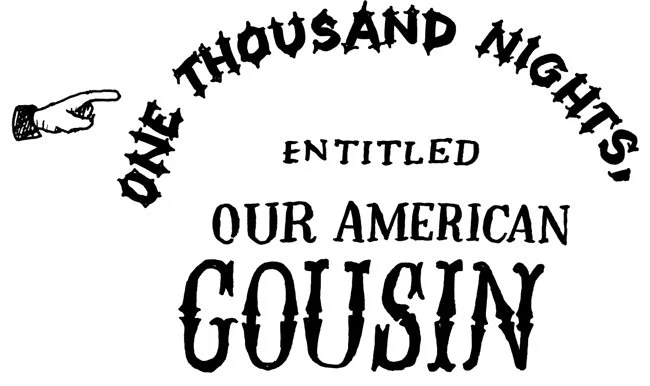
Having never quite been a socially accepted profession, the acting profession took a hit following Lincoln’s assassination. After all, he had been murdered by an actor whose intimate knowledge of the space aided his execution of the crime. For Edwin, the impact was deeper. It was his own brother who committed the act, in their shared workplace: the theatre.
The three Booth brothers who worked in the theatre were famous—the by-product of being the sons of celebrated tragedian Junius Brutus Booth. While John was certainly famous—he would not have been captured so quickly if he was not so recognizable—it was Edwin who was truly the star.
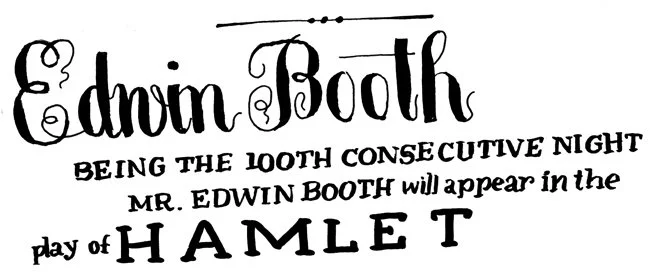
Weeks prior to the assassination, Edwin had completed his 100 Nights of Hamlet back at the Winter Garden Theatre in New York. This impressive feat marked the first time an actor performed the same role for one hundred consecutive nights; a record that would not be broken until John Barrymore in 1922. By early April, Edwin had secured himself in an elite echelon of celebrity.
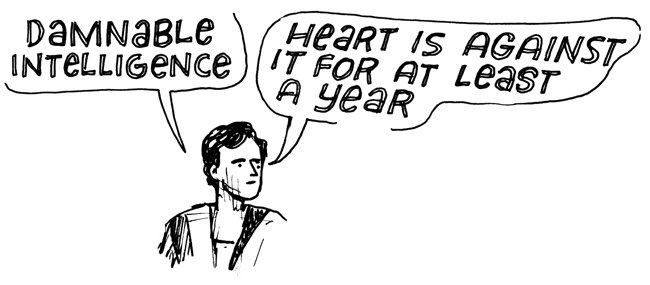
When news of the assassination broke, Edwin immediately went into hiding, writing to his close friend Adam Badeau how stunned he was by the “damnable intelligence” and the concerns he had, not only for his family, but for his own career. His retirement from the stage was expected; theaters remained closed across the nation and the idea of a Booth returning was unfathomable. In July 1865, he wrote to a friend that he had heard the papers rumored at his return but his “heart is against it for at least a year.” Yet, less than six months later, he would return. His personal correspondence to close friends indicated that he was conflicted about this, stating that “were it not for means, I would not do so, public sympathy notwithstanding: but I have huge debts to pay, a family to care for, a love for the grand and beautiful in art, to boot, to gratify…the excitement of the only trade for which God has fitted me.”
But Edwin was strategic in his planning his return. Choosing the Winter Garden Theatre in New York meant that he was returning on his home turf to familiar audiences who largely knew and loved him. Regardless, public opinion remained mixed. Upon the public announcement of Edwin’s return, the New York Herald wrote that “shame upon such indecent and reckless disregard of propriety…the blood of our martyred president is not yet dry in the memory of the people…still a Booth is advertised to appear before a New York audience.”

Despite the outcry, the crowds continued to gather. Perhaps for some, attending the performance was less of an act of admiration than a morbid curiosity to witness a spectacle. But for others, Edwin was a living symbol of their shared national tragedy. Within a half hour after the theatre opened, the house had reached capacity.
As the house lights dimmed and the hum of the production began, no one knew how the audience would respond. Edwin’s choice to return in the titular role of Hamlet held dual meaning. Of course, it was his most celebrated performance, but at its core Hamlet is a play about grief, something Edwin knew well. He was in an almost perpetual state of mourning, from the death of his father in 1852, to his close friend Richard Cary who was killed in the battle of Cedar Mountain in 1862, to his first wife Mary Devlin in 1863, to the social and physical death of his brother John in 1865.
Upon his first appearance during the second scene of Hamlet, the audience immediately rose to their feet in a thunderous applause, clapping and hurrahing for several minutes. Newspapers recounted that the scene was one of “wild excitement,” as women waved their handkerchiefs, and flowers and wreaths were heaped upon the stage. Edwin made no effort in hiding his emotions. Upon hearing the crowd’s response, his head dropped and his body shook as he absorbed the enormous weight of the audience’s support. When the final curtain fell, the audience surged into the street to shower the star with more praise, only to discover Edwin had already slipped away through the stage door.
For the crowd, their thunderous applause was, in a way, an absolution of his brother’s crime. Yet for Edwin himself, his choice to return to the stage was far more complicated. Standing under the stage lights as the grieving Prince of Denmark, his performance carried the public weight of his family name alongside the unspoken pain of his own losses. Ultimately, his return proved that while performance provides a public space for audience and actor to process their collective pain, it can never fully shield a man from the weight of his own grief.
Elizabeth M. Reese is a Washington, D.C.-area historian whose work focuses on public memory, family ties, and grief. She is currently writing a manuscript examining how Edwin Booth’s grief reshaped American theatre and contributed to national healing following the assassination of Abraham Lincoln. Elizabeth is the Senior Manager of Public Programs & Interpretation at Woodlawn & Pope-Leighey House, where she oversees historic research and public education, and is the author of Marquis de Lafayette Returns: A Tour of America’s National Capital Region (2024). She holds an M.A. in American History from Gettysburg College, and her writing has been featured in various scholarly and public publications and can be seen on C-SPAN.
Visit her website to learn more about her—including upcoming speaking engagements, podcast appearances, and publications.
For more guest appearances, check out these posts:








Edwin Booth’s return to stage