
Just finished reading: President Garfield
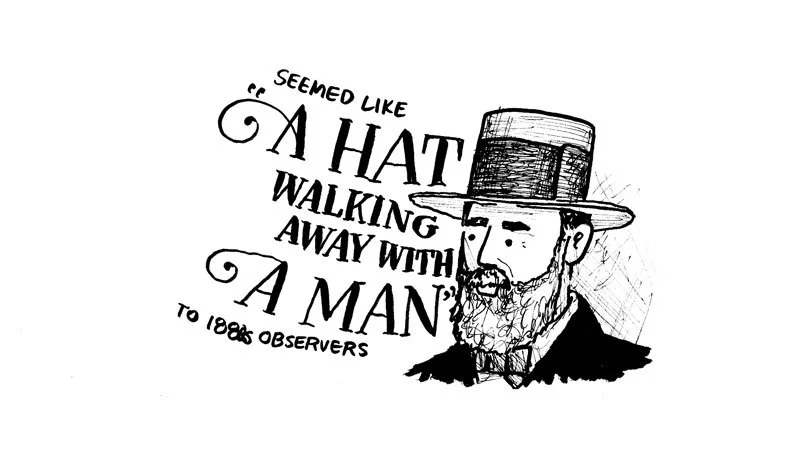
I just finished reading President Garfield: From Radical to Unifier by C.W. Goodyear.
Years ago when I read Candice Millard’s Destiny of the Republic: A Tale of Madness, Medicine and the Murder of a President, I made a note to read a second book about Garfield that explores more of his life.
Finally got around to it! My goal was to finish by March 13, the anniversary his wife’s death. I just had to read 20 pages a day and keep doodling, and it would have been a breeze. The doodling bit is a problem though — waiting for my new glasses to come in. Drawing kinda makes me queasy, but I finished at last… (also, the glasses have still not arrived).
But that’s neither here nor there.
Let’s dive into The Learned Man from Ohio…
Flip through my sketchbook.
Then scroll through more doodles. As always, my doodles don’t highlight the most important parts of the book. And they are in no particular order. Certainly not chronological.
From janitor to the highest office
Garfield’s resume includes:
Canal boat pilot
Janitor (to pay for school)
Teacher
Lay preacher
College President
Lawyer
State senator
U.S. Army general (youngest one!)
Congressman (the youngest one; he was only 31)
Minority Leader of the House
President
It’s worth noting that he:
Helped runaway slaves (against orders) while in the army
Believed that “Government actually based on the monstrous injustice of human slavery” must not exist
Established the first Department of Education, pointing out that we shouldn’t be expanding our boundaries of citizenship without also trying to “Increase the intelligence of the citizen.” (He also said that “a tenth of our national debt expended in public education 50 years ago would have saved us the blood and treasure of the late war.”)
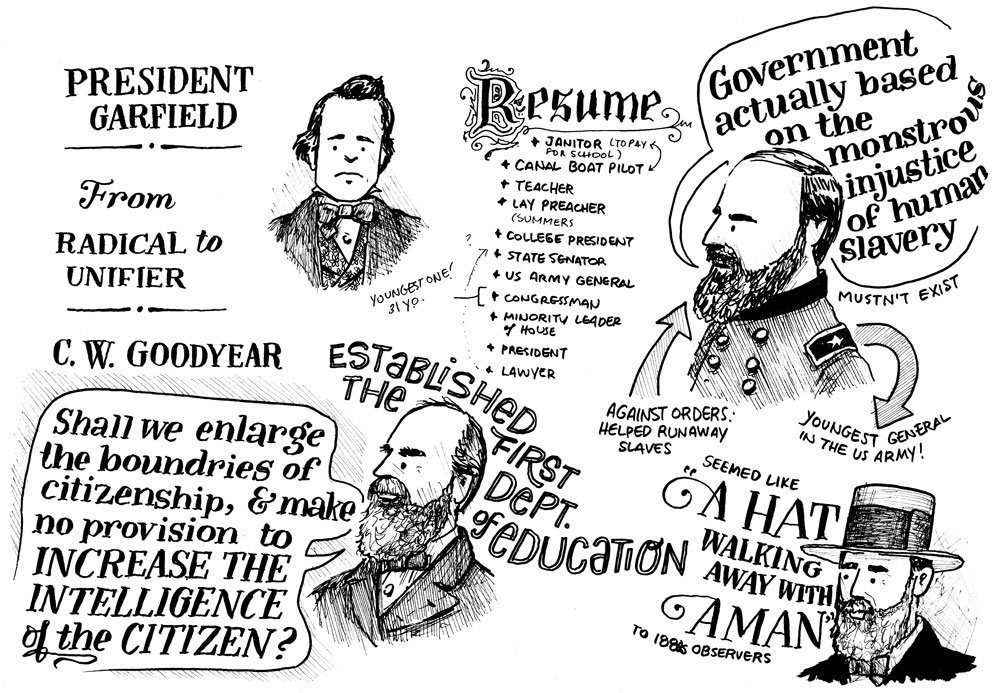
Not Franklin or Lincoln even
Rutherford Hayes said of Garfield: “The truth is no man ever started so low who accomplished so much in all our history. Not even Franklin or Lincoln even.”
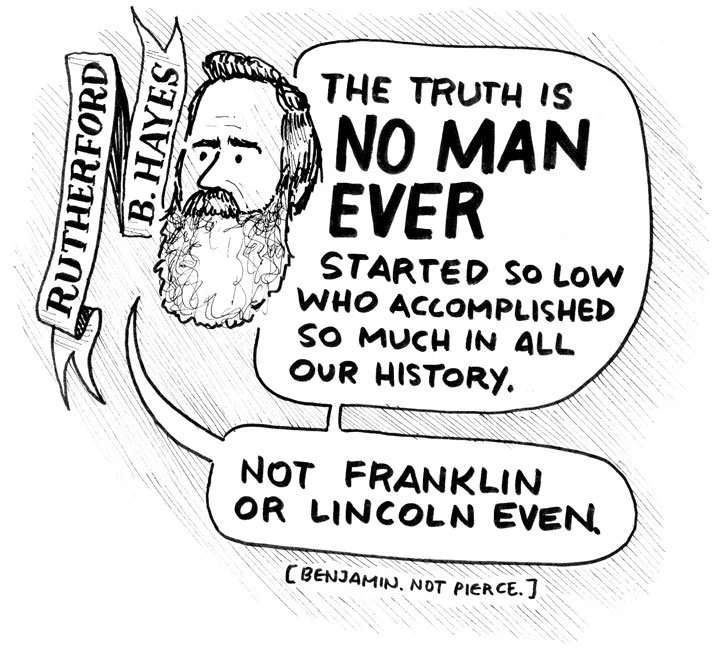
Last POTUS born in a log cabin
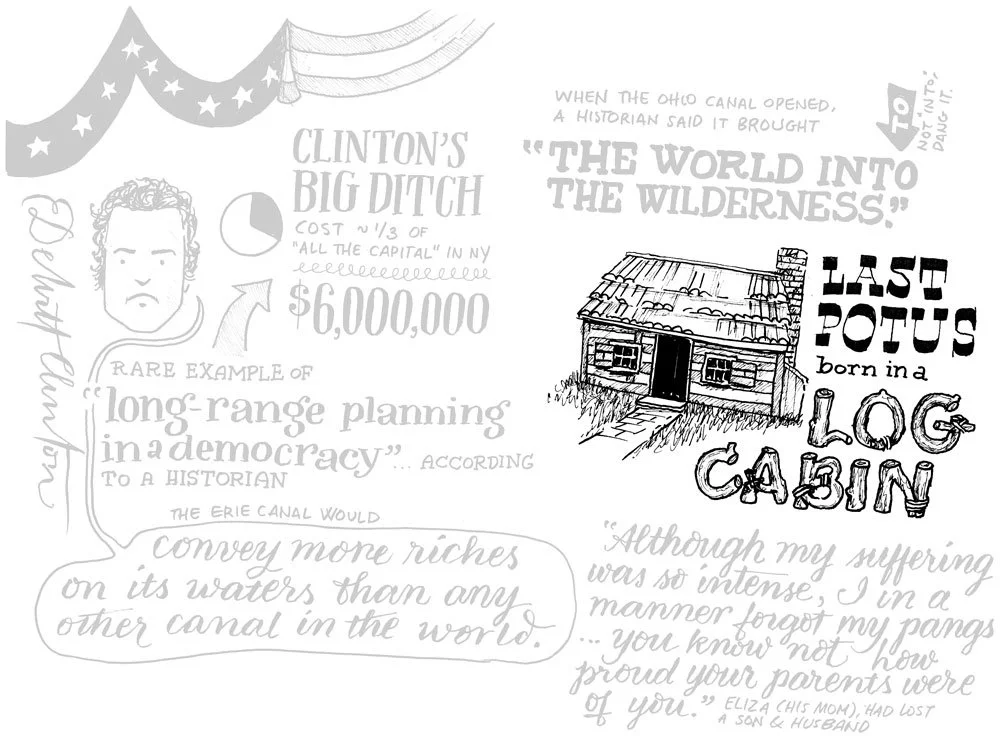
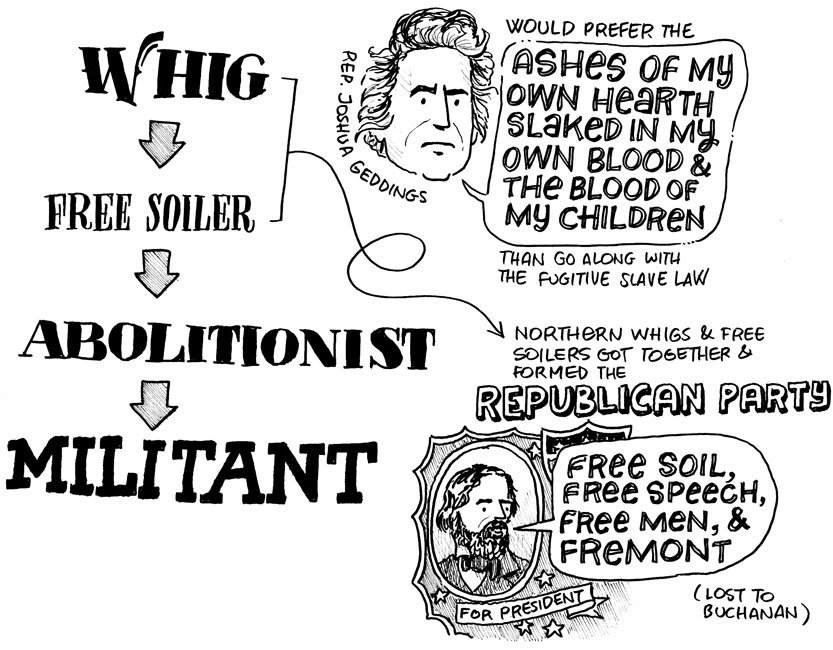
Northern Whig + Free Soiler = Republican party
Their first presidential candidate was John C. Fremont, who promised “Free soil, free speech, free men, and Fremont.” He lost to James Buchanan.
Rep. Joshua Geddings said he’d prefer the “ashes of my own hearth slaked in my own blood and the blood of my children” than to go along with the Fugitive Slave Law.
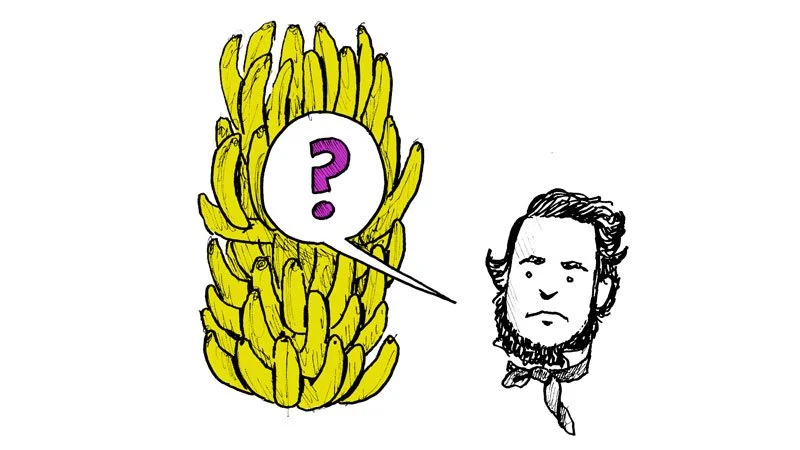
MASSIVE MELON
I was unaware of Garfield’s ginormous noggin and unprepared for the number of times that would come up in this book. Had I realized, I would have flagged them all.
I think my favorite might be Frederick Douglass, who said to a crowd of Black New Yorkers:
“That deep-chested three-story-headed man, James A. Garfield, must be our president.”
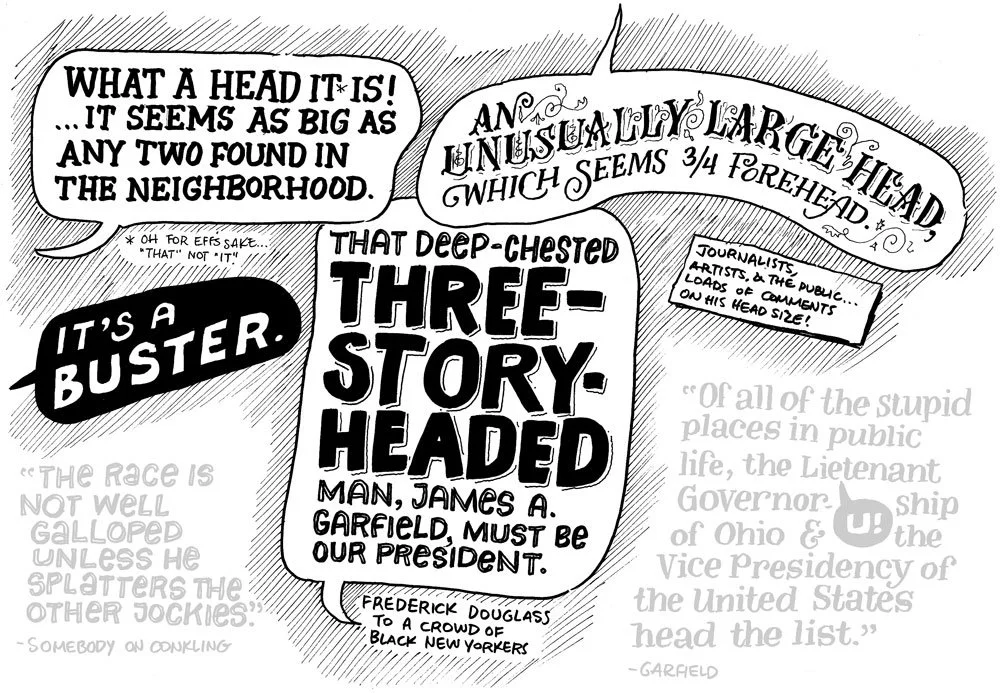
Maybe it’s because he had “a hungry brain”…?

The one and only Rosco Conkling
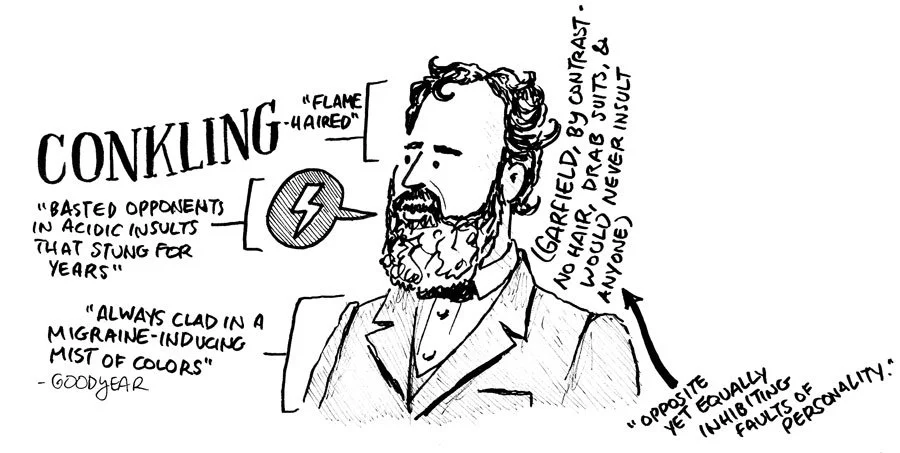
Conkling threatened Garfield: “I need hardly add that your administration cannot be more successful than I wish it to be. Nor can it be more satisfactory to you, to the country, and to the party than I wish to make it.”
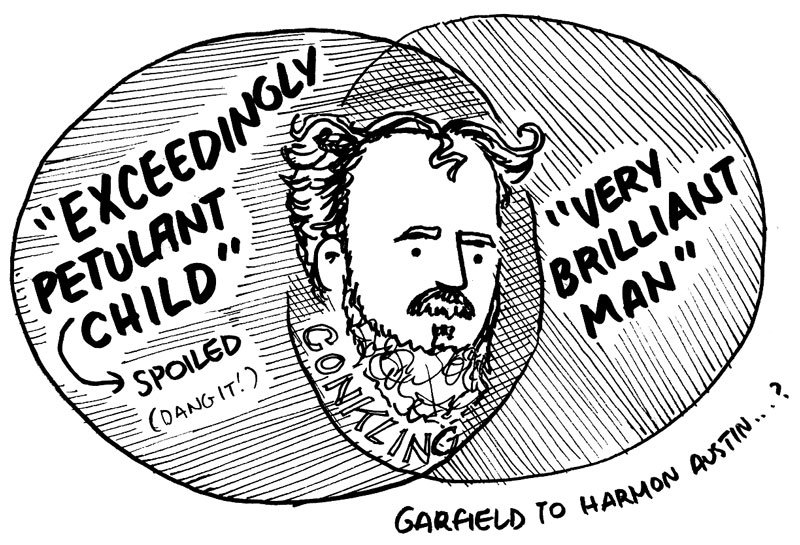
Garfield drew a Venn diagram, showing that Conkling was an “exceedingly petulant spoiled child” and also a “very brilliant man.” JK. I drew the diagram, but he did say those things.
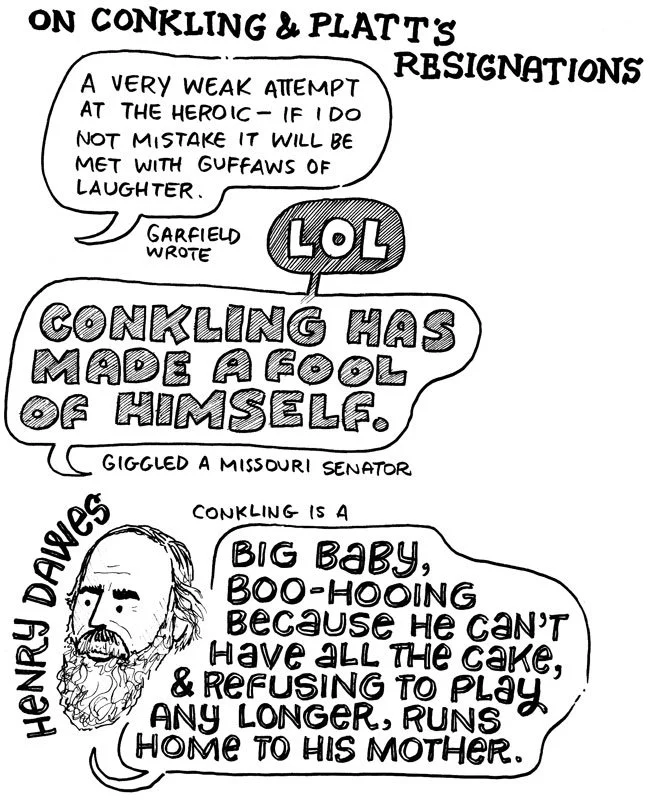
When Conkling and his buddy Platt resigned in what was supposed to be a Big Dramatic Show of Power but instead fell flat and bit them both on the keister, the reactions were priceless:
Garfield wrote: it was “a very weak attempt at the heroic — if I do not mistake it will be met with guffaws of laughter.”
A Missouri senator giggled “Conkling has made a fool of himself.”
Henry Dawes said he was “a big baby, boo-hooing because he can’t have all the cake and refusing to play any longer, runs home to his mother.”
Liberty, love, life
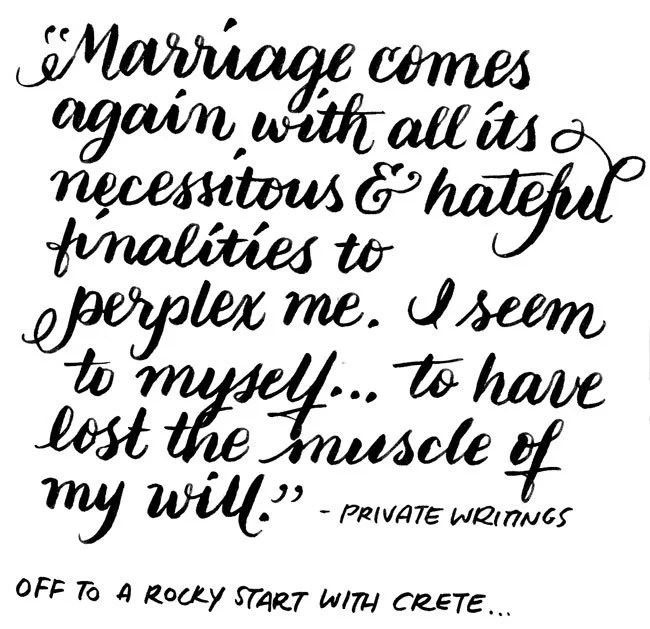
Lucretia and James were students together. Then he was a teacher and she was a student. At some point they started courting, but their relationship got off to a rocky start. In his private writings, he vented “marriage comes again with all its necessitous and hateful finalities to perplex me. I seem to myself … to have lost the muscle of my will.”
Yikes.
But they stuck with it. Eventually married. And he had a bunch of affairs.
Not great. Not great at all.
Not only that, but in the first five years of their marriage, they spent only 20 weeks together.
When their beloved daughter died, they were brought closer.
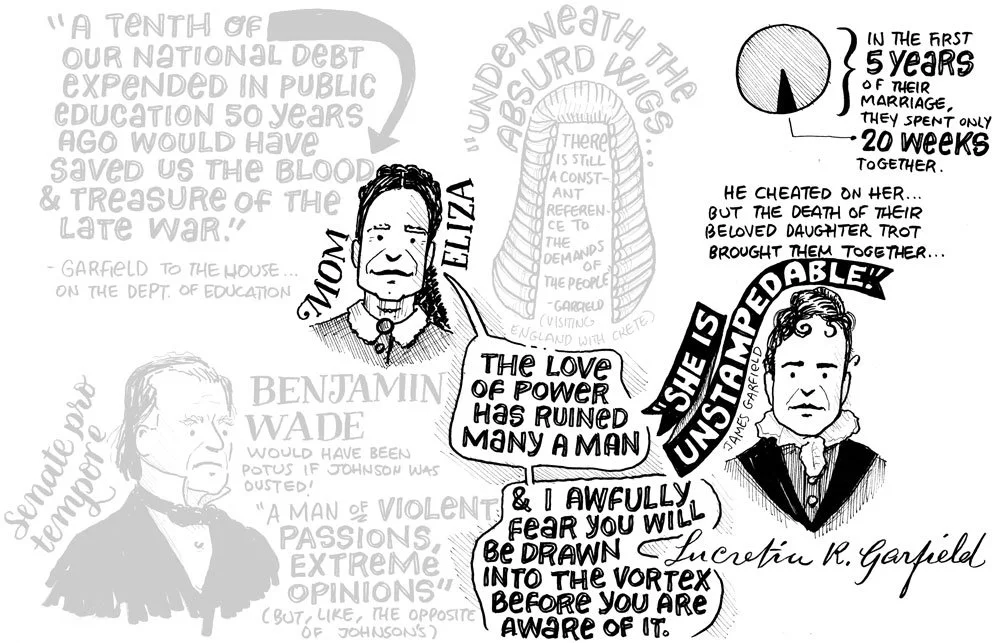
(Eliza Garfield, his mom, was pretty cool. She said “The love of power has ruined man a man and I awfully fear you will be drawn into the vortex before you are aware of it.” Garfield himself noticed that the desire of the presidency had ruined many.)
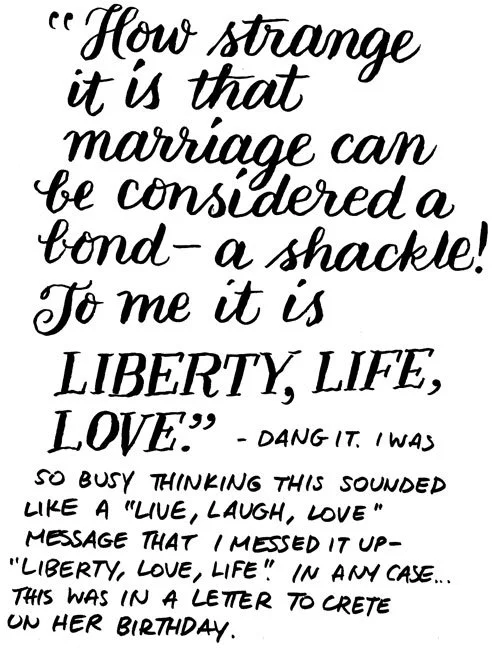
On Crete’s birthday (years later, I believe), he wrote “how strange it is that marriage can be considered a bond — a shackle! To me it is liberty, love, life.”
He would write to her:
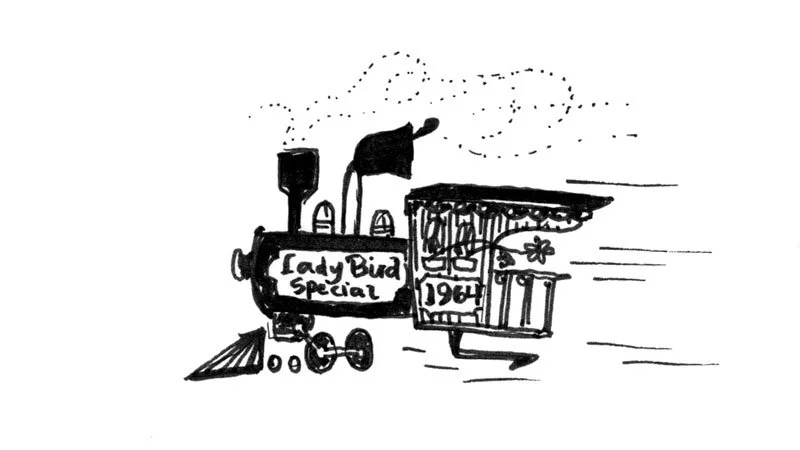
“All roads lead to Crete. Even when I am going away from you, I remember I am traveling on a circuit which ends in your arms, and so the car wheels sing of you as they hurry me on.”
Kill the beast
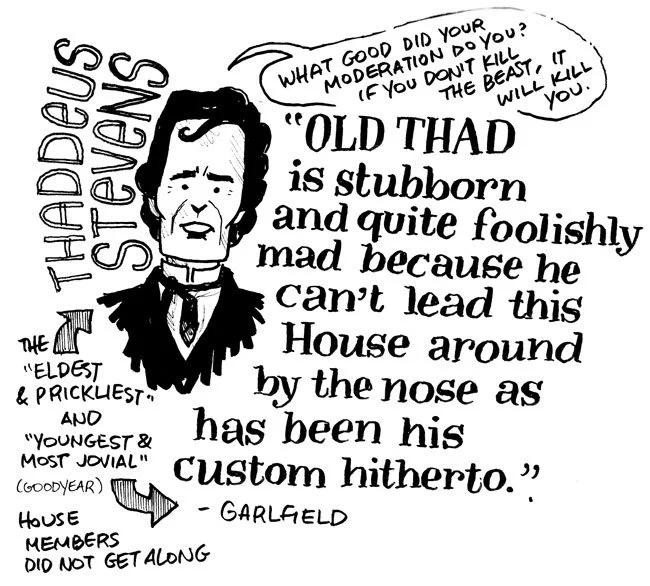
While Garfield was the “youngest and most jovial” in the House, Thaddeus Stevens was the “eldest and prickliest” (Goodyear’s words)
Stevens was an Abolitionist and Radical Republican
He asked “what good did moderation do you? If you don’t kill the best, it will kill you.” (Learn more about him here — he’s fascinating!)
Garfield, who generally got along with everyone and also didn’t like slavery, said “Old Thad is stubborn and quite foolishly mad because he can’t lead this House around by the nose as has been his custom hitherto.”
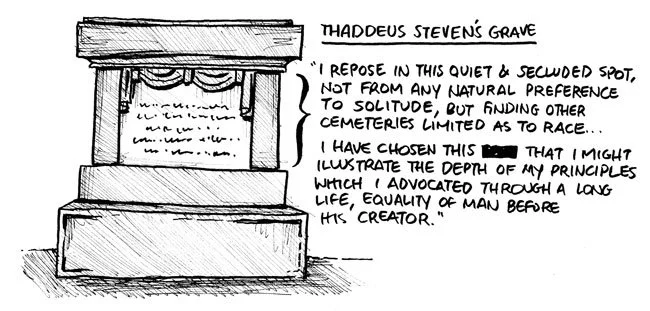
Before he died, he arranged a plot in a cemetery that wasn’t segregated:
“I repose in this quiet and secluded spot, not from any natural preference to solitude, but finding other cemeteries limited as to race… I have chosen this that I might illustrate the depth of my principles which I advocated through a long life, equality of many before his creator.”
Magnetic Man
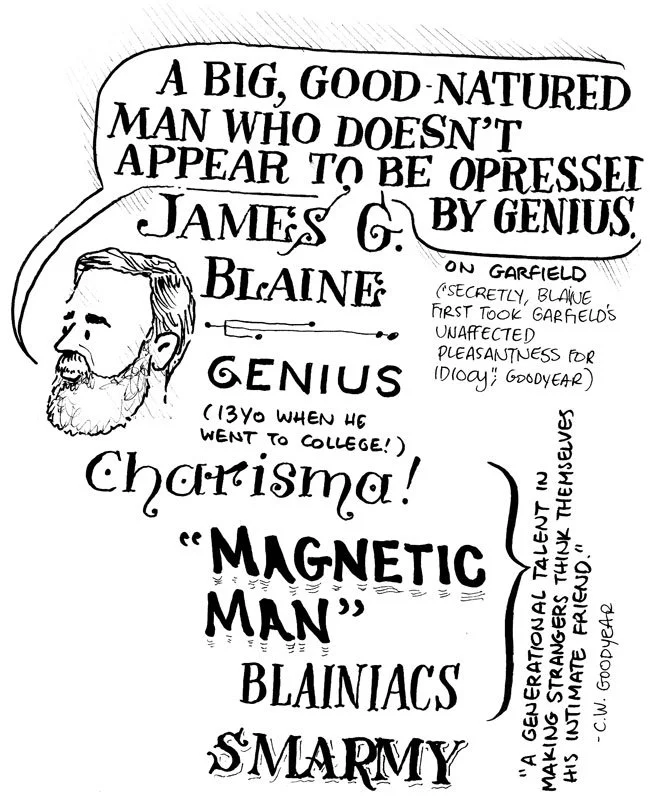
Blaine was a genius — he was just 13-years-old when he went to college.
Exceptionally charismatic — called “Magnetic Man” and his admirers were “Blainiacs”
Goodyear called him “a generational talent in making strangers think themselves his intimate friends.”
See also: smarmy
Initially, Blaine wasn’t impressed with Garfield. He misinterpreted his pleasant demeanor as some sort of mental deficiency, calling him “a big, good-natured man who doesn’t appear to be oppressed by genius.”
I’d like to point out that Garfield came up with an original Pythagorean Theorem proof and Blaine did not.
Apparently, I’m not “opressed” by genius either.
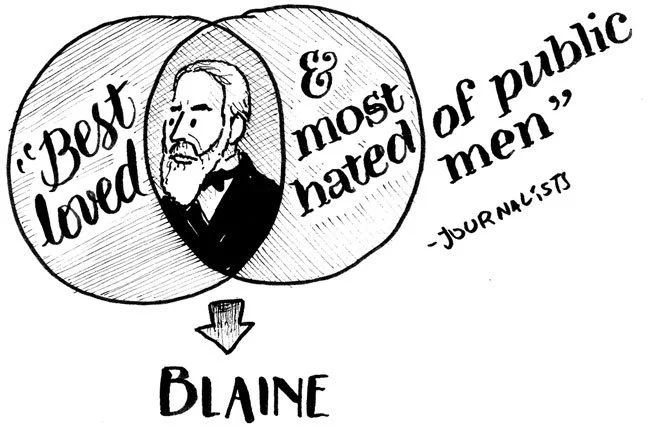
Sigh. [drops head in disappointment]
I know Garfield wasn’t perfect, but I admit I put him on a pedestal.
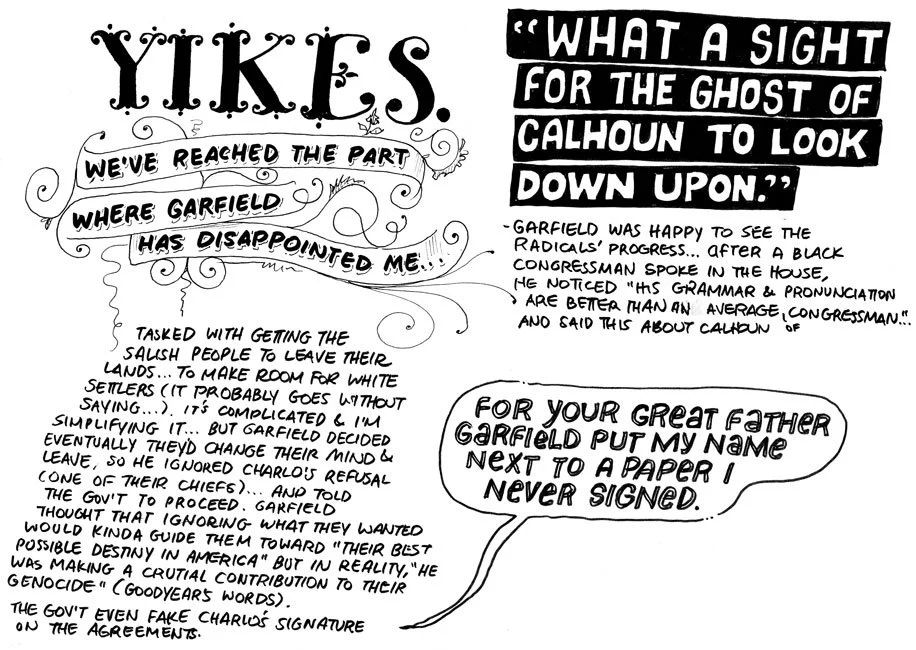
He was happy with the Radicals’ progress and after a Black congressman spoke to the house, he reflected with pleasure: “What a sight for the ghost of Calhoun to look down upon.”
But then also…
He was tasked with getting the Salish people to leave their lands… to make room for white settlers. It’s complicated and I’m oversimplifying, but Garfield decided that eventually they’d change their mind so he ignored Charlo (one of their chiefs) and told the U.S. government to proceed. Garfield believed that would kinda guide them to “their best possible destiny in America.”
In reality, Goodyear says “he was making a crucial contribution to their genocide.” The government even faked Charlo’s signature on the agreements.
Insult collection
Fantastic collection of insults in this book. Among my favorites:
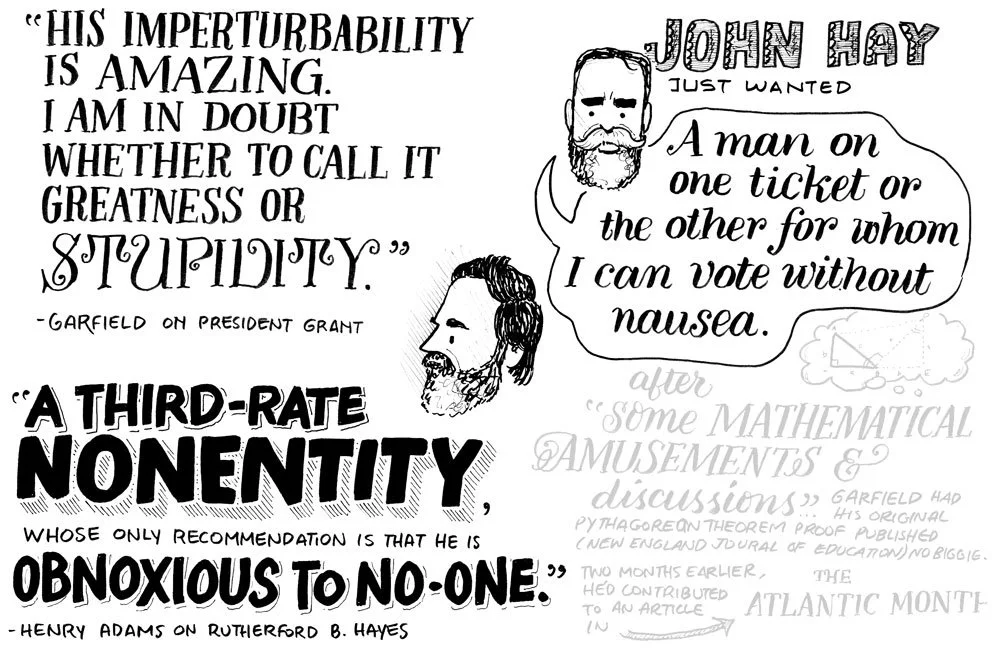
“His imperturbability is amazing. I am in doubt whether to call it greatness or stupidity.” - Garfield on President Grant
“A third-rate non-entity, whose only recommendation is that he is obnoxious to no-one.” - Henry Adams on Rutherford B. Hayes
“A man on one ticket or the other for whom I can vote without nausea.” - John Hay, disappointed with the presidential contenders
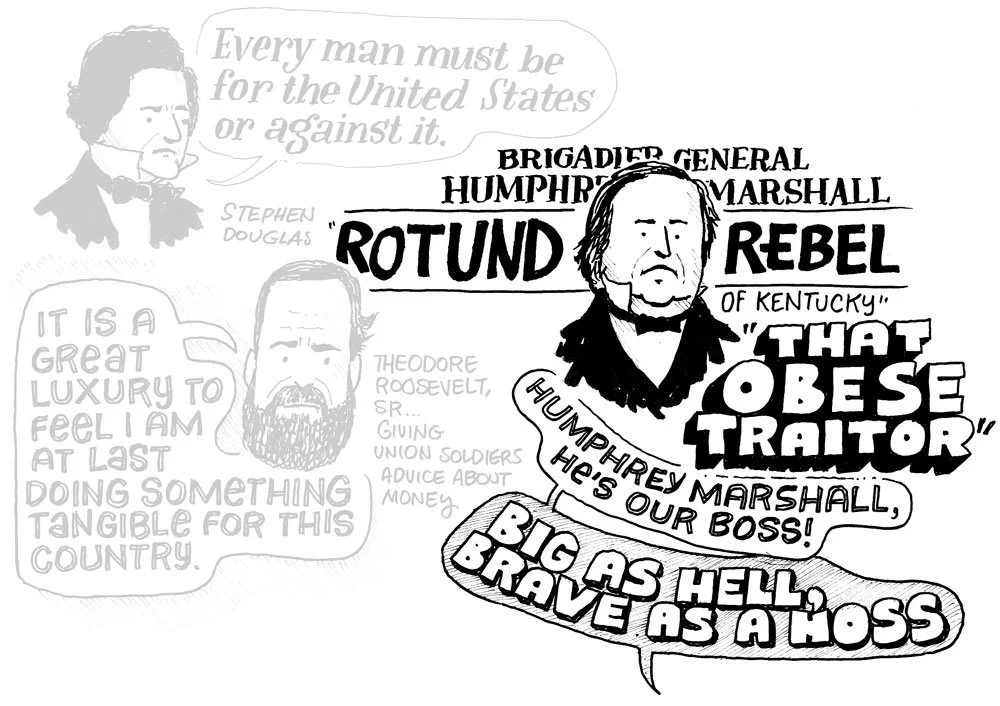
“Rotund Rebel of Kentucky” and “that obese traitor.” - on Brigadier General Humphrey Marshall, to which his Confederate soldiers chanted “Humphrey Marshall, he’s our boss! Big as hell, brave as a hoss.”
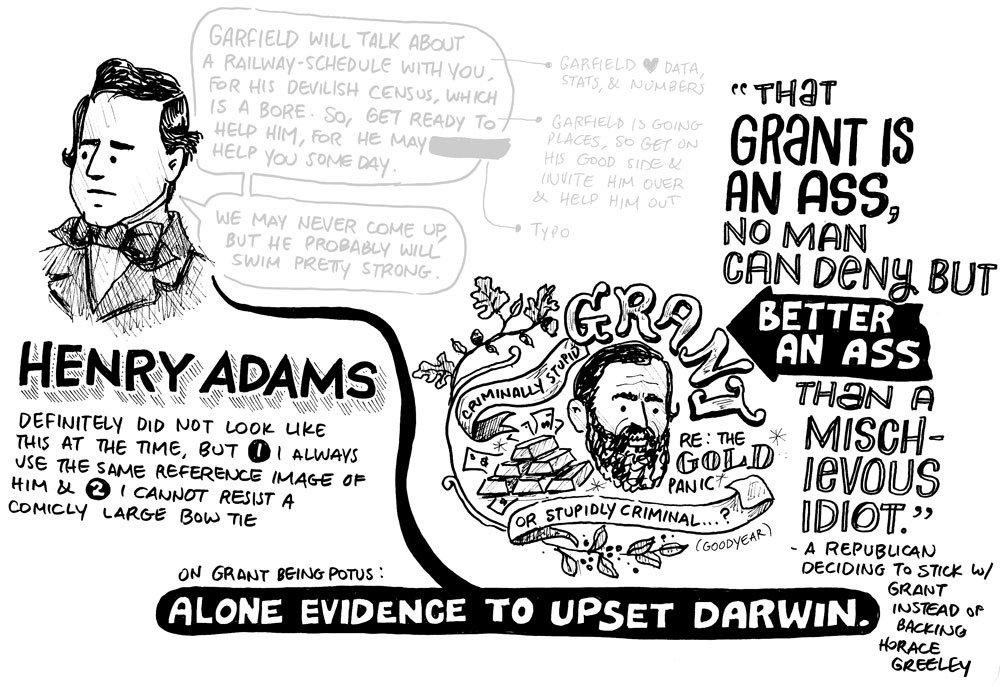
Goodyear posited that President Grant was either “criminally stupid” or “stupidly criminal.”
A Republican, deciding to stick with Grant instead of backing Horace Greeley admitted “that Grant is an ass, no man can deny but better an ass than a mischievous idiot.”
Henry Adams said that Grant being president was “alone evidence to upset Darwin.”
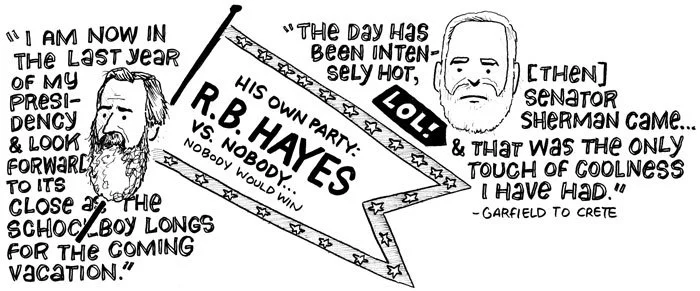
It was said by President Hayes’ own party that if he ran against nobody, Nobody would win
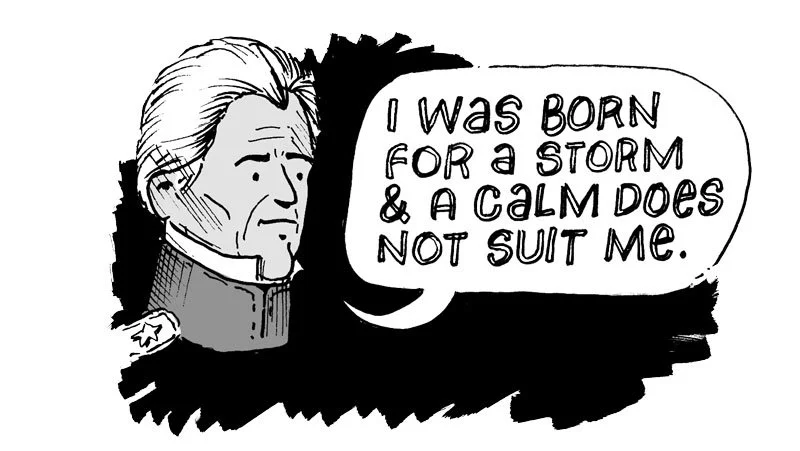
Garfield complained of the oppressive temperatures, saying that seeing Senator Sherman (AKA The Ohio Icicle) was “the only touch of coolness I have had.”
The “Murderer-Cuckold”
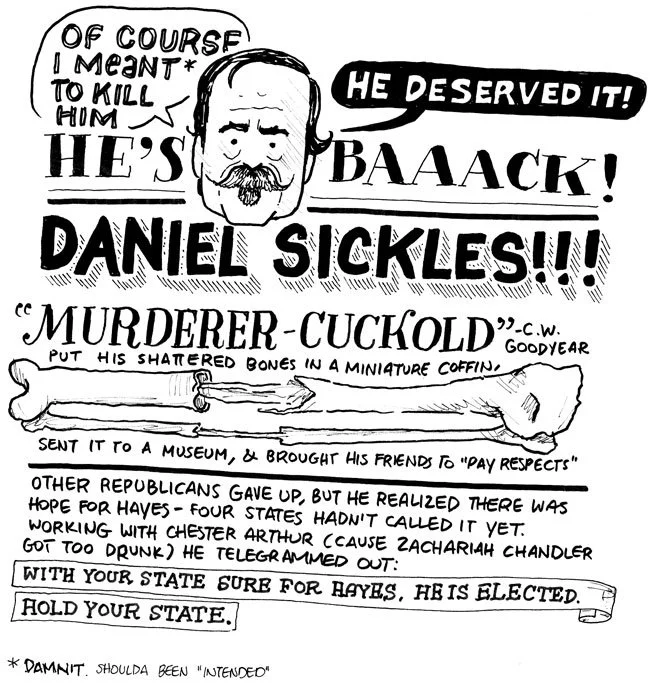
Daniel Sickles!! This guy is something else and I love when he shows up.
The “murderer-cuckold” (Goodyear’s words) deposited put his shattered bones in a miniature coffin, sent it to a museum, and brought his friends to “pay respects.”
Though he got off on murder, he later said “Of course I intended to kill him! He deserved it!”
When other Republicans gave up on Hayes’ election, Sickles realized there was hope. Four states hadn’t called it yet. Working with Chester Arthur (‘cause Zachariah Chandler got too drunk, drowning his election sorrows prematurely), he telegrammed out: “with your state sure for Hayes, he is elected. Hold your state.”
Tilden v. Hayes
Oh, this was a Whole Thing that I’m not going to explain. But I had no idea that Garfield was involved!
Garfield:
Traveled to investigate reports of voter fraud, including to New Orleans where he said white people would “smile in the morning and commit murder at night.” Really horrific stories, which I am not getting into here
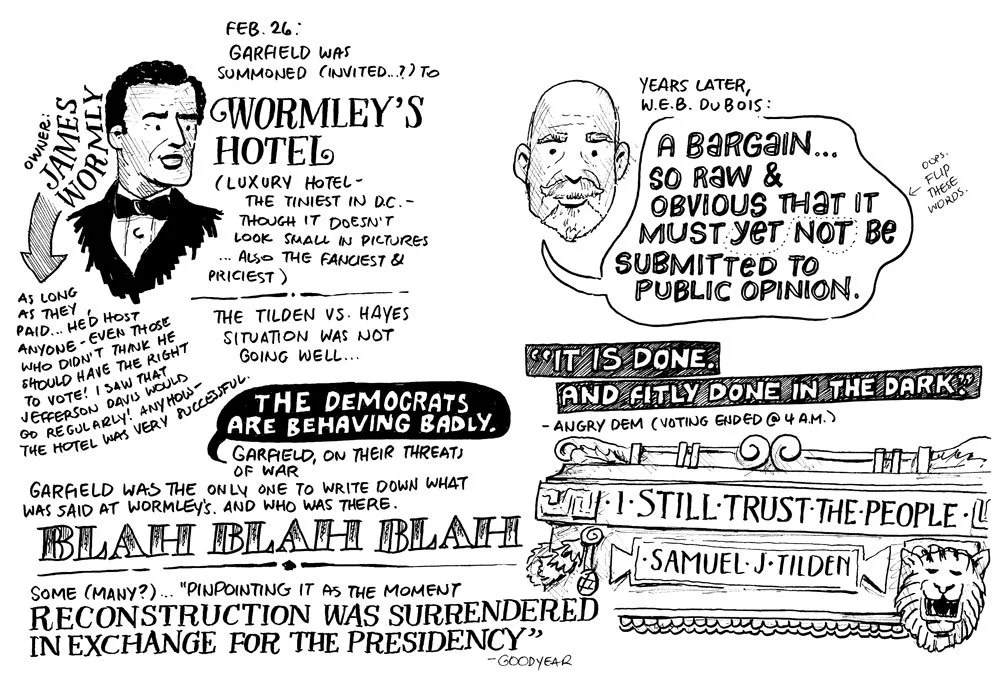
Was summoned to Wormley’s Hotel — the teensiest luxury hotel in DC, owned by James Wormley. (Fascinating!)
Documented what happened at the meeting and was the only one who did so. Some (many?) point to it “as the moment Reconstruction was surrendered in exchange for the presidency,” according to Goodyear.
And also:
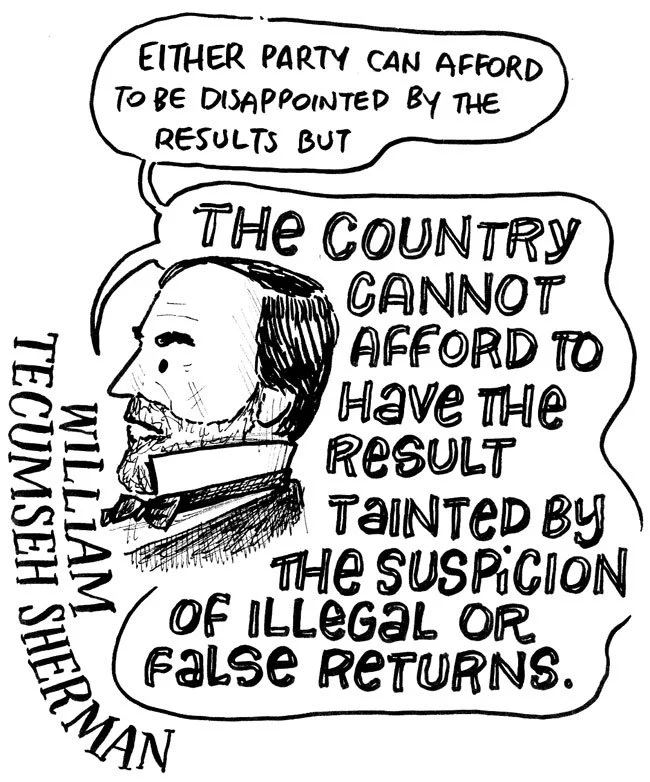
William Tecumseh Sherman (brother of The Ohio Icicle) said “either party can afford to be disappointed by the results but the country cannot afford to have the result tainted by the suspicion of illegal or false returns.
Years later, W.E.B. DuBois called it “a bargain… so raw and obvious that it must not yet be submitted to public opinion.”
Samuel Tilden had “I still trust the people” carved on his grave

The Vice President’s Black Wife: The Untold Life of Julia Chinn, by Amrita Chakrabarti Myers
Electoral Count Act
In 1887, President Grover Cleveland signed the Electoral Count Act into law so this kind of presidential election mess could never happen again. Going forward, Congress had to get together at 1 p.m. on January 6 and do their thing. The San Francisco Examiner pointed out that “should another Presidential crisis ever confront the country, this new XXX will be found of vital importance.”

Just kidding. They said “this new law will be found of vital importance.” I discretely hid a typo under that black rectangle and then didn’t fix it. What a dumb dumb.
But speaking of not fixing things, turns out this act didn’t prevent a future crisis and needed further refining more than a century later.
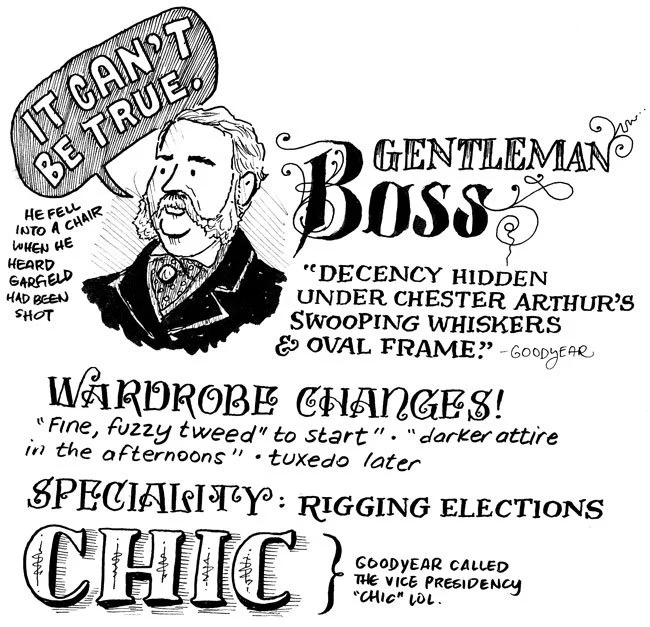
Gentleman Boss
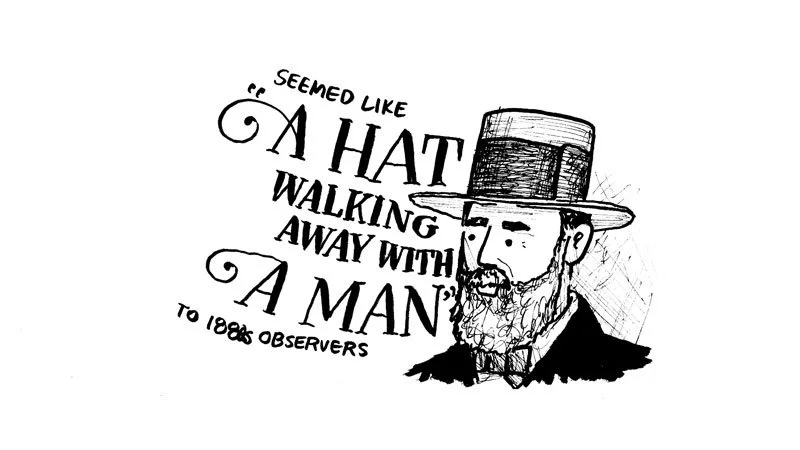
Arthur enjoyed changing his clothes more than doing work. It was said that he tried on 20 pairs of pants before getting dressed every day. And the wardrobe changes!
“Fine, fuzzy tweed” in the morning
“Darker attire in the afternoons”
Tuxedo for later
His specialty was rigging elections
Goodyear called the vice presidency “chic” which made me LOL. Arthur wasn’t about to pass up on opportunity to be attached to something chic!
Vice President Chester Arthur fell into a chair in disbelief when he heard Garfield had been shot.
Goodyear writes of the “decency hidden under Chester Arthur’s swooping whiskers and oval frame.”
Destroy the government itself
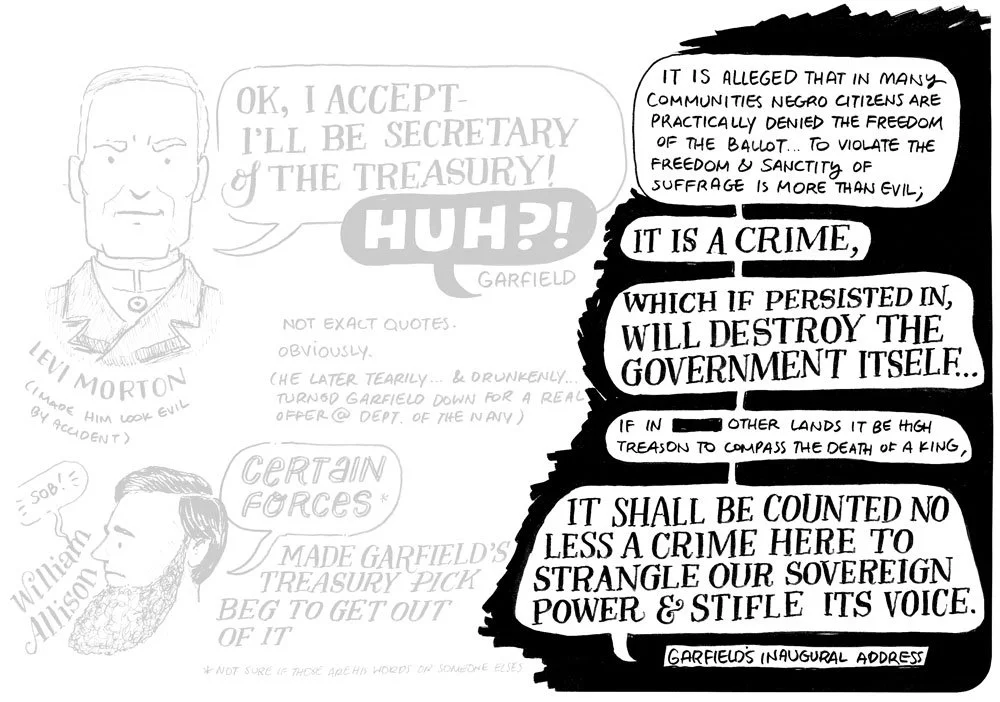
In his inaugural address, Garfield said:
“It is alleged that in many communities negro citizens are practically denied the freedom of the ballot… to violate the freedom and sanctity of suffrage is more than evil; it is a crime, which if persisted in, will destroy the government itself… If in other lands it be high treason to compass the death of a king, it shall be counted no less a crime here to strangle our sovereign power and stifle its voice.”
Readjuster Coalition
I’d never heard of the Readjuster-Coalition — a political party that united Virginia’s poor whites and Black citizens. A party based on class, not race. The mix of platform issues was interesting:
✓ pushing back on Virginia’s Reconstruction debt
✓ nope on poll taxes
✓ more public schools
And the figurehead was even more unexpected — 100 pound falsetto-voiced, flare pant-wearin’ ex-Confederate General William Mahone (“Little Billy”). My doodle does not do him justice.
Please stop reading, open a new browser, and do an image search.
I’ll wait.
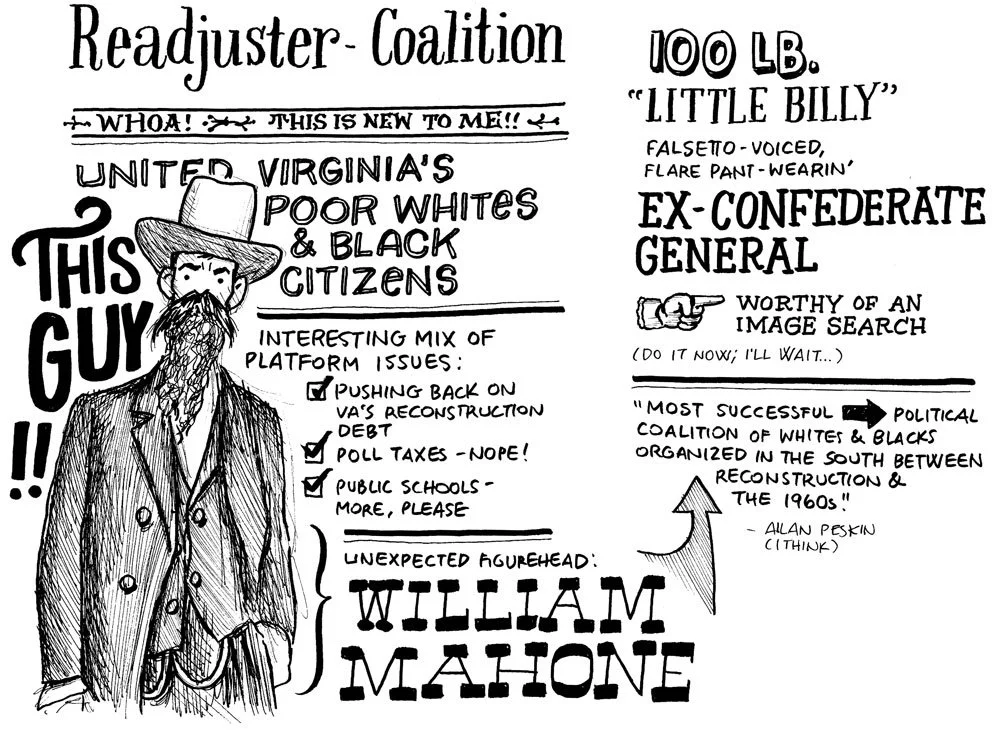
Allan Peskin (I think) said the party was the “most successful political coalition of whites and Blacks organized in the South between Reconstruction and the 1960s.”
Get your shit together, bub
I looooove the series Death by Lightning. (Here’s the trailer!) I know it didn’t 100% stick to history and I totally get that… but the one teensy disappointment was the lack of Julia Sand. (From a creative standpoint and the need to condense the story: I get it. From the standpoint that this woman had such an important impact on the fate of our country: not so much.)
In any case… Garfield is dying. Arthur is next up. He’s super-corrupt and not great and all the things.
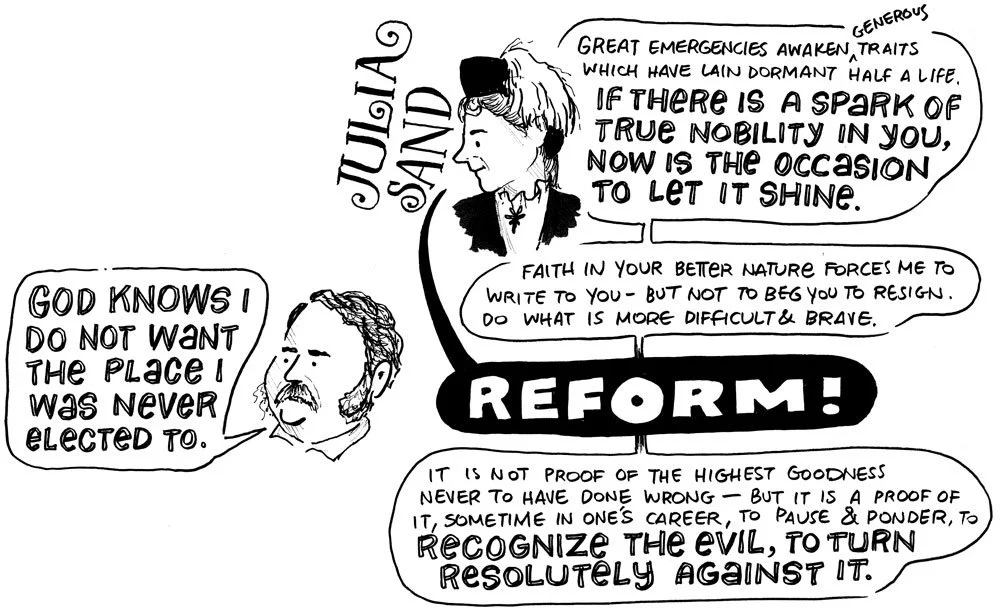
Julia Sand started writing to Chester Arthur and her influence changed everything:
“Great emergencies awaken generous traits which have lain dormant half a life. If there is a spark of true nobility in you, now is the occasion to let it shine. Faith in your better nature forces me to write to you — but not to beg you to resign. Do what is more difficult and brave. Reform! It is not proof of the highest goodness to never have done wrong — but it is a proof of it, sometime in one’s career, to pause and ponder, to recognize the evil, to turn resolutely against it.”
Let’s repeat that, louder for the folks in the back:
“…to pause and ponder, to recognize the evil, to turn resolutely against it.”
Theodore Roosevelt voted for him in his first presidential election
He was on his honeymoon with Alice, but took a break and “drove over to Norwich to deposit my first vote for President — for Garfield.”
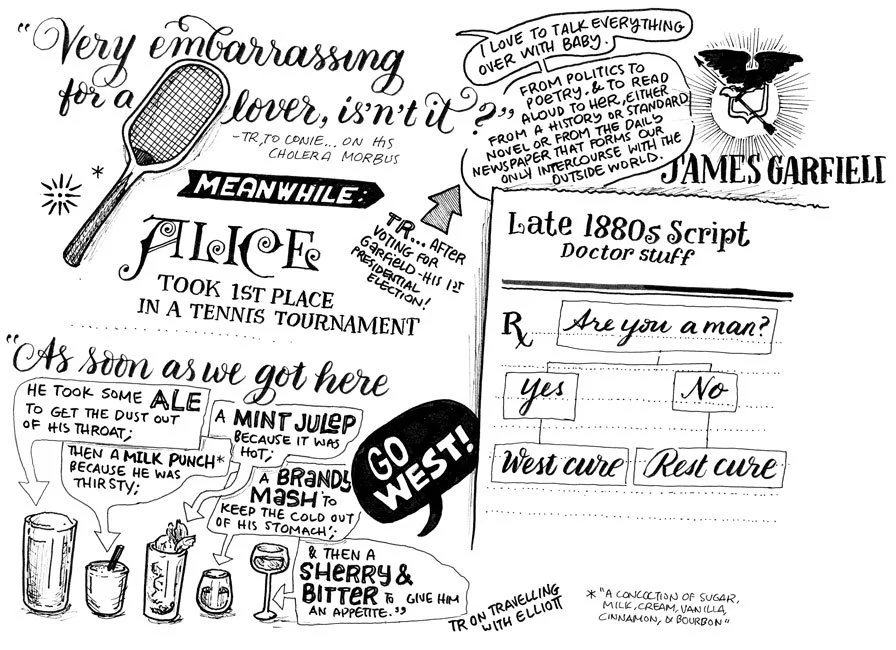
The Loves of Theodore Roosevelt: The Women Who Created a President, by Edward F. O’Keefe
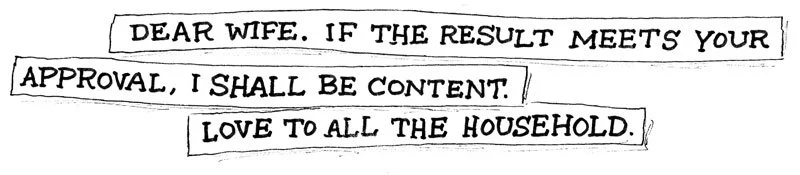
Love to all the household
When he received the nominate nomination, he sent a message to Crete: “Dear wife. If the result meets your approval, I shall be contented.”
This book inspired three other posts:
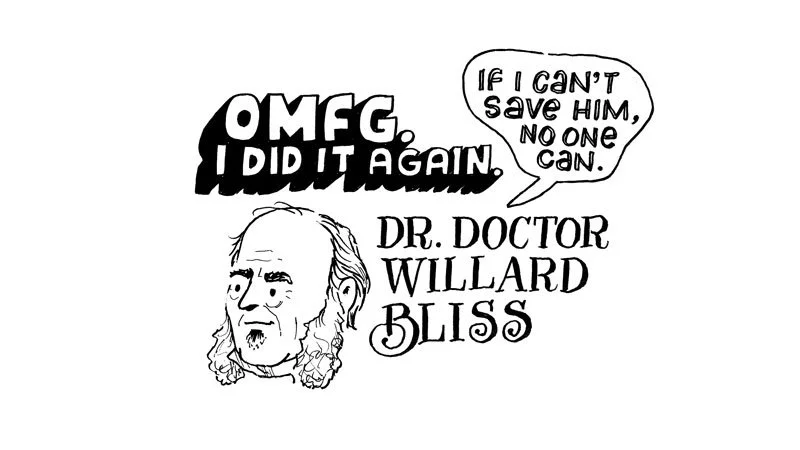
Following Bliss (My God! What is this?)
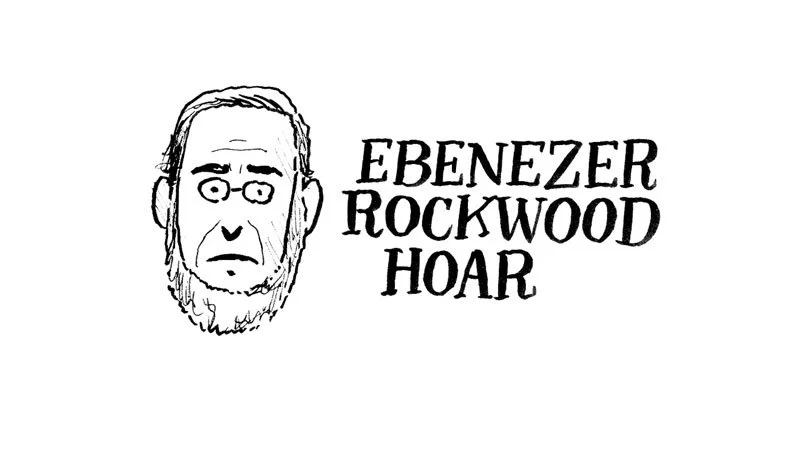
The Hoars and more (another genealogical adventure)
I love agitation (a collection of Garfield sound bites)
More posts like this:
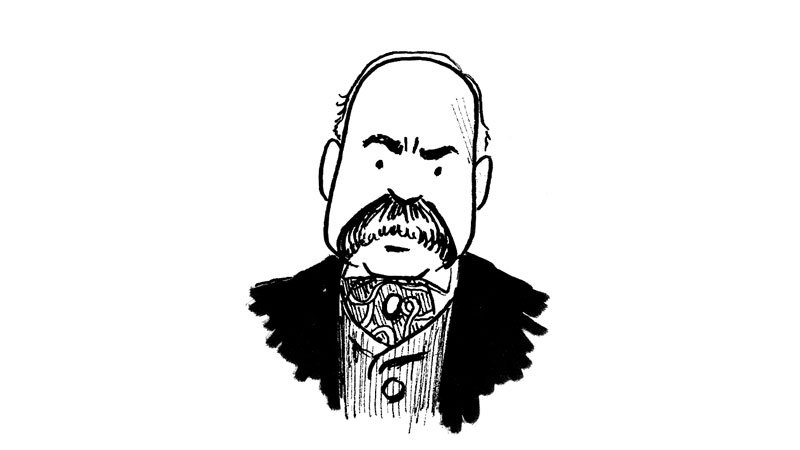







Could’ve done without him