
I just finished reading America’s Founding Son: John Quincy Adams, from President to Political Maverick by Bob Crawford, The Avett Brothers’ bassist. This book sounded fascinating but I hadn’t planned to read it yet, because my to-read stack is out of control.
Then I discovered I’m related to Presidents Adams. That changed everything.
I’m related to a lot of people. And I’ve read books about a lot of people. But this is the first time reading a book knowingly about someone I’m related to. Not only that, but I’ve read books by a lot of different authors. And I’ve attended a lot of concerts. But I don’t believe I’ve ever enjoyed someone’s music at a concert and also read their book. And certainly I’ve never seen someone in concert after reading their book about someone I’m related to. But The Avett Brothers are coming to town soon!

This made more sense in my head than it does here, but there’s no going back now! Everything was going to come together, but then it looked like I’m related to Bob Crawford. As far as I know, that’s not the case. I’m just related to everyone else I read about these days.
Flip through my sketchbook.
Then scroll through more doodles. As always, my doodles don’t necessarily highlight the most important parts of the book. And they are in no particular order. Certainly not chronological.
We shall put it on the table and we shan’t do anything
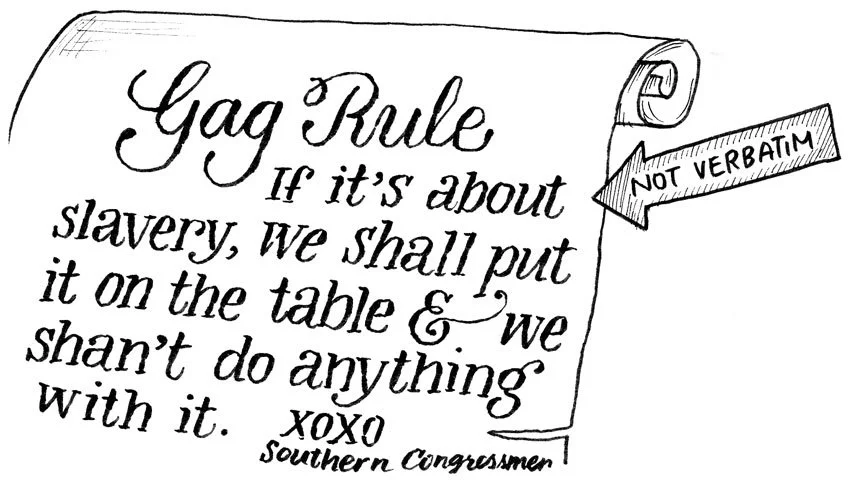
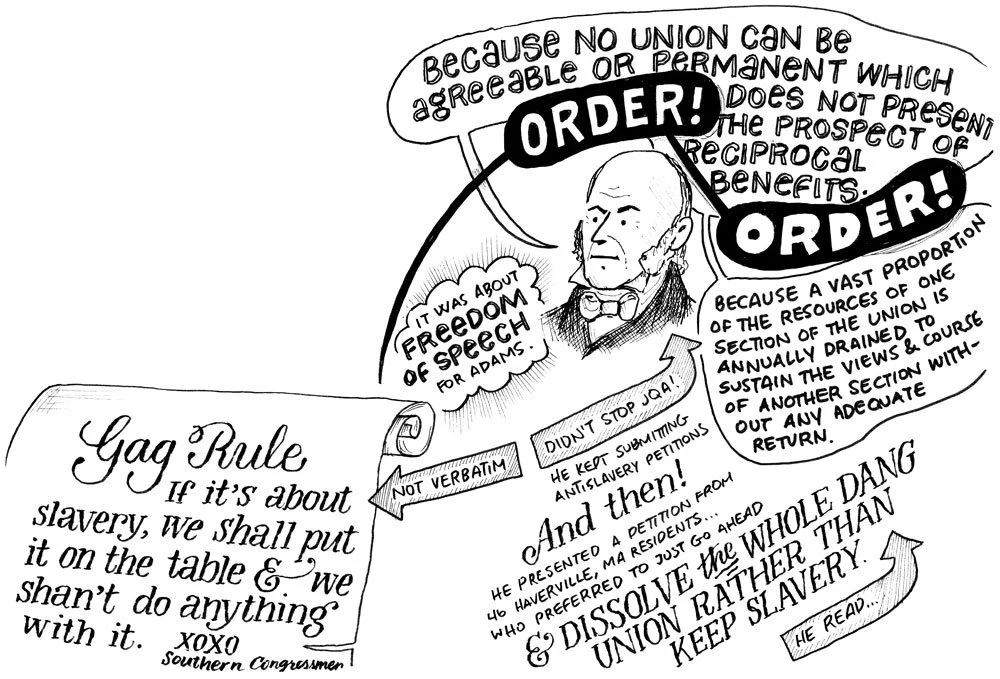
The Gag Rule spelled out “If it’s about slavery, we shall put it on the table and we shan’t do anything about it. XOXO Southern Congressmen.” Pretty sure that’s verbatim.*
For John Quincy Adams, this was about Freedom of Speech.
*It’s not.
Rufus King keeps popping up lately
He clearly needed to be doodled. Not easy, because William Rufus King and William Rufus, King of England appeared when I searched for visual references to draw from.
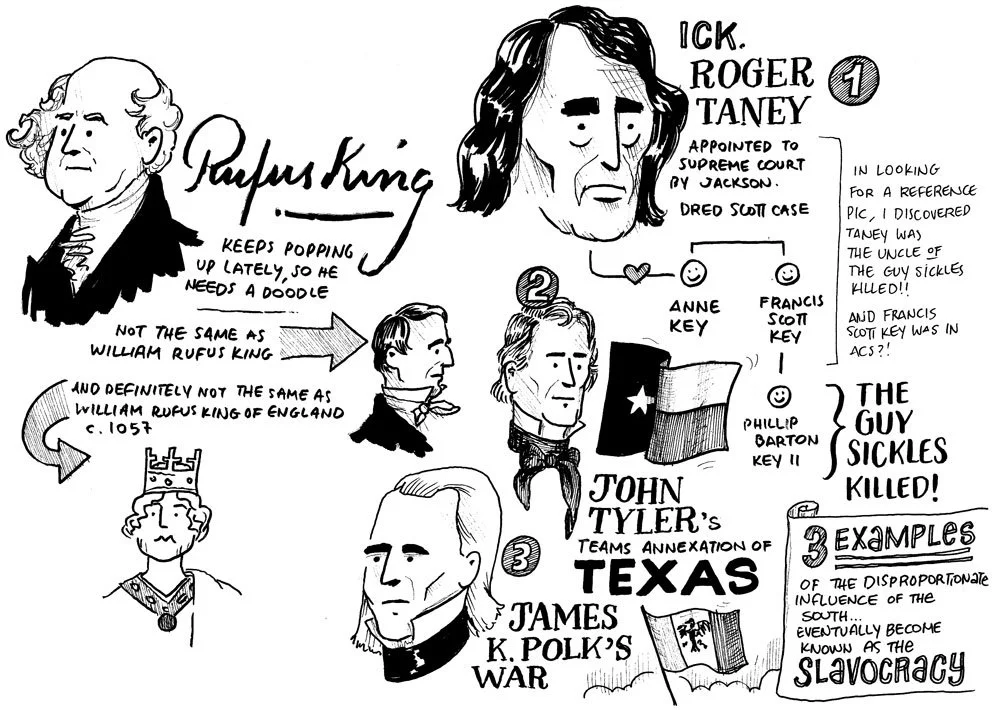
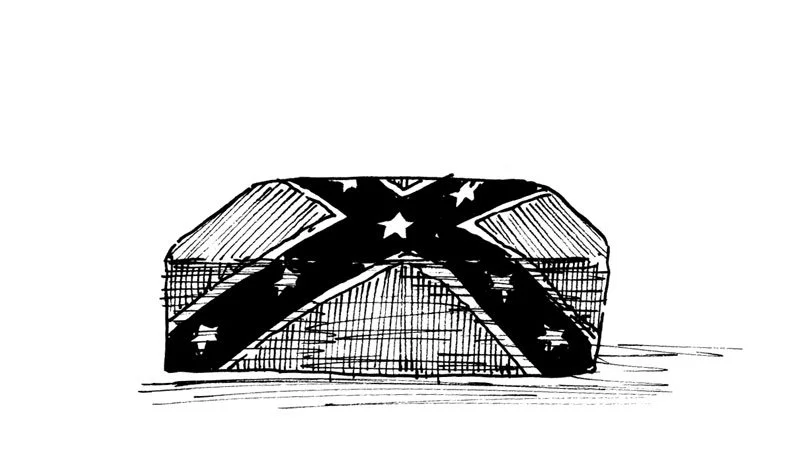
3 examples of the Slavocracy’s influence
Roger Taney (Dred Scott Case)
John Tyler’s annexation of Texas
James K. Polk’s war with Mexico
These are all big and important effects. Less big and important — Roger Taney was married to Anne Key, sister of Francis Scott Key…so they were aunt and uncle of the guy Daniel Sickles killed!
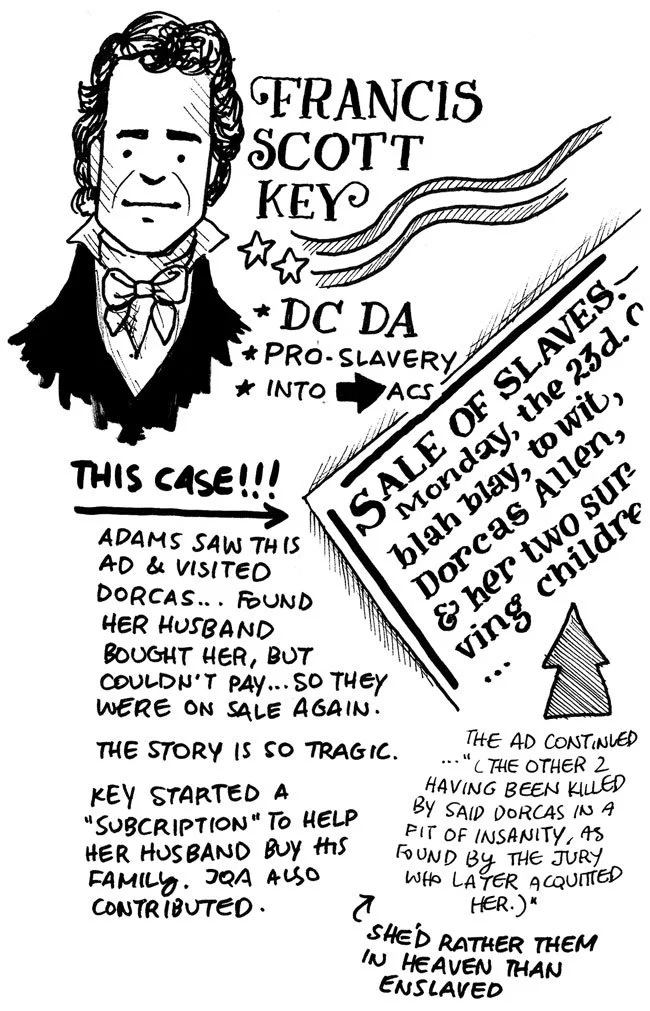
Francis Scott Key famously wrote The Star Spangled Banner. Less famously, he:
served as DC’s District Attorney
was pro-slavery
was into the ACS (American Colonization Society, which was an interesting collection of people who wanted to send freed Blacks to Africa, for either misguided benevolent reasons or selfish, greedy, opportunistic reasons)
started a “subscription” to help Dorcas Allen’s husband buy his family
I can’t square all of those bullet points.
Dorcas Allen was an enslaved woman who was promised her freedom, but then through a series of unfortunate deaths, was passed around to various family members and remained enslaved. She and her four children were sent to DC. Rather than have her children endure a lifetime of unimaginable cruelty, she killed the two youngest and tried to end her own life.
John Quincy Adams saw an ad for her and her two children (where it points out that she killed her kids “in a fit of insanity, as found by the jury who later acquitted her”) and was moved. He met with her husband and found that he’d bought her freedom but then was unable to pay. His family was for sale again. Key started a “subscription” to help her husband buy his family. Both Key and JQA contributed.
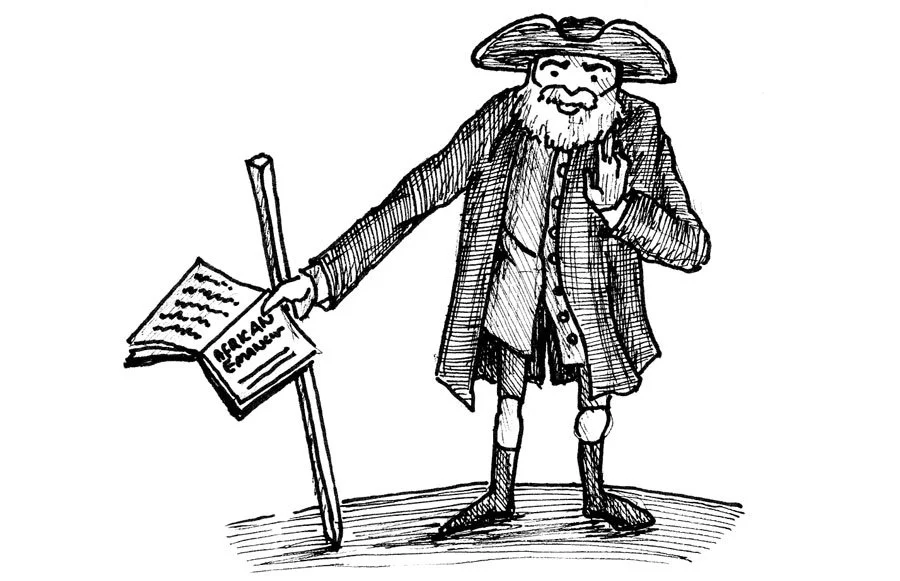
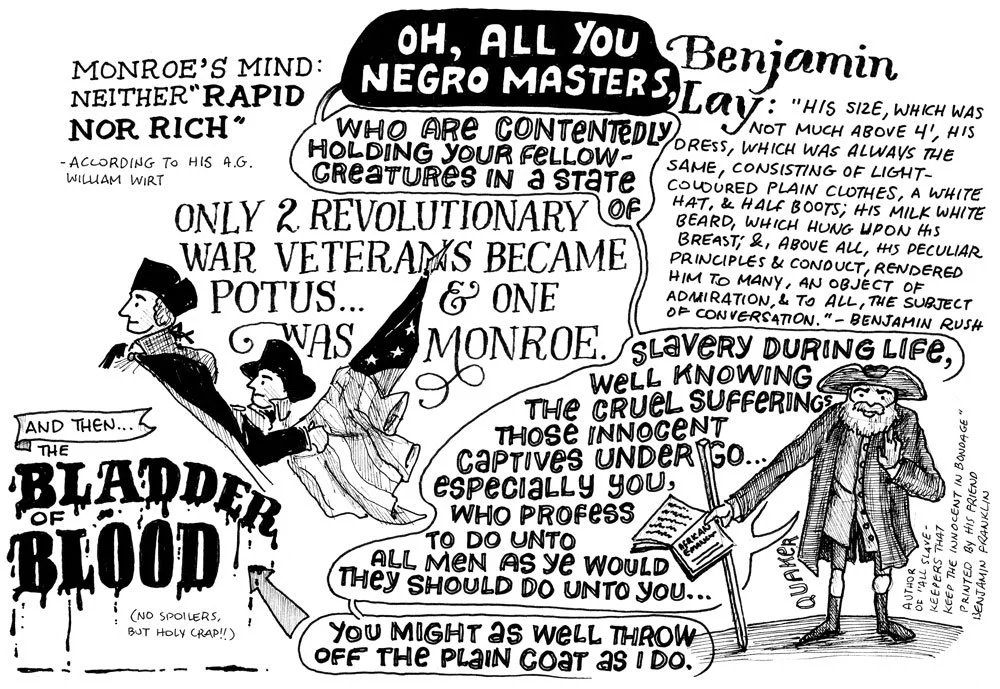
Benjamin Lay and the Bladder of Blood
OMG this guy! I don’t ever remember coming across him before. Benjamin Rush described him as such:
“His size, which was not much above 4', his dress, which was always the same, consisting of light-coloured plain clothes, a white hat, and half boots; his milk white beard, which hung upon his breast; and, above all, his peculiar principles and conduct, rendered him to many, an object of admiration, and to all, the subject of conversation.”
Lay was a Quaker and a staunch Abolitionist.
He published All-Slave Keepers that Keep the Innocent in Bondage; his friend Benjamin Franklin printed it.
And then… The Bladder of Blood, which is an incident I do not plan to tell you about (at least not right now) because I don’t want to spoil it. You’ll have to read about it for yourself.
Henry Clay was 6' 1" and red-haired
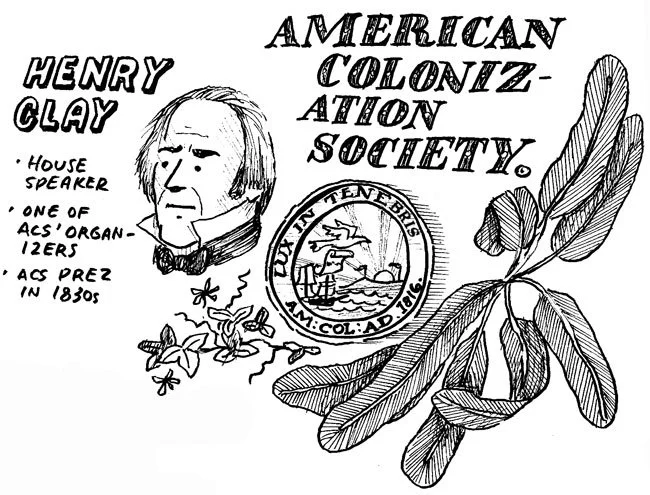
He was also one of the organizers of the ACS and its president in 1830s…
which I found interesting, given that he fathered children with a woman he enslaved. (When his wife caught him acting “more lovingly” toward that woman than “suited her feelings,” he sold her.*
*The enslaved woman, not his wife.

The Vice President’s Black Wife: The Untold Life of Julia Chinn, by Amrita Chakrabarti Myers
Maine is less than half the size of Missouri!
On the American map in my geographically-challenged brain, it’s quite the opposite. In fact, Fake Maine is three times larger than Imaginary Missouri.
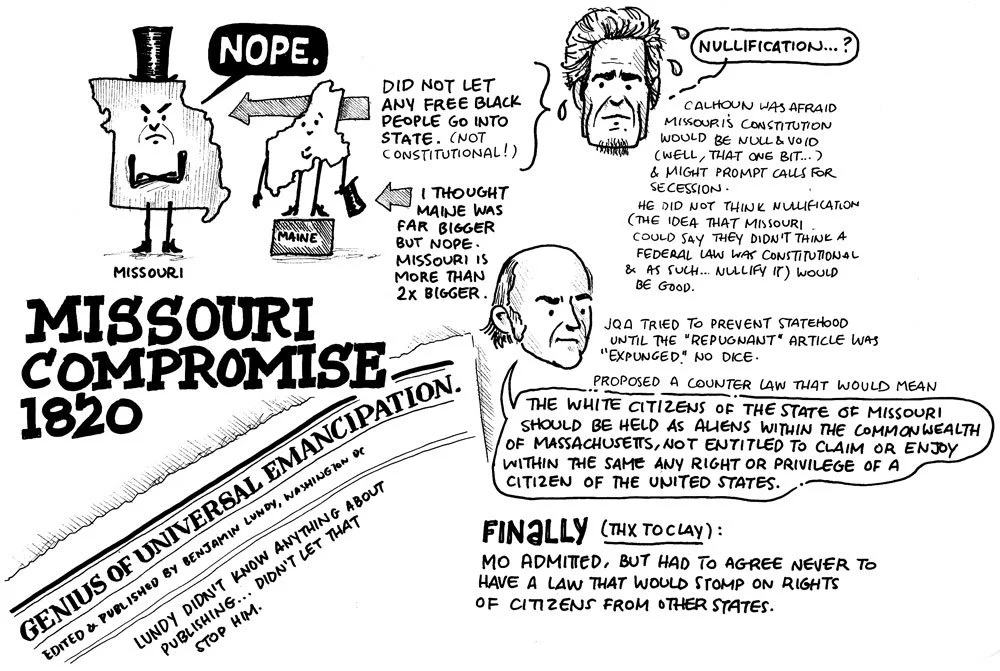
Also, Missouri didn’t let free Black people into their not-quite-yet-a-state, which was clearly not constitutional. John Quincy Adams tried to prevent statehood until the “repugnant” article was “expunged.” No dice. Then he proposed a counter law that would mean “the white citizens of the free state of Missouri should be held as aliens with the commonwealth of Massachusetts, not entitled to the claim or enjoy within the same any right or privilege of a citizen of the United States.”
[my jaw dropped]
Thanks to Henry Clay, Missouri was admitted after agreeing never to implement a law that would stomp on the rights of citizens from other states.
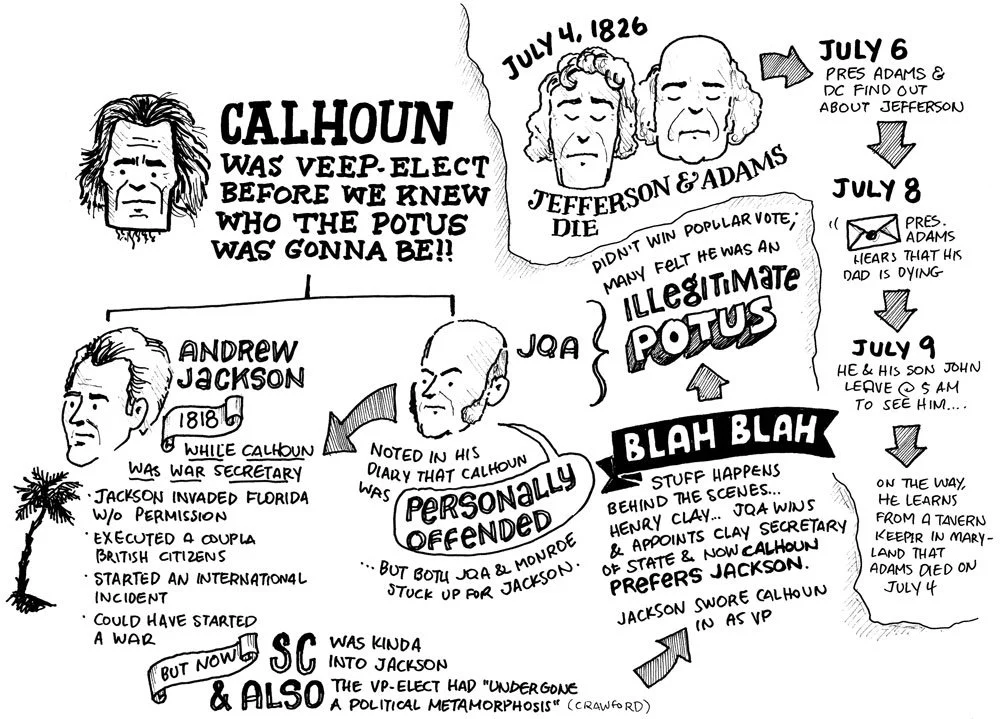
Didn’t know his dad died for five days!
July 4, 1826 — Thomas Jefferson and John Adams died within hours of each other
July 6 — President John Quincy Adams (and also DC) finds out Jefferson died two days earlier
July 8 — President Adams finds out his dad is dying
July 9 — He and his son John leave at 5 a.m. to go see him… and on the way, they learn from a tavern keeper in Maryland that Adams died five days previous
Crawford pointed out that in 1824, it was a “vibes election.”
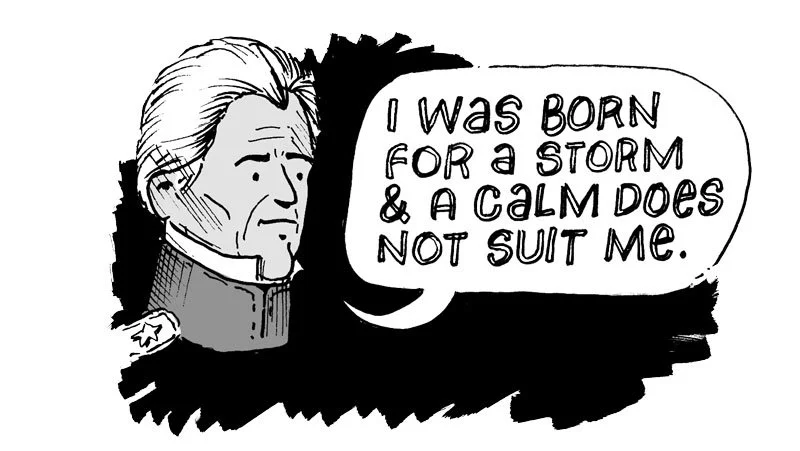
Jackson’s vibe: The future! Westward! The people — not elites! Fresh! Different!
JQA’s vibe: Not any of that. He was the past… (even though they were both born the same year, 1767).
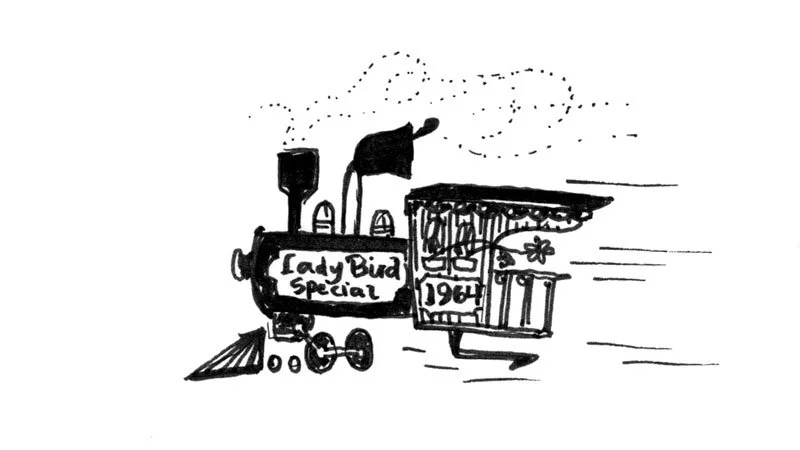
They knew Calhoun was VEEP before they knew who was POTUS
Might be Andrew Jackson:
Kinda awkward. When Calhoun was War Secretary, Jackson invaded Florida without his permission. Executed a coupla British citizens. Started an international incident and almost a war. As one does.
But also South Carolina was kinda into Jackson now…? And Calhoun had already “undergone a political metamorphosis” (Bob Crawford’s words; we’ll get back to that in a minute).
Or maybe John Quincy Adams:
He knew that Calhoun was offended by Jackson’s going-rogue-shenanigans. Both he and President James Monroe stuck up for Jackson at the time.
He didn’t win the popular vote or the Electoral College.
Buuut also, there was some behind the scenes stuff… promises to Henry Clay that he’d be Secretary of State.
Blah blah blah… JQA wins. Or “wins.” He’s president.
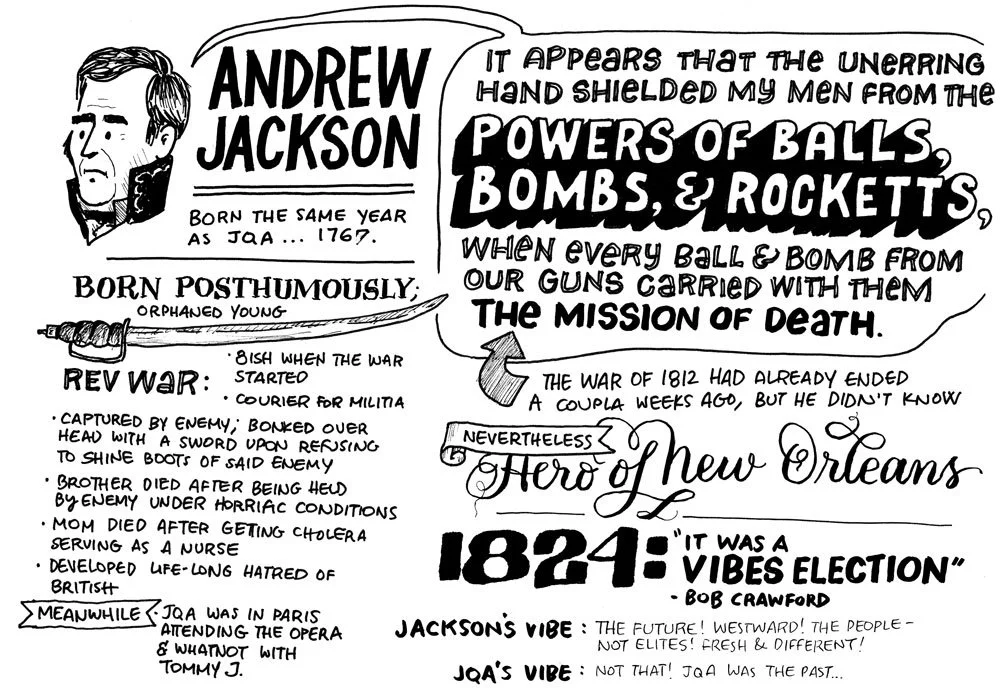
FYI: Andrew Jackson was the Hero of New Orleans for some War of 1812 stuff he did … after the war ended. He hadn’t gotten the memo yet. War Hawk and never-soldier (as far as I know) Henry Clay wasn’t a fan of Jackson’s, saying “I cannot believe that killing 2,500 Englishmen at New Orleans qualifies for the difficult and complicated duties of the chief magistracy.”
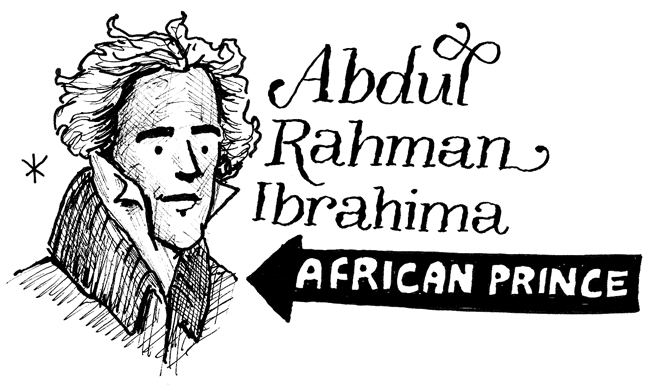
Prince Abdul
26-year-old African Prince Abdul Rahman Ibrahima was taken prisoner in 1788 after attacking a rival tribe in Timbuktu.
He was sold to plantation owner Colonel Thomas Foster
The Sulton of Morocco found out; requested his release
President John Quincy Adams stepped in (or probably his administration)
Got his emancipation, on the condition that he return to Africa
He visited Adams at The President’s House… tried to get his five sons and eight grandkids released.
Couldn’t free them all.
Died in 1829 after getting a fever in Liberia.
After some time, the American Colonization Society got some of his kids freed.
I did not do him justice; see a better depiction here…. along with more detail. Also, you’ll note from the fact that this started when he was in his 20s and ended when he had grandkids — this took place over a significant amount if time.
The Benjamin Franklin & heartbreak
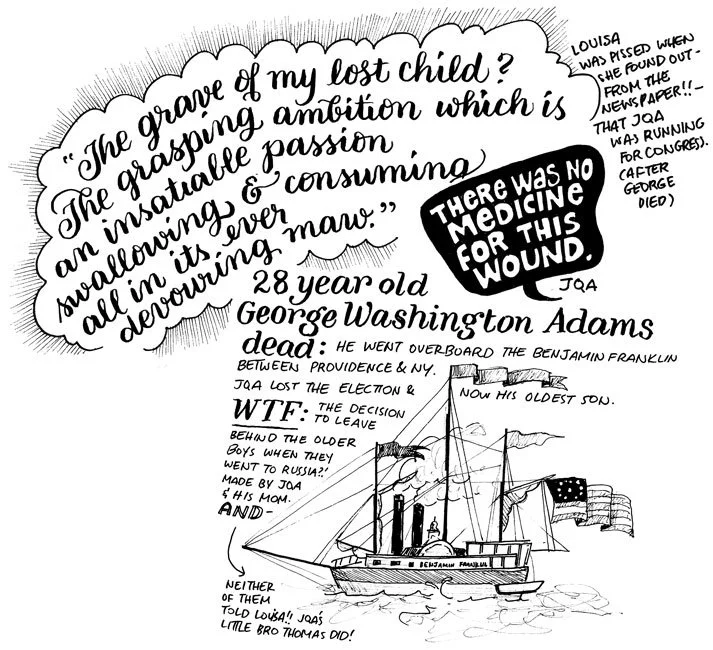
JQA and Louisa’s older two sons were left behind when they went to Russia. This decision was not made by JQA and Louisa, but JQA and his mother Abigail and are you freaking kidding me?! Yes, I understand that Abigail had first hand experience in deciding whether or not to bring one’s family when one is stationed overseas. But to cut out the boys’ mom entirely!?
Yikes. I do love Abigail, but this is a strike against both her and JQA in my book.
Not only did they not loop Louisa in on the decision making, they did not loop her in. Full stop. JQA’s little brother Thomas told her. She got the news from her freaking brother-in-law that two of her children would not be joining them in Russia.
All of that aside, there were also addiction issues in Abigail’s family and both of the older boys fell victim.
28-year-old George Washington Adams went overboard The Benjamin Franklin, it is believed by suicide.
Louisa was inconsolable, even more so when she found out — from the newspaper! — that her husband was running for Congress after George died: “The grave of my lost child? The grasping ambition which is an insatiable passion swallowing and consuming all in its ever devouring maw.”
Fast forward five years, they found out that 31-year-old John Adams II was “extremely ill”. JQA had to take the same boat George died on to go see his other dying son. He arrived just in time; John died at 4:30 a.m. the next day.
As the grieving father said after George died: “there was no medicine for this wound.”
Calhoun transformed!
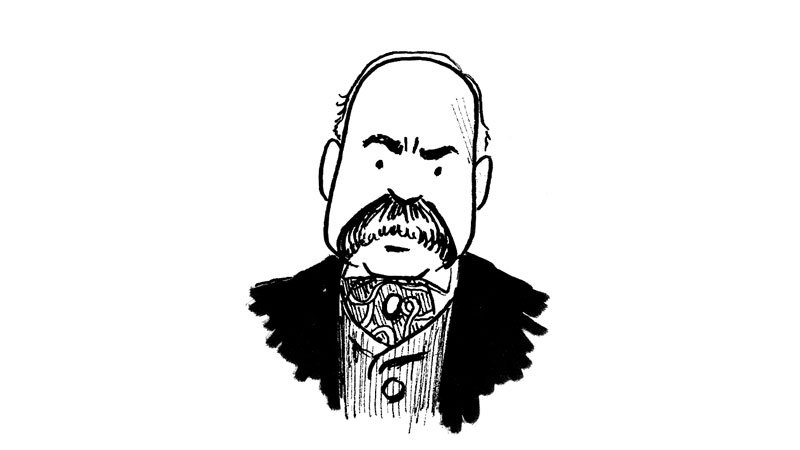
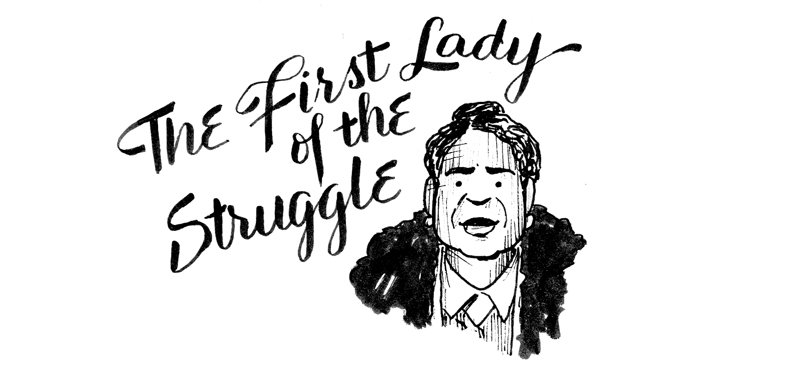
I do not like John C. Calhoun.
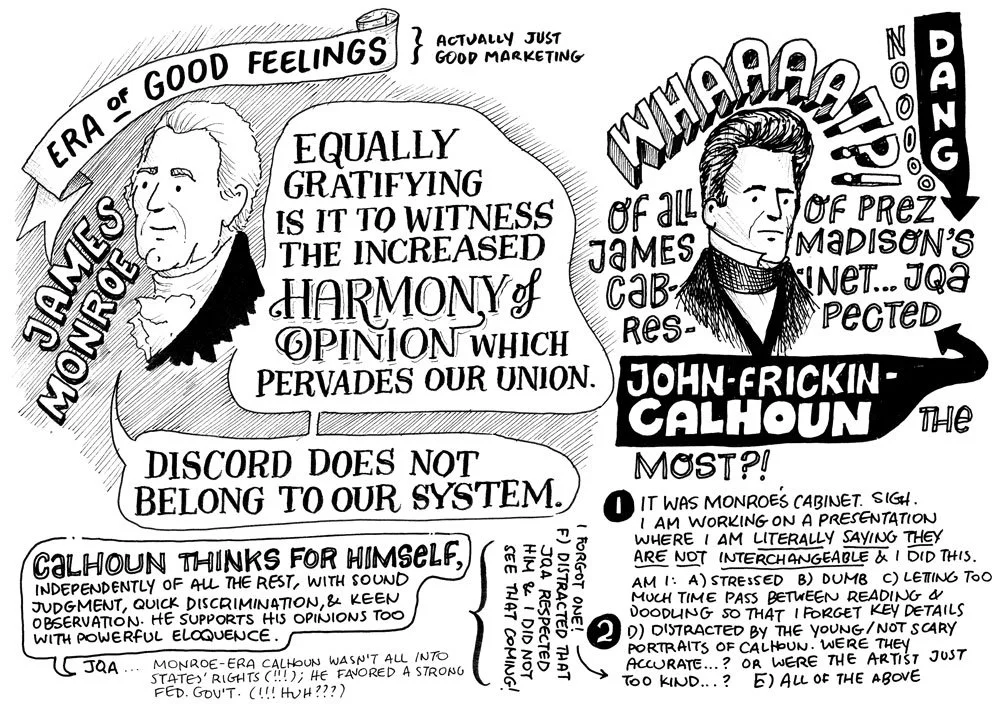
It shocked me to learn that of all of President James Madison Monroe’s cabinet, that’s who John Quincy Adams respected the most. He wrote: “Calhoun thinks for himself, independently of the rest, with sound judgment, quick discrimination, and keen observation. He supports his opinions too with powerful eloquence.”
Apparently, Monroe-Era Calhoun wasn’t all into states’ rights. He favored a strong central government.
It also shocked me that while working on a presentation about James Madison, wherein I explain how James Madison and James Monroe are not interchangeable, I interchanged them. Even more so because right there in the sketchbook, I’d clearly doodled that James Monroe was president. And again even more because when I just went to find the clip of my presentation to share with you and discovered it was actually in my presentation about James Monroe… which I haven’t given yet. That’s not until May 8. Join me to see if I manage to get through an hour without mixing these guys up! You can register here, if you want.
Calhoun eventually pivots. He’d supported strong federal tariffs, which were not popular in South Carolina. The southern states realized they didn’t have to follow laws they didn’t like. Etc., etc., etc. He undergoes a complete metamorphosis, politically and physically.*
JQA said:
“I anticipated that he would prove an ornament and a blessing to his Country — I have been deeply disappointed in him and now expect nothing from him but evil.”
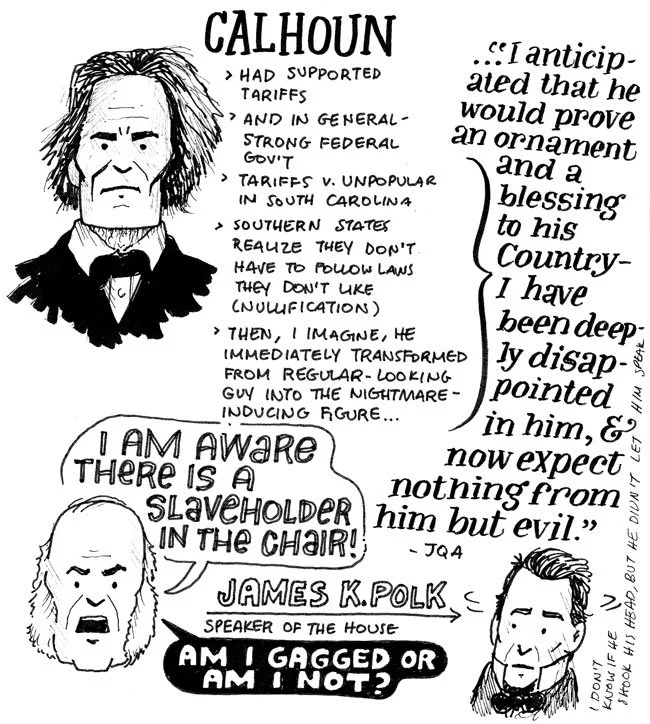
*OK, I don’t know if he simultaneously went through both transformations, but I envision him going from this to this at the same pace that JQA went from thinking Calhoun was worthy of respect to expecting nothing but evil. Calhoun shed his old skin like a snake and became the stuff of nightmares, is how I chose to believe it happened.
Also, this book is beautifully illustrated by Garrett Morlan, though I believe strongly it should come with a warning before page 13 so you can brace yourself prior to seeing Calhoun’s disturbing mug.
Louisa worried for her husband
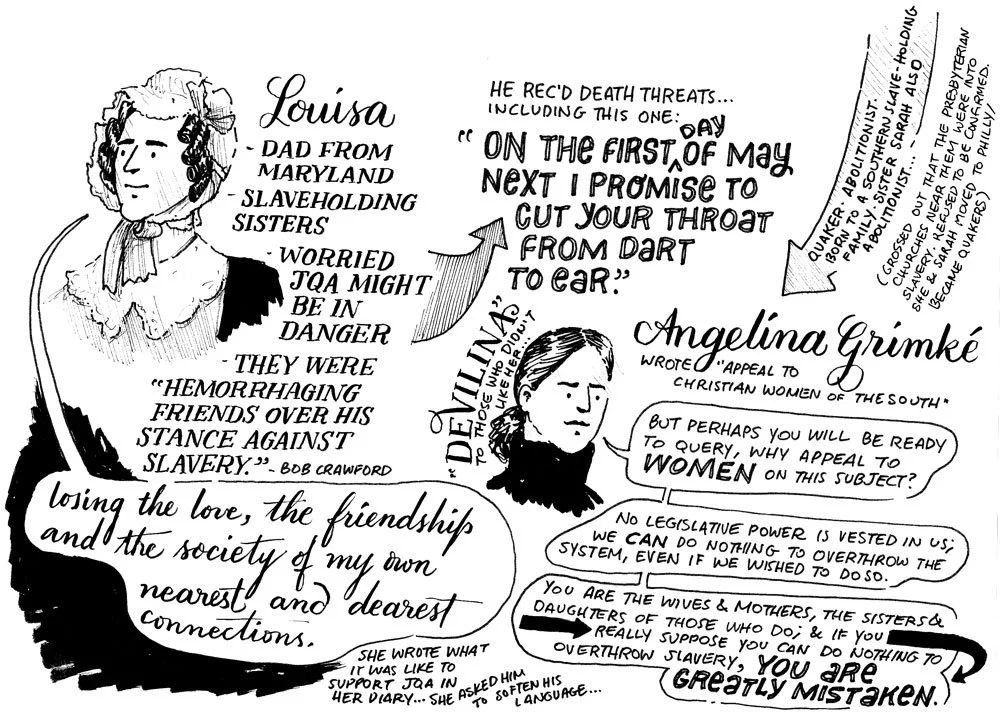
While Louisa was born in a England, her dad was from Maryland
Her sisters were slaveholders
She worried for her husband’s safety; he’d received death threats, including one that vowed “on the first day of May next I promise to cut your throat from dart to ear”
Crawford points out “they were hemorrhaging friends over his stance against slavery.”
Supporting her husband meant “losing the love, the friendship and the society of my own nearest and dearest connections.”
Angelina Grimké
(Or Devilina to those who didn’t like her)
Born into a Southern slaveholding family
Super grossed out that Presbyterian churches near them were into slavery and she refused to be confirmed
Became a Quaker
And an Abolitionist (so did her sister)
Wrote Appeal to Christian Women of the South:
“But perhaps you will be ready to query, why appeal to women on this subject? No legislative power is vested in us; we can do nothing to overthrow the system, even if we wished to do so. You are the wives and mothers, the sisters and daughters of those who do; and if you really suppose you can do nothing to overthrow slavery, you are greatly mistaken.”
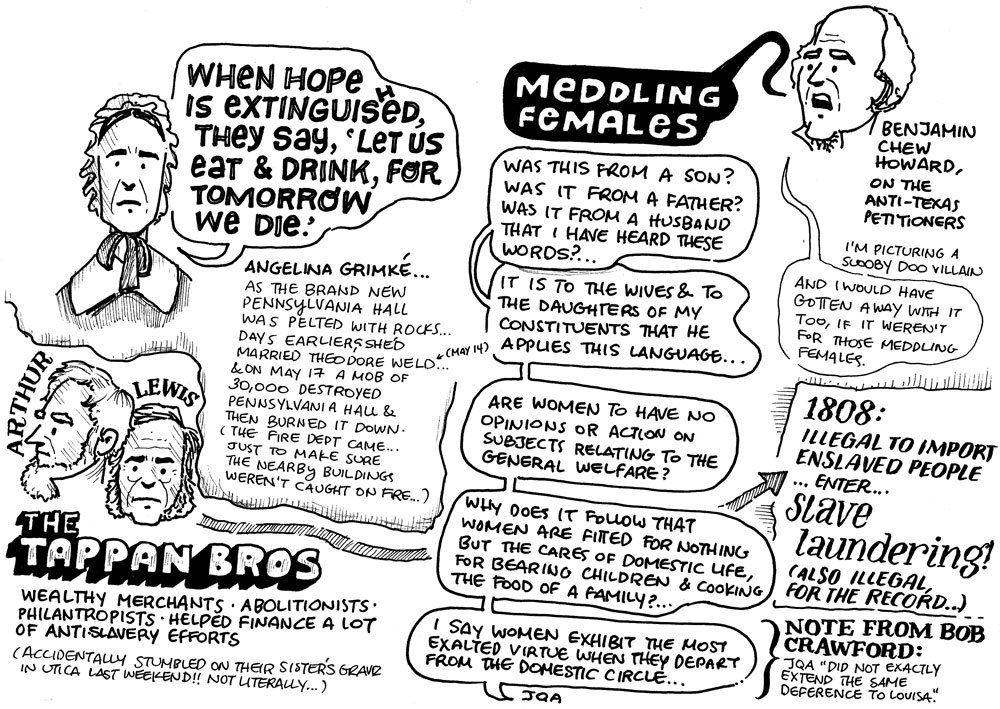
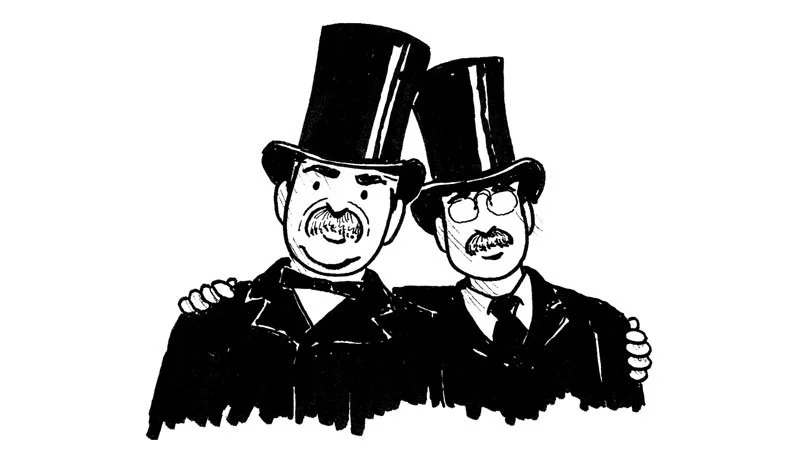
Tappan bros
The Tappan brothers were wealthy merchants, abolitionists, and philanthropists who helped finance a lot of anti-slavery efforts.
Shortly after reading about them, I accidentally visited Arthur Tappan’s daughter’s grave! New York Governor Horatio Seymour’s brother John Foreman Seymour (stay with me!) was married to Frances Antill Tappan Seymour. I didn’t go there to see her — in fact, I was just going to the zoo and discovered that Roscoe Conkling was buried nearby and dragged my family to find him. Frances and Roscoe are spending eternity kinda close to each other.
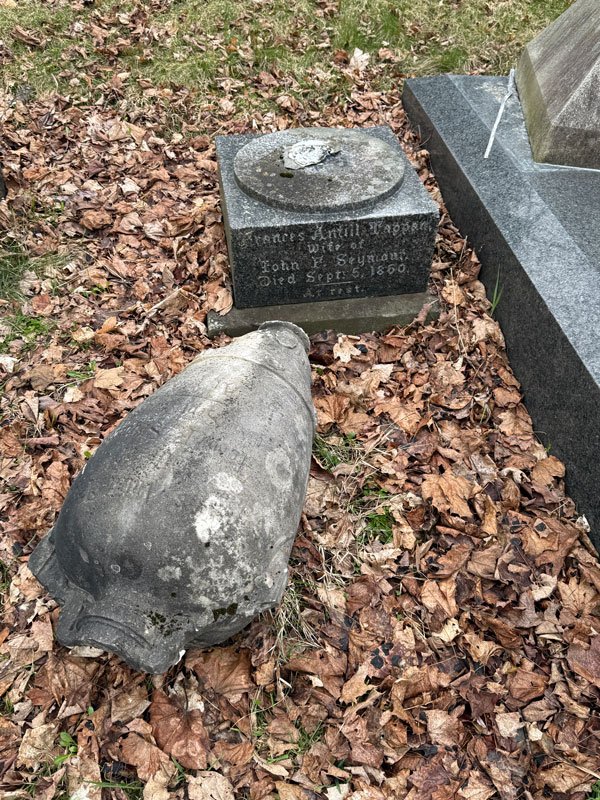
I didn’t break this!
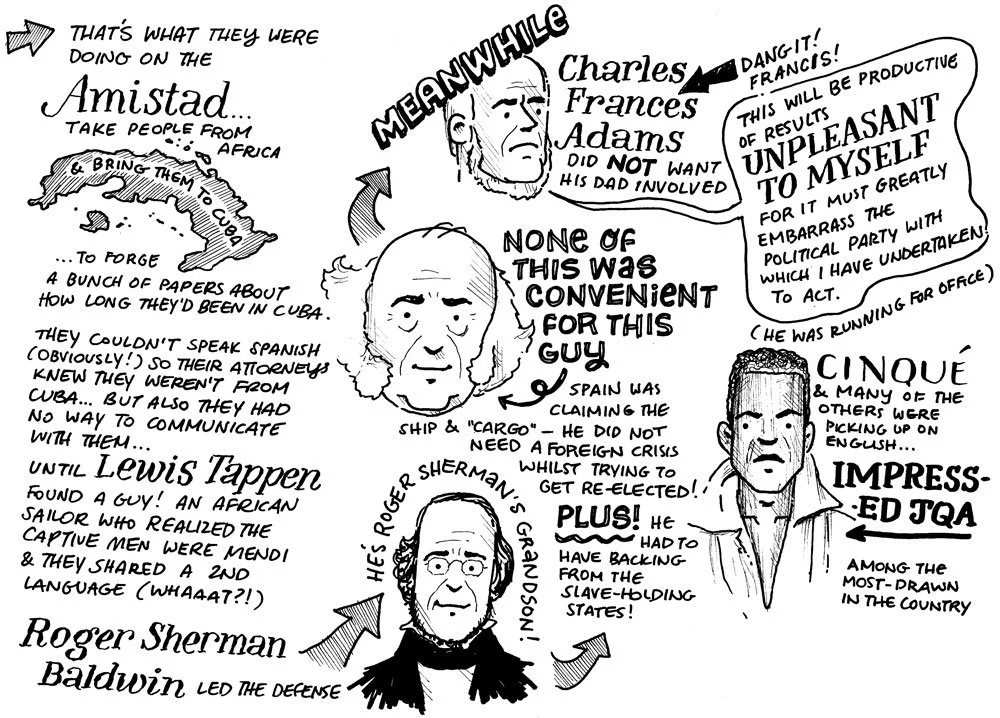
None of this is as important as her uncle, Lewis Tappan, or John Quincy Adams’ influence on the Amistad trial.
I didn’t realize (or perhaps remember) that the whole Amistad thing was basically slave laundering. It wasn’t legal to bring over enslaved people from Africa anymore, so that put an end to that.
Except it didn’t.
They’d just take people from Africa and bring them to Cuba, where they’d forge a bunch of papers and there you go.
Except these guys fought back. Skipping through the details (just read the book), but they didn’t speak Spanish so the whole Cuba thing was obviously not true.
Their own attorneys couldn’t communicate with them — until Lewis Tappan found a guy! An African sailor who realized the captive men were Mendi and they had a shared second language.
Roger Sherman Baldwin (Roger Sherman’s grandson!) lead the defense.
Cinqué, who lead the revolt, impressed JQA. He was also among the most-drawn people in the country! Learn more about Cinqué here.
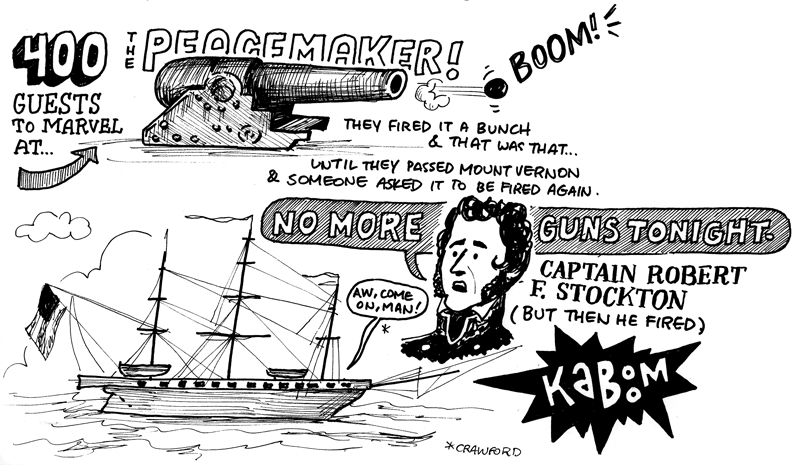
USS Princeton!
When I turned the page in Founding Son and saw the USS Princeton?! I was ecstatic.
Then I reflected on how tragic and horrifying it was and felt like a complete jerk.
But here we are. I’m a jerk. But an ecstatic jerk.
This is one of those unbelievable stories and every time it comes up, I learn something new. (Here’s the first time I posted about it, way back when.)
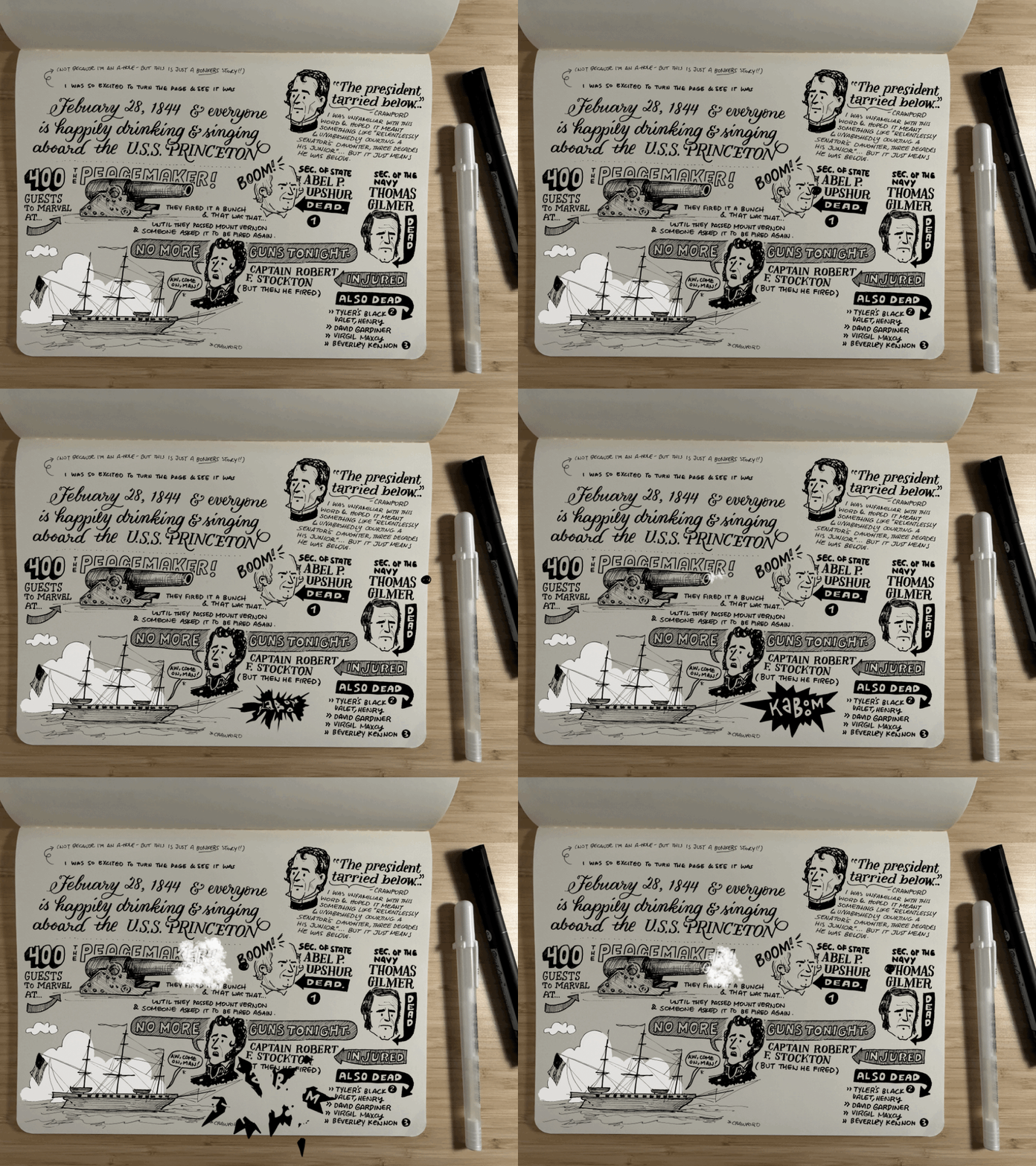
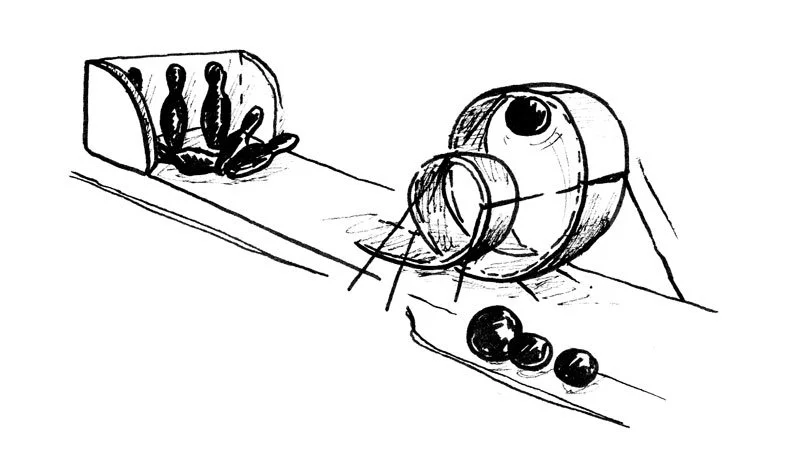
Four hundred guests (high-ranking government officials and other Very Important People) floated down the Potomac aboard the USS Princeton to see the “Peacemaker”, merrily drinking, singing, and celebrating. The “Peacemaker” was a big-ass-long-range-wrought-iron gun. Obviously. It was fired a bit. Then Captain Robert F. Stockton said “no more guns tonight”. He was pressured to fire again when they passed Mount Vernon.* And so he did. (I read elsewhere that he may have thought he had an order from the Secretary of the Navy, Thomas Gilmer…?)
In any case, the Peacemaker exploded, killing:
Secretary of the Navy, Thomas Gilmer
Secretary of State, Abel P. Upshur**
President Tyler’s Black valet
David Gardiner***
Virgil Maxcy
Beverley Kennon
Among the injured were:
Captain Robert F. Stockton****
Senator Thomas Hart Benton
Not injured was:
President John Tyler, because he “tarried below” (Crawford’s words). I was unfamiliar with that term and hoped it meant something like “relentlessly and unabashedly courting a senator’s daughter, three decades his junior”. It does not.
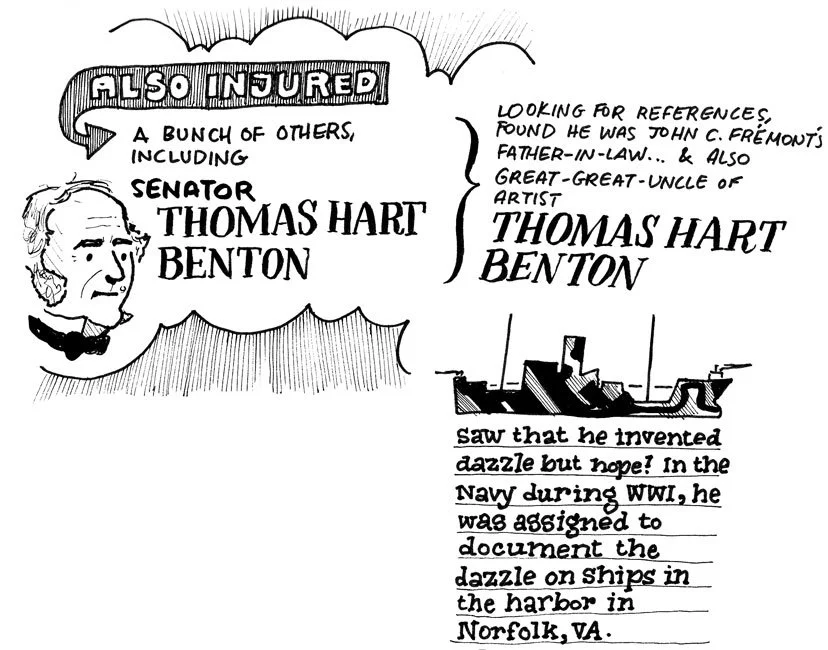
TANGENT
Was Senator Thomas Hart Benton, who was injured during the explosion, related to the artist Thomas Hart Benton? Indeed! That’s his great-great-nephew. Looking for a picture of him, I saw he invented dazzle and got so excited! (Even considered trying to dazzle my doodle of the USS Princeton, because that seems like an excellent use of my time.) Unfortunately, he did not invent dazzle ship camouflage. Bummer. He painted dazzle ships. Not painted the dazzle on the ships, but dazzled ships entered the harbor and he would paint them. That was his assignment in the Navy.
I’d like to retract the “bummer”. This is actually pretty cool! Really freaking cool, as a matter of fact.
What the hell. Let’s dazzle the USS Princeton:
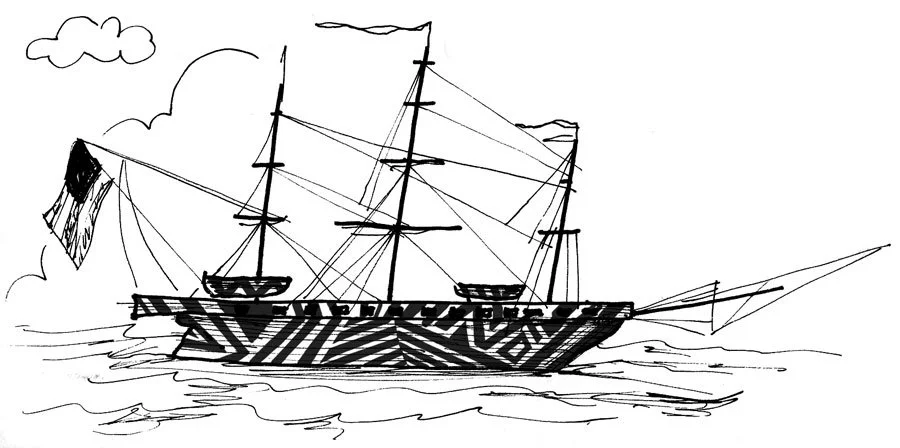
*I also stumbled on USS Mount Vernon, which was dazzled.
**When looking for pics of Upshur, I came across USS Upshur and USNS Upshur. I don’t know about you, but if I die on a specific type of vessel, I have zero interest in that type of vessel being named after me. Turns out, both were named for different Upshurs and neither for him. (In fact, one wasn’t even an Upshur... his mom was and she had him change his name because of the Navy history with her name.
***Tyler went ahead and married his daughter.
****This guy seems fascinating and I need to dig into him more. Liberia?! Pirates?!
(I feel fine)
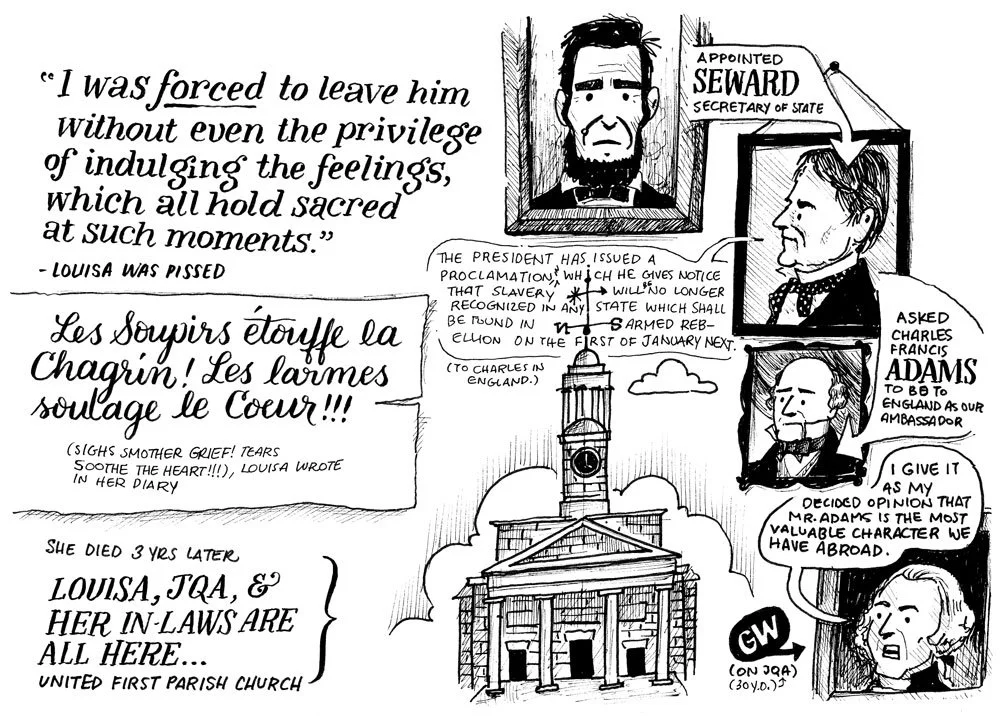
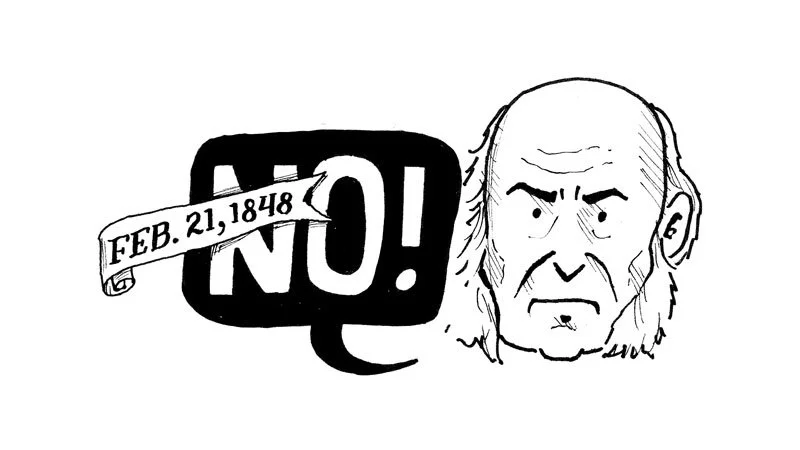
On February 21, 1848, John Quincy Adams was at work. He screamed “NO” about something he disagree with, his hands started shaking, he tried to talk, and fell over. They carried him to the Speaker’s Chamber where he was said to have whispered “This is the end of the end of the earth, but I am composed…” which planted an R.E.M. earworm, resulting in my accidentally starting to write out “It is the end of the world as we know it…” and, what the hell, I got too far to fix it.
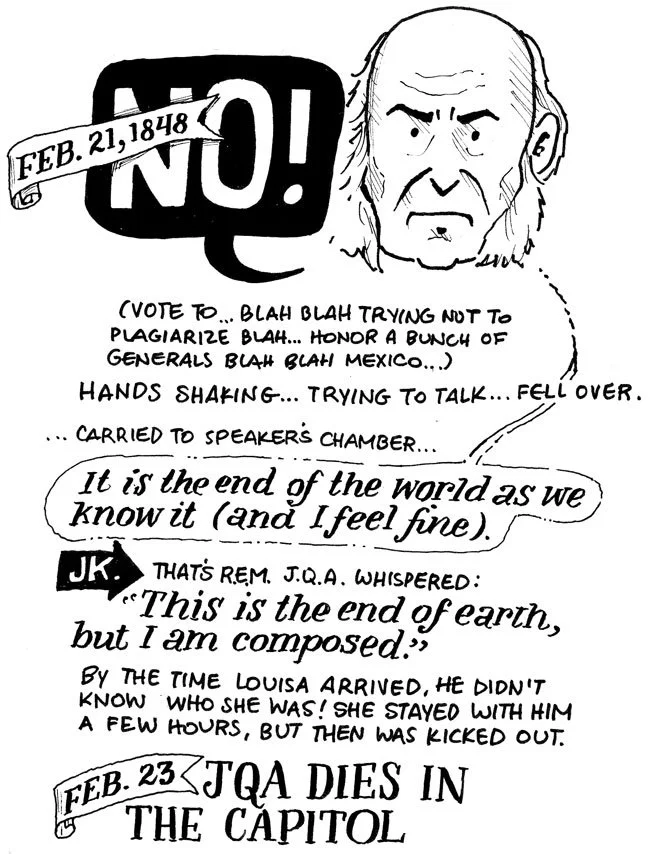
Worse than me mistakenly making it seem like JQA wrote R.E.M. lyrics — by the time Louisa arrived, her husband didn’t even recognize her. She spent a few hours with him and then those a-holes kicked her out. He died on February 23.
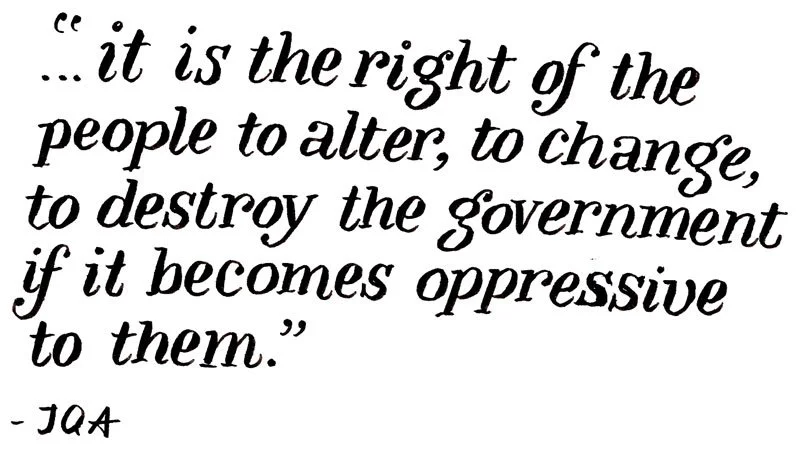
Let’s end with a reminder from John Quincy Adams:
“it is the right of the people to alter, to change, to destroy the government if it becomes oppressive to them.”
Have you read America’s Founding Son?
Let me know what you thought in the comments below.
WANT MORE JQA?
Join me June 12 at 10:30 a.m. EST for a virtual presentation, featuring even more doodles of JQA (including, but not limited to, him skinnydipping in the Potomac). Or register, and watch at your leisure.
PS
I’m eternally grateful that this book inspired me to:
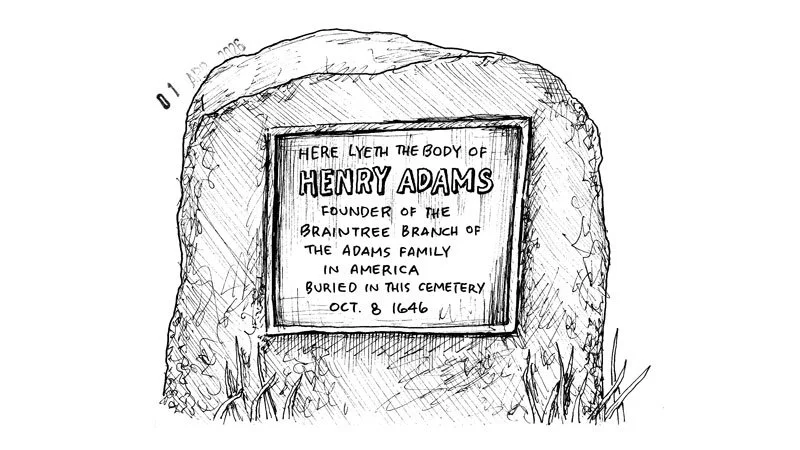
Explore Henry Adams, a mutual ancestor (of me and Presidents Adams, not me and Bob Crawford) … where I discovered I roll up to Henry Adams not one way, but three freaking different ways (what the fork?!)
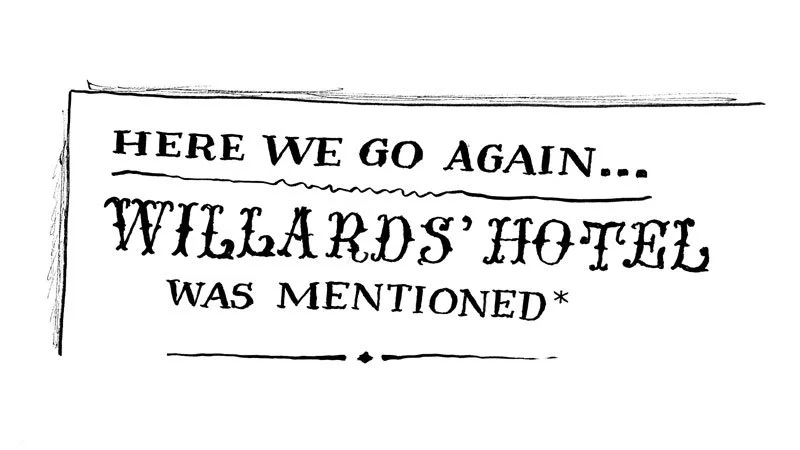
Dig into the Willard Hotel (finally!) and see if I’m related to the guys who ran it. The things I learned!!
More posts like this:






Mrs. Ex President T