
Just finished reading: American Lion
American Lion: Andrew Jackson in the White House, by Jon Meacham has been patiently sitting on my shelf for three years, ever since I picked it up at a library book sale where I swore I’d only buy a couple of books.
Just like the last two books I read, I reprioritized this one due to my upcoming Andrew Jackson presentation. I read about Jackson years before I started doodling my way through the presidents. I needed some fresh doodles at my disposal!
Giddy up!
Before reading this book, I thought Jackson was a violently hotheaded guy who did some incredibly unspeakable terrible things but also sometimes he was a decent guy, too. A loyal friend and husband, for example. And yeah, he did some incredibly unspeakable terrible things and was loyal friend and husband — but he’s more interesting than that, with more nuance. (To be clear — that does not in any way negate the incredibly unspeakable things.)
Flip through my sketchbook.
Then scroll through more doodles. As always, my doodles don’t necessarily highlight the most important parts of the book. And they are in no particular order. Certainly not chronological.
If you watch until the end, you get to see my tripod topple over. That’s never happened before and it made me laugh, so I didn’t edit it out. This is the kind of high-quality production you can expect over here.
Lewis & Rachel & Andrew
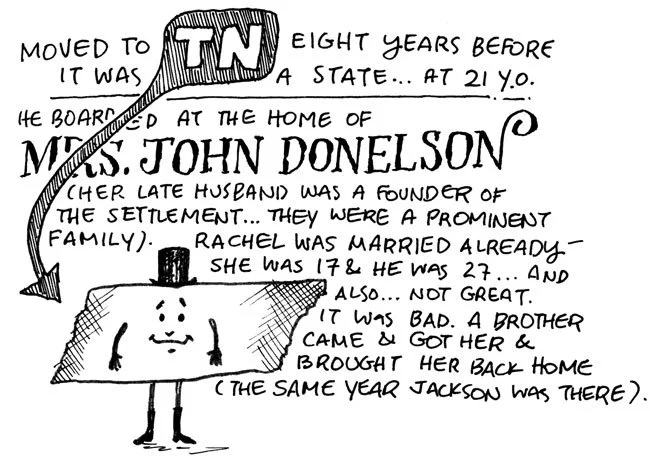
21-year-old Jackson moved to Tennessee eight years before it became a state:
He boarded at Mrs. John Donelson’s home.
Her late husband was a founder of the settlement; they were a prominent and wealthy family.
Their daughter Rachel married 27-year-old Lewis Robards when she was 17.
He was … not great. Their marriage was terrible—so terrible that her brothers went and got her, and brought her back home (the same year Jackson was there).
Her husband made both her and her mom cry. He was also super jealous of Jackson. Jackson said to him “If I had such a wife, I would not willingly bring a tear to her beautiful eyes.” Lewis retorted: “well, perhaps. But she is not your wife.”
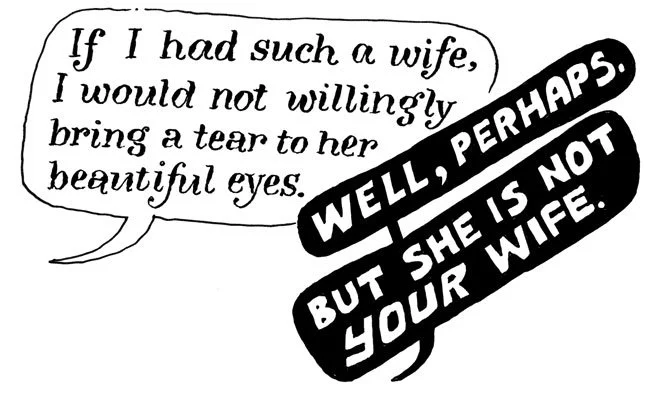
Not yet, buddy!
Rachel escaped her abusive marriage and married Jackson. Unfortunately she, unbeknownst to her, she wasn’t fully divorced.
During the dirty campaign of 1828, Rachel was smeared in the press—accused of being an adulterer and a bigamist. She vented to her niece Emily that “the enemies of the General have dipped their arrows in wormwood and gall and sped them at me.”
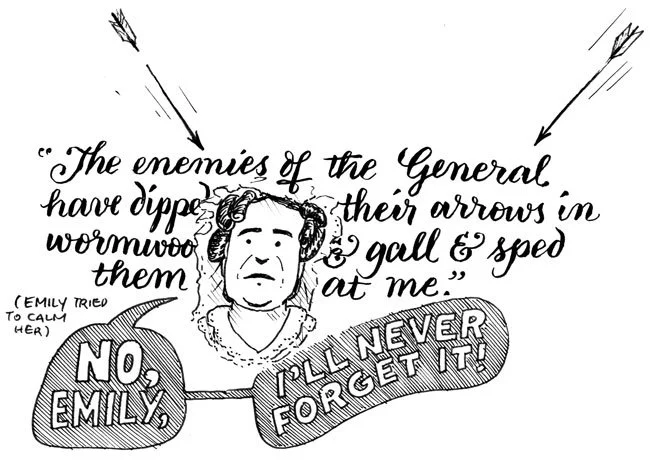
Rachel died days after the election. Jackson blamed her death on the JQA campaign.
Andrew & Andrew (& Andrew)
The family was lousy with Andrews Jackson, including Andrew Jackson Donelson and Andrew Jackson, Jr.
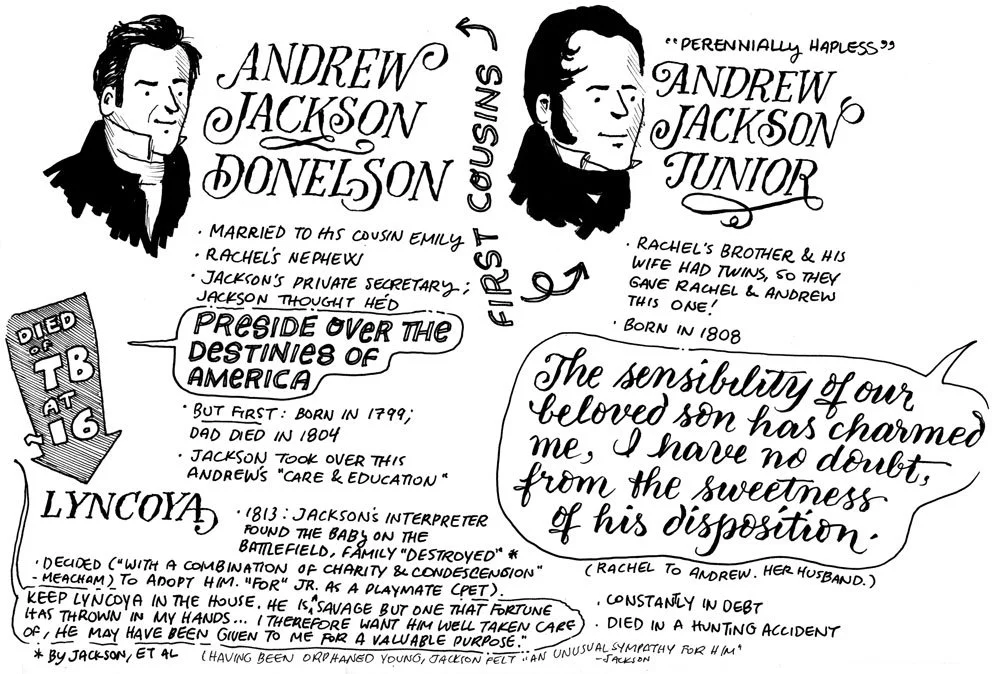
If you want to learn more about Lyncoya, check out this podcast series. Actually, listen to it even if you don’t want to learn more about Lyncoya. The story is really something else.
18-year-old Andrew Jackson Donelson fell for his cousin when she was ten (‼️), according to family lore. One time, he saw her and her classmates trying to cross a stream. Everyone managed, “but not so Princess Emily, for her Fairy Prince took her in his arms, restoring her to earth on the other side.”
The story goes, that’s when they fell in love.
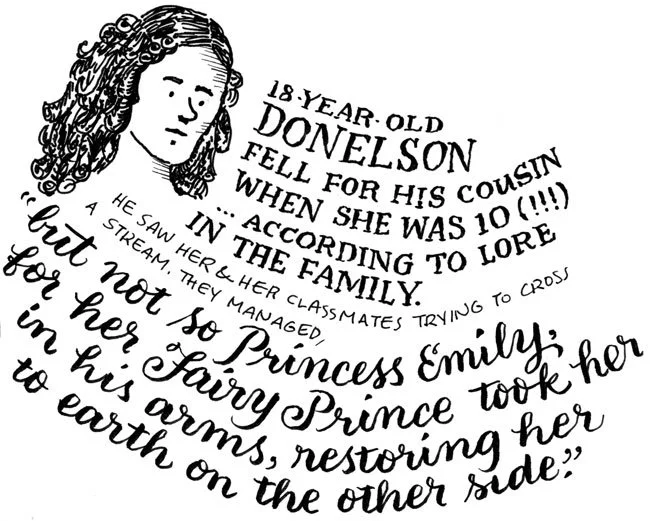
This meet cute feels less cute and more 😬.
This seems dumb but…
Jackson’s friend had a beef with Jesse Benton, brother of Not-Yet-Senator Thomas Hart Benton.
As such, Jackson had a beef with Thomas Hart Benton because why not, but also men are totally in control of their emotions, thank goodness.
If they met, it was known Jackson would “whip” him.
And they crossed paths! Wouldn’t you know it—Jackson’s riding whip was in-hand! How convenient!
Chaos erupts! Jackson is shot in his left arm; shoots Tom but misses. Tom falls down the stairs. Then Rachel’s nephew is there and now there’s wresting. Someone gets all stabby with a dirk knife, etc, etc.
It’s a mess.
No one dies. Jackson is hurt the worst, bleeding through a coupla mattresses. Doctors want to amputate his arm but he’s not interested: “I’ll keep my arm.” And he does.
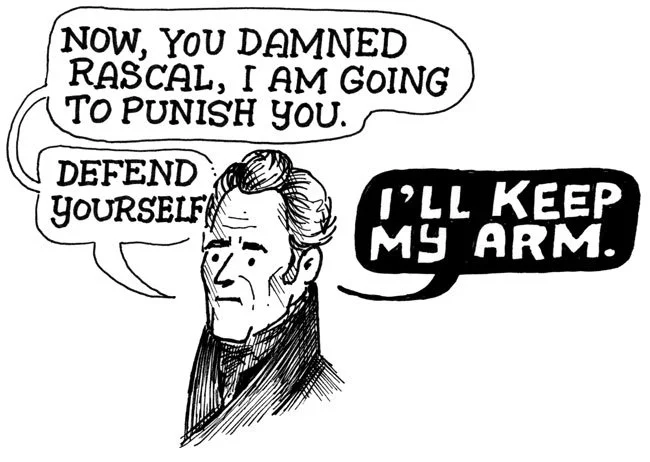
Somehow Jackson and Thomas Hart Benton went from wanting each other to die to becoming ride or die friends. 🤷🏻♀️
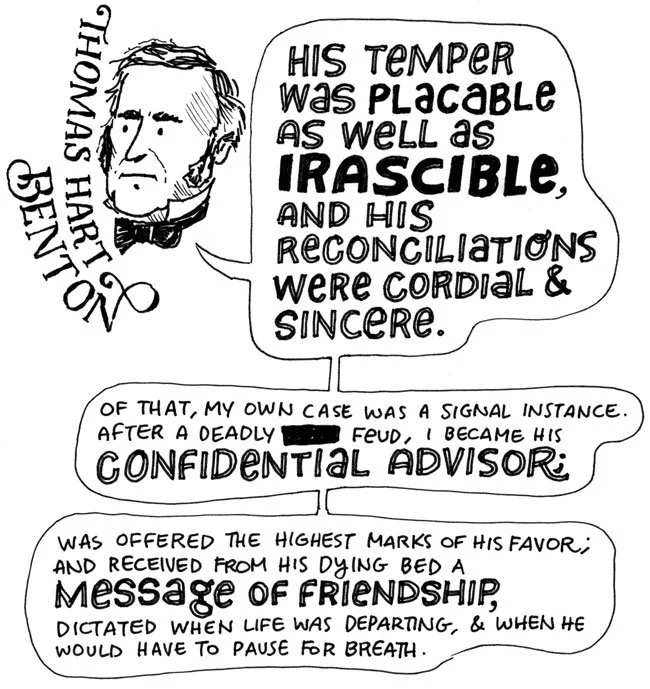
Margaret Eaton
If you’re unfamiliar with Peggy Eaton or The Petticoat Affair, stop reading this post and read this one first. It’s bananas.
As Meacham wrote:
“That the race for the White House in a large republic should have been affected by the sexual history of the wife of the secretary of war seems bizarre; yet politics is often driven not only by large ideas about policy and destiny but by affections and animosities.”
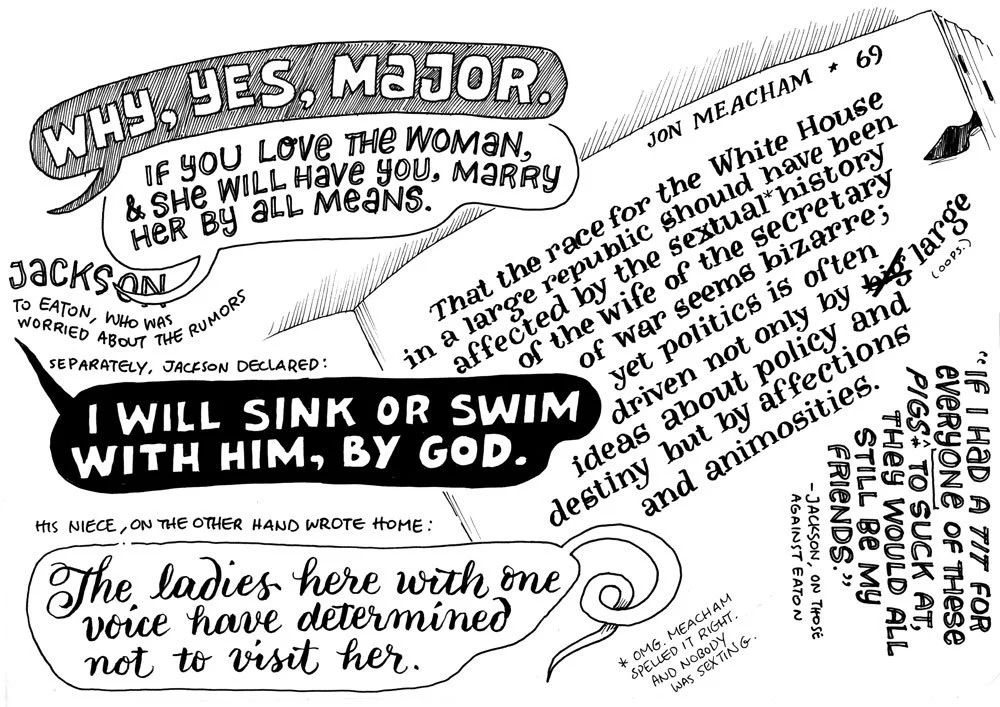
Did he spell it “sextual” as I did here? No, he did not. I’m embarrassed to admit the first time I spelled it “sectual” but was so proud of myself for catching and fixing it before anyone saw. Nope. I left the “t” in there. What a dummy. As ridiculous as this entire scandal was, it mercifully did not involve any sexting. So I guess there’s that.
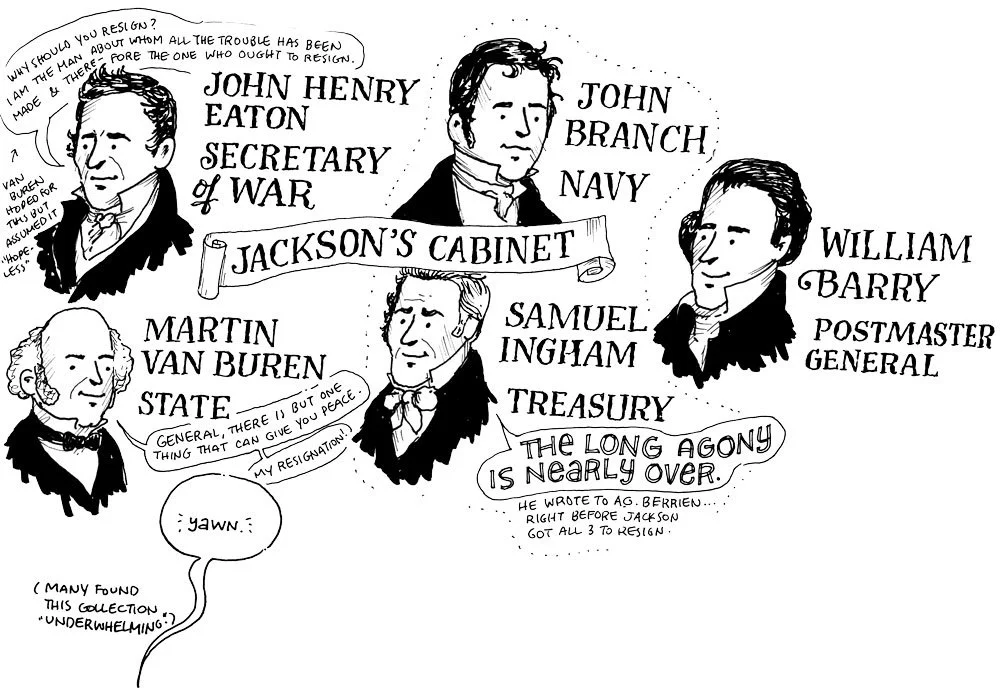
The entire cabinet, save one… poof!
Following the scandal, Martin Van Buren (Secretary of State) resigned… kinda forcing John Henry Eaton (Secretary of War) to also resign.
Treasury Secretary Samuel Ingham wrote to Attorney General Berrien, relieved that “the long agony is nearly over”…
Then Jackson forced both of them and also John Branch (Navy) to resign.
Postmaster General William Barry was the last man standing.
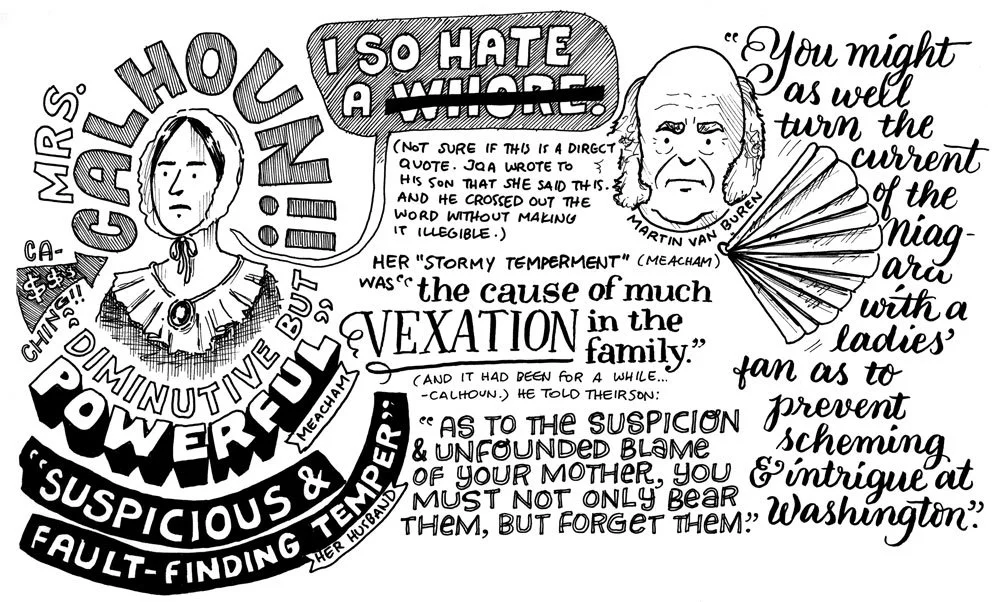
I so hate a whore
Also, VP John C. Calhoun resigned…
His wife was involved in shunning Mrs. Eaton. John Quincy Adams wrote to his son that she’d said “I so hate a whore” … with the word legibly crossed out.
Calhoun’s resignation and election as South Carolina Senator meant (in Meacham’s words): “Now he could fight Jackson openly from the floor rather than secretly and sporadically and from the shadows—for as long, in any event, as South Carolina remained in the Union.”
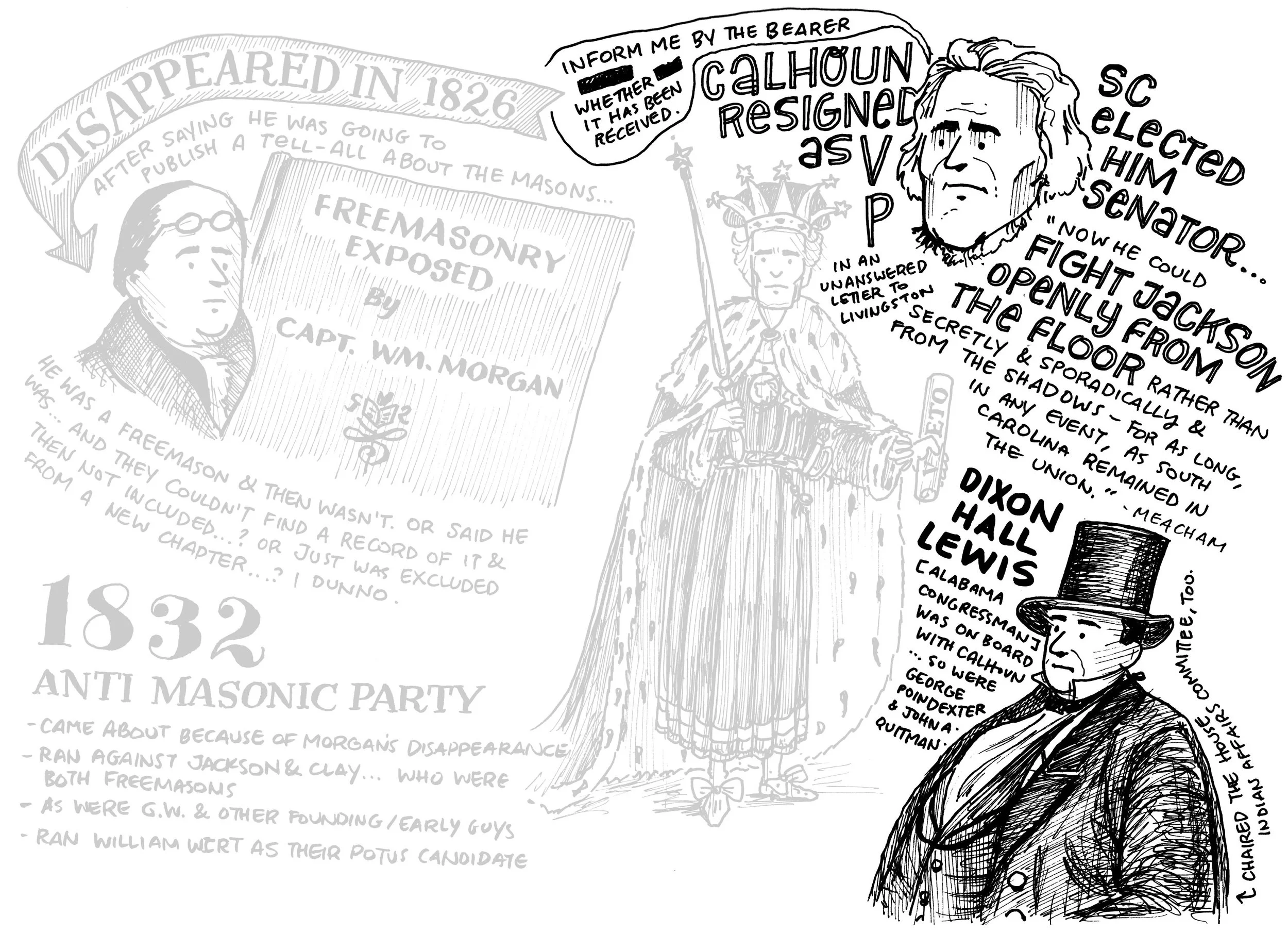
I need to get back into Captain William Morgan in a future post, because holy crap this is a fascinating story.
I demand satisfaction!
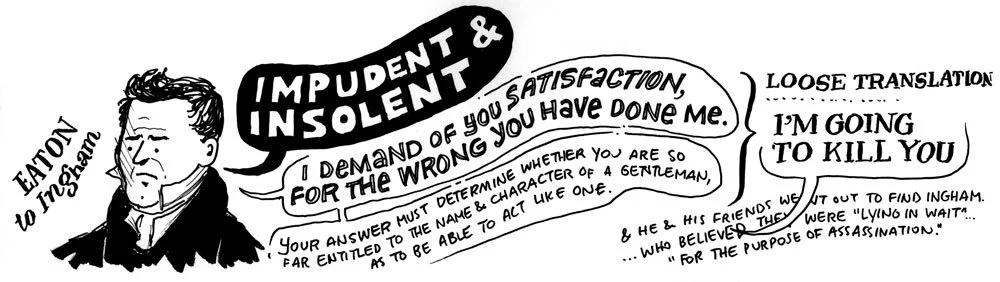
Have you seen The Residence…? I’m totally reading “I’m going to kill you” in Marvella’s voice. Eaton didn’t actually say “I’m going to kill you.” He said “I demand of you the satisfaction for the wrong you have done me. Your answer must determine whether you are so far entitled to the name and character of a gentlemen as to be able to act like one.”
And let me kill you.
Eaton and his friends went out to find Ingham, who believed they were “lying in wait” … “for the purpose of assassination.”
In his dotage
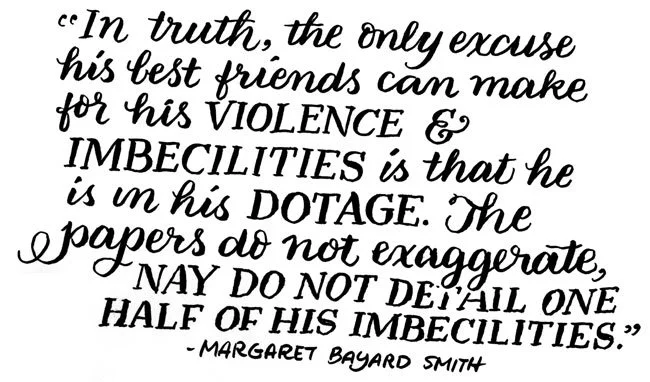
On Jackson’s behavior (including the cabinet turnover), Margaret Bayard Smith said: “In truth, the only excuse his best friends can make for his violence and imbecilities is that he is in his dotage. The papers do not exaggerate, nay do not detail one half of his imbecilities.”
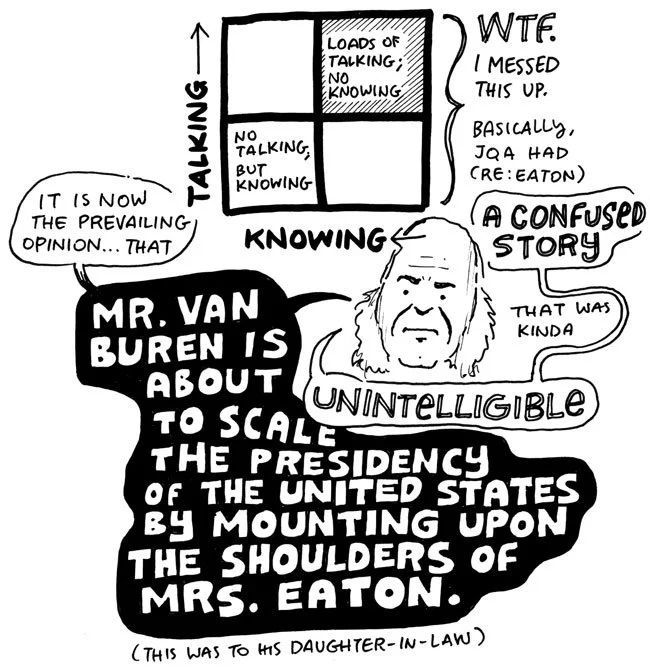
Van Buren mounting Mrs. Eaton’s shoulders
This little diagram looked soooo cool in my head, but I messed it up. The point is—John Quincy Adams realized that the more people knew about the whole Margaret Eaton situation, the less they were talking. The less they knew, the more they talked… leaving “a confused story” that was kinda “unintelligible.”
He commented: “it is now the prevailing opinion… that Mr. Van Buren is about to scale the presidency of the United States by mounting upon the shoulders of Mrs. Eaton.”
LOL.
Put another way, as I read in Martin Van Buren: The American Presidents Series: The 8th President, 1837-1841 by Ted Widmer…
“The political history of the last thirty years dates from that moment when the soft hand of Mr. Van Buren touched Mrs. Eaton’s knocker.”*
*Her doorknocker. He knocked on her door. With his soft hands.
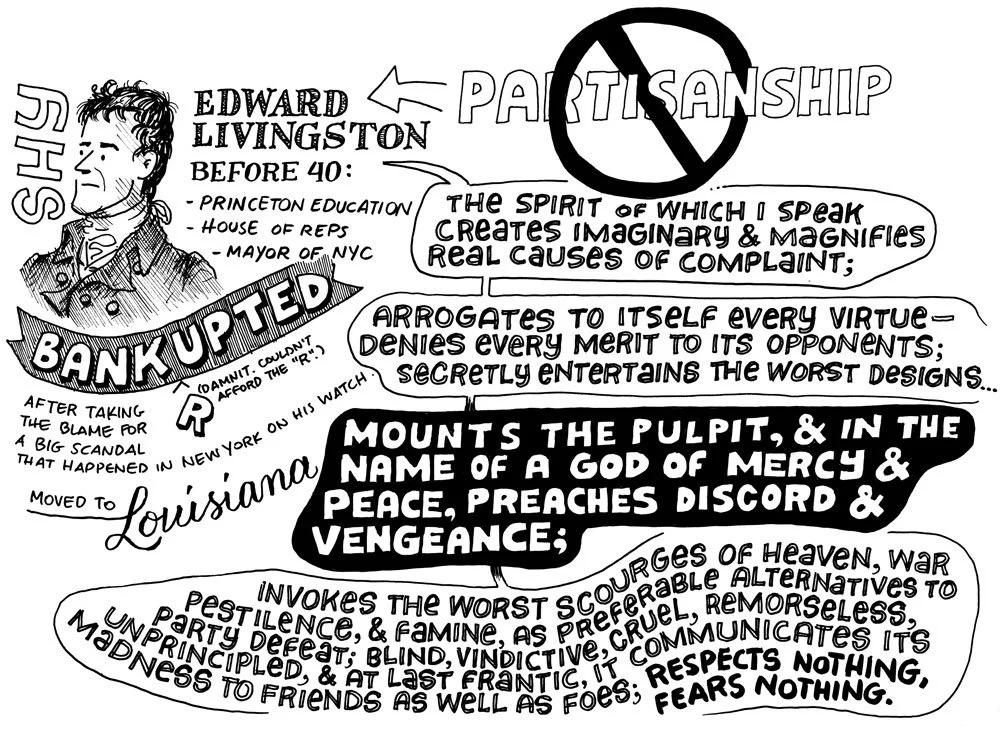
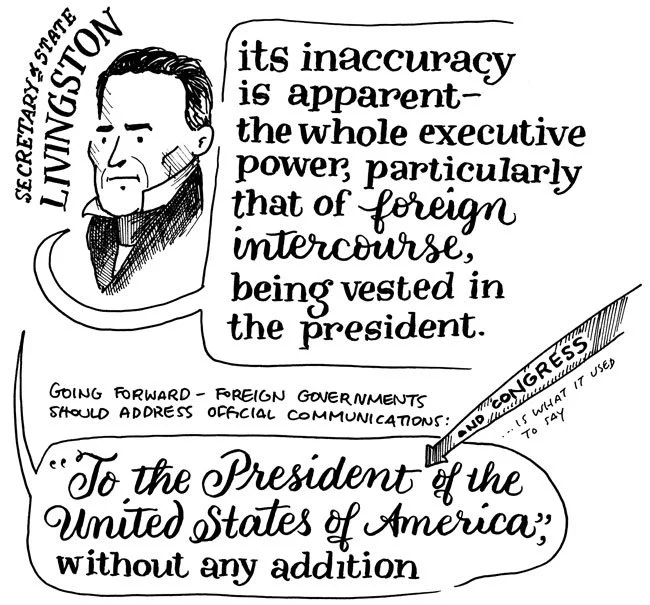
Edward Livingston
Edward Livingston is popping up all over for me lately and I love it.
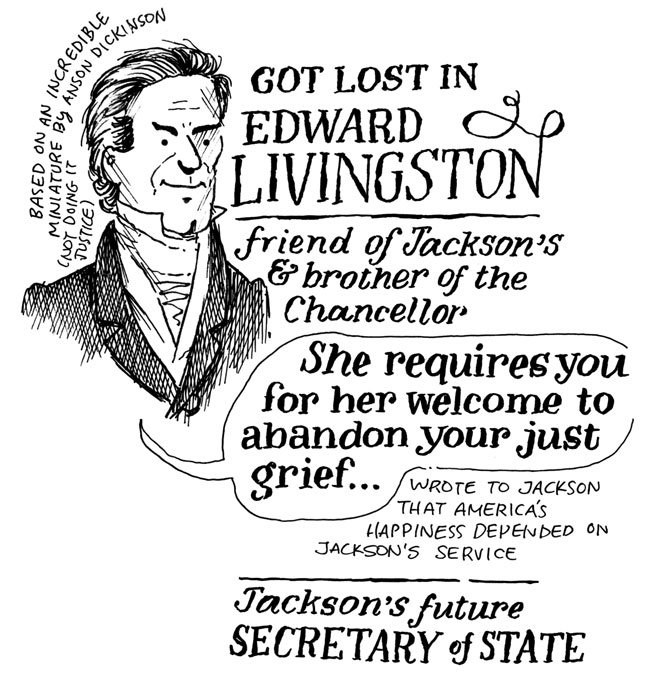
The doodle above referenced a delightful miniature painted by Anson Dickinson, which I am not doing justice to even a little bit. It’s public-domain artwork, so I can actually show you what it looked like:
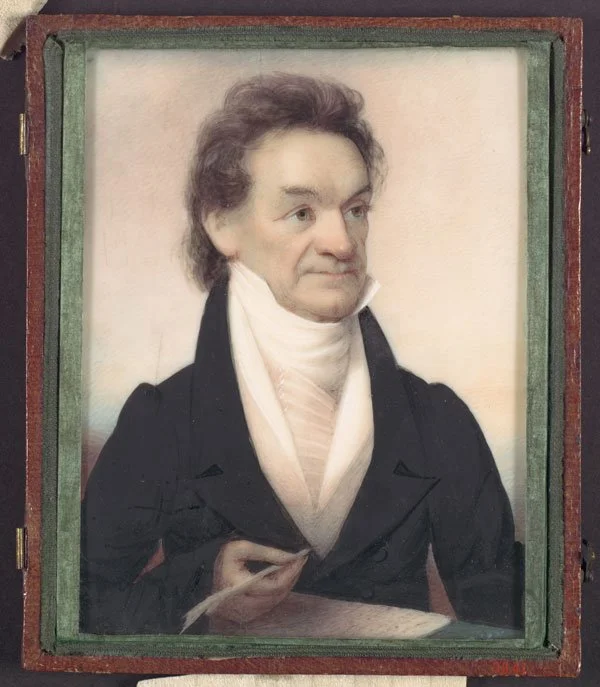
Not at all like any of the other Edward Livingston portraits I’ve seen and I think that’s why I love it so much.
How can we justify this trespass?
That’s what New Jersey Senator (and Henry Clay’s future running mate) Theodore Frelinghuysen wanted to know: “Mr. President, if we abandon these aboriginal proprietors of our soil—these early allies and adopted children of our forefathers, how shall we justify it to our country, to all the glory of the past and promise of the future? How can we justify this trespass to ourselves?”
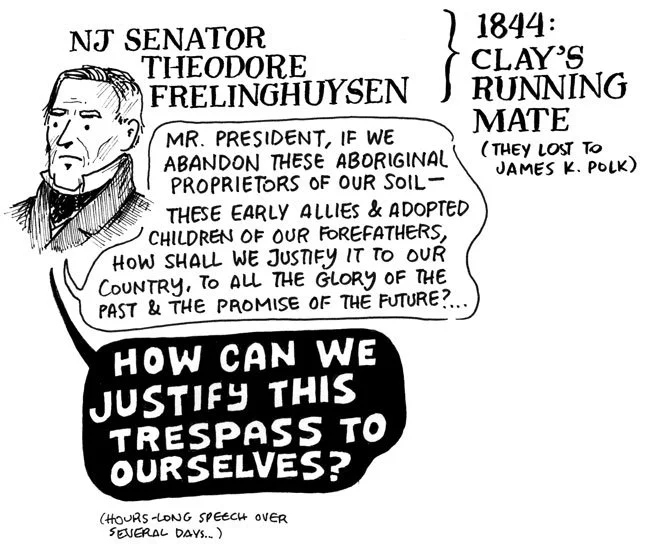
Oh, Frelinghuysen, we can justify the crap out of so many things… you have no idea.
[insert disappointed sigh here]
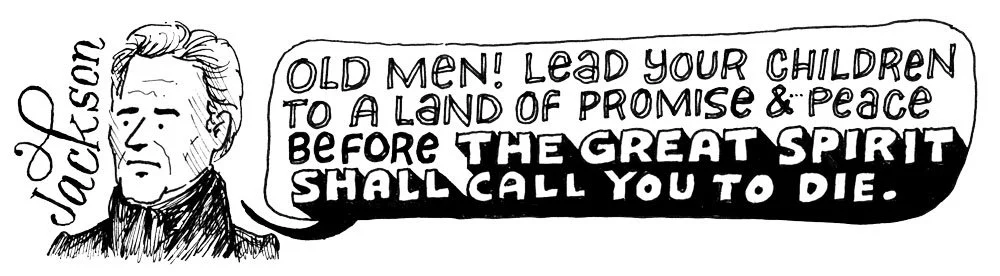
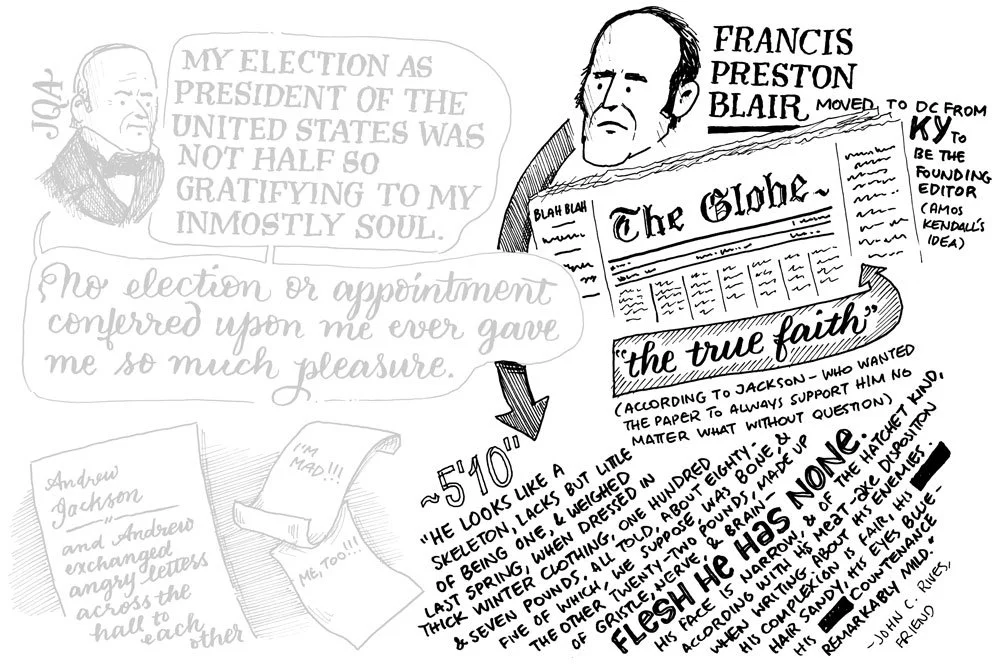
Francis Preston Blair
Moved from KY to DC to be the founding editor of The Globe, a pro-Jackson newspaper
5’ 10”
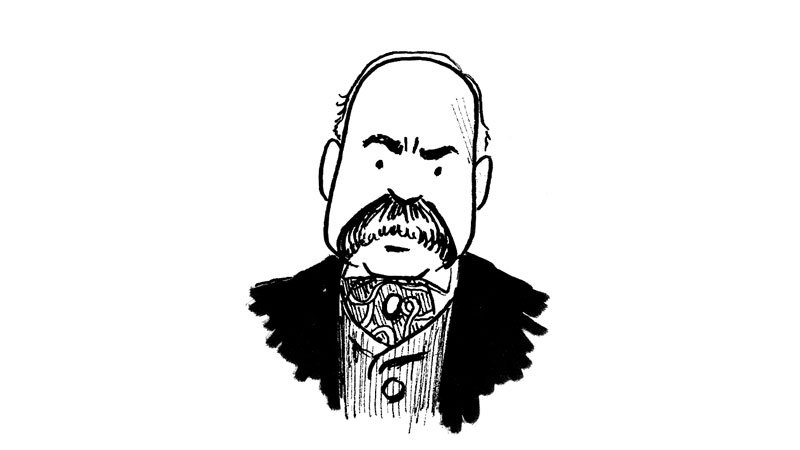
According to his friend John C. Rives, “he looks like a skeleton, lacks but little of being one, and weighed last spring, when dressed in thick winter clothing, one hundred and seven pounds, all told, about eight-five of which, we suppose, was bone and the other twenty-two pounds, made up of gristle, nerve, and brain—flesh he has none. His face is narrow, and the hatchet kind, according with his meat-axe disposition when writing about his enemies. His complexion is fair, his hair sandy, his eyes blue—his countenance remarkably mild.”
Years later, it was in Blair’s house that Blair’s friend Robert E. Lee was asked to lead the Union army (by Blair and the Secretary of War) and said thanks but no thanks. (Honestly, I was confused writing this because I swear that happened in Lee’s house. Nope… it was at his own house that he decided to resign from the Army and at Blair’s house that he turned down an offer to lead the Union army.)

Upstairs at the White House: My Life with the First Ladies, by J. B. West and Mary Lynn Kotz
I’M SO MAD!!!!!
Perhaps I lost a little interest in the incessant squabbling. Somehow, it took me a bit to realize that Andrew Jackson and Andrew Jackson Donelson were exchanging angry letters to each other … across the hall … in the middle of the night.
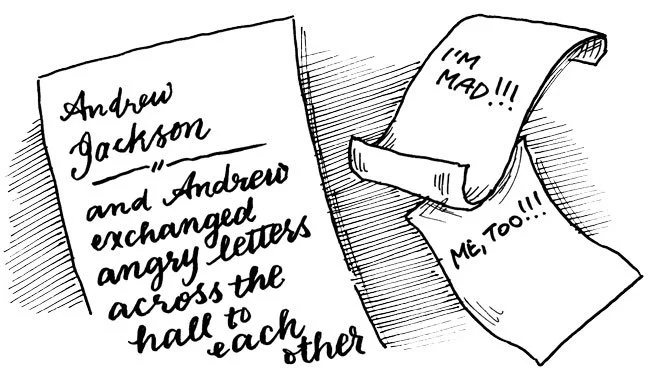
As far as I know, none of the letters said “I’m so mad!!!” or “I’m mad, too!!!” but I can’t swear to it.
Presidential Power & Freedom of Speech … eek
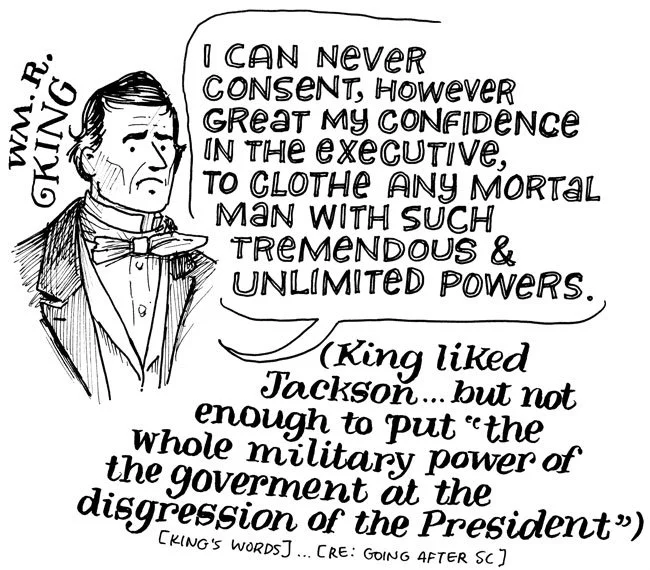
President Jackson wanted to use force against South Carolina and William R. King was not having it: “I can never consent, however great my confidence in the executive, to clothe any mortal man with such tremendous and unlimited powers.”
Freedom of speech is cool. So is public mail… unleeeeesss you don’t agree with the speech (Anti-Slavery Society messaging for example). Then it’s ok to suppress free speech, probably.*
*It’s not. But that didn’t stop him.
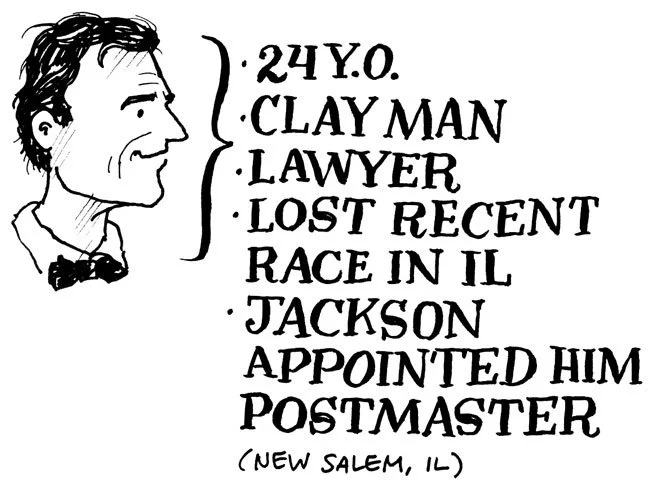
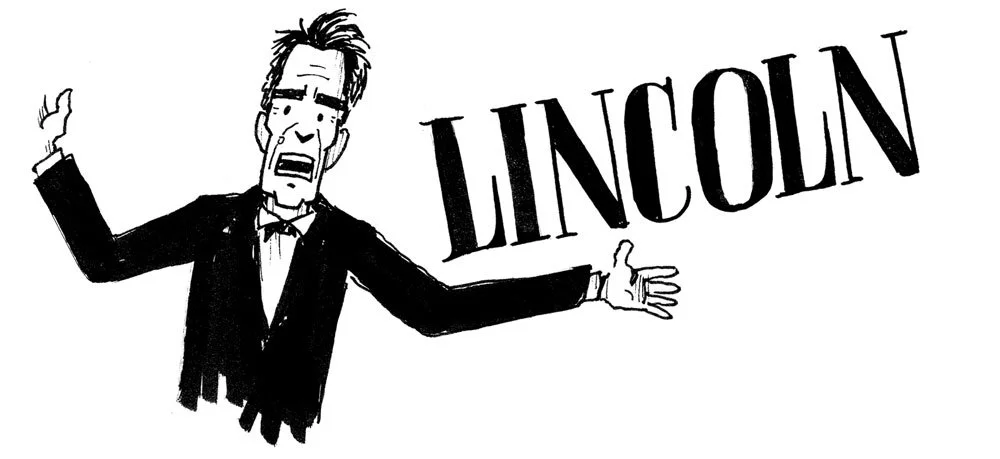
Lincoln appointed postmaster
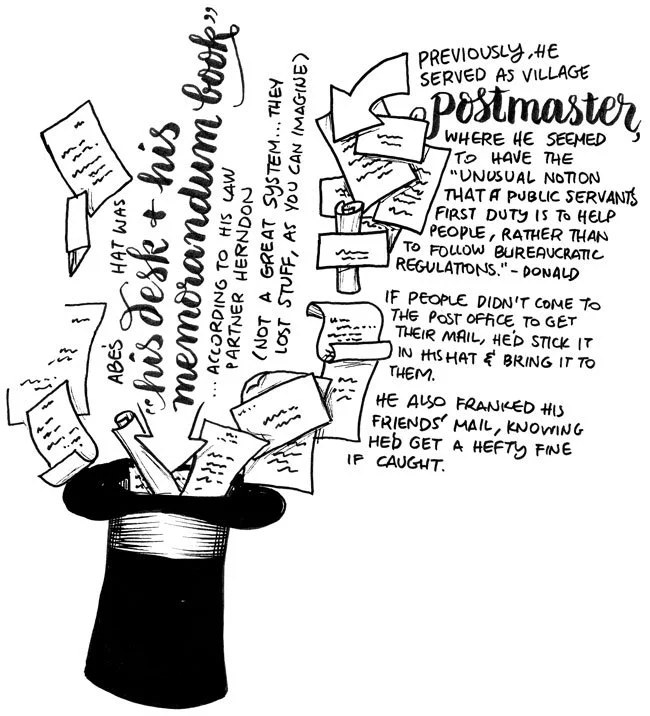
I knew Abraham Lincoln was a village postmaster and as such, according to David Herbert Donald, he seemed to have the “unusual notion that a public servant’s first duty is to help the people, rather than follow bureaucratic regulations.” He’d stick mail that wasn’t picked up into his hat and bring it to the addressee. He also franked his friends’ mail, which was against the rules. Obviously.
But I didn’t realize (or remember) that he was appointed by Jackson. Or that he was only 24 years old.
Send ‘em to Russia
I knew Jackson tried to get rid of future-president James Buchanan by shipping him off to Russia: “It was as far as I could send him out of my sight… I would have sent him to the North Pole if we had kept a minister there!”
I didn’t realize this was A Thing He Did To Get Rid of People.
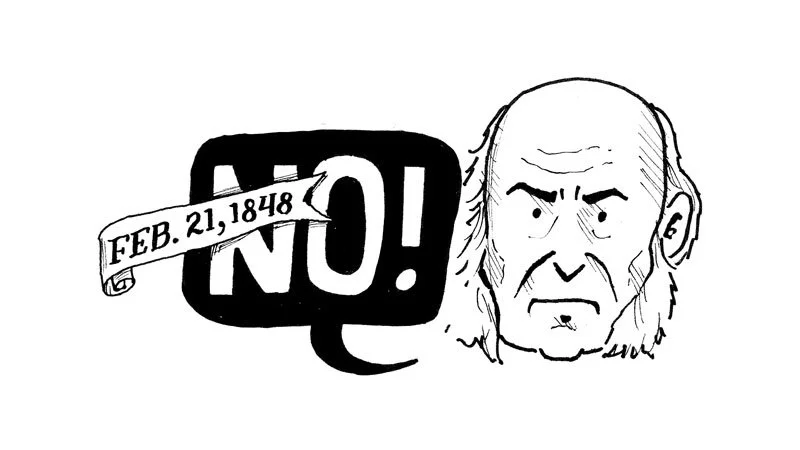
He tried it with William Duane. And Samuel Ingham. Failed both times.
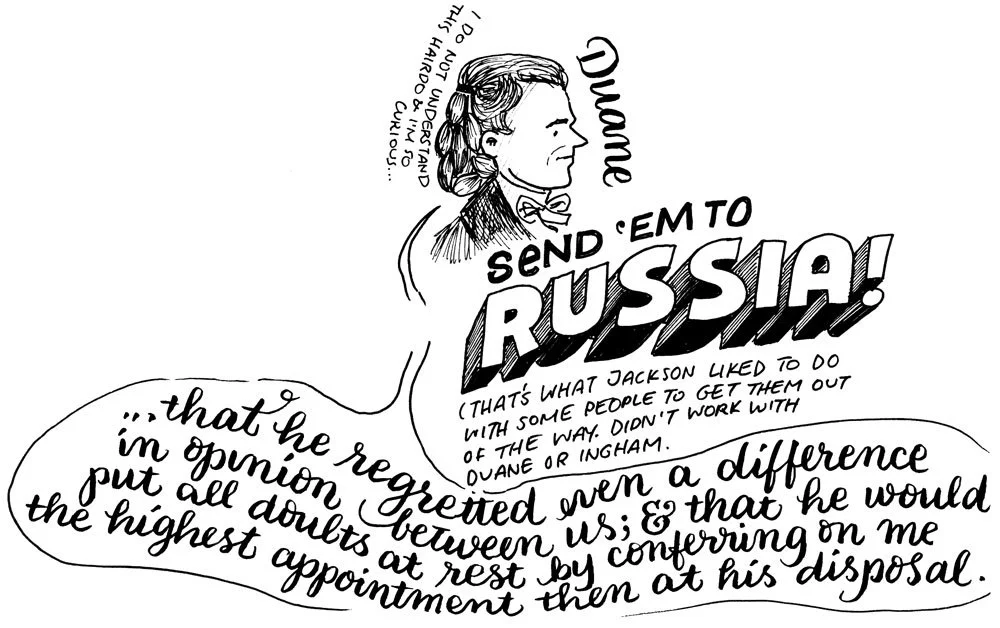

Jackson doodle inspired by Bosom Friends: The Intimate World of James Buchanan and William Rufus King, by Thomas J. Balcerski
Not at all relevant, but I’m dying to understand Duane’s hair. Like, is it a braid all tucked up into a barrette? What is happening here? It’s short in the front, but super long in the back…? Business in the front, but elegant/sophisticated soirée in the back? I need answers!
Is it unusual to have your buddy comment (and be present to comment) at your near-assassination when you and that buddy once tried to kill each other…?
That is unusual, right?
In any case, “handsome … well-dressed” unemployed young housepainter Richard Lawrence tried to kill Andrew Jackson as he stepped out of the Rotunda after Warren R. Davis’ funeral.
Lawrence fired from less than 10’ away.
Thomas Hart Benton (the guy who had previously tried to kill Jackson but was now buddies with him) said “the explosion of the cap was so loud that many persons thought the pistol had fired.”
He dropped the gun and tried a second one. That gun didn’t fire either!
The odds of two guns not firing like this? 125,000 to 1.
He may have been saved by George Washington and Mother Nature:
There was a huge hole in the Rotunda—dug up to maybe relocate George Washington (but his family disagreed).
The hole plus the day’s misty weather may have moistened the gun powder.
Benton said afterward “the pistols were examined and found to be well loaded; and fired afterwards without fail.”
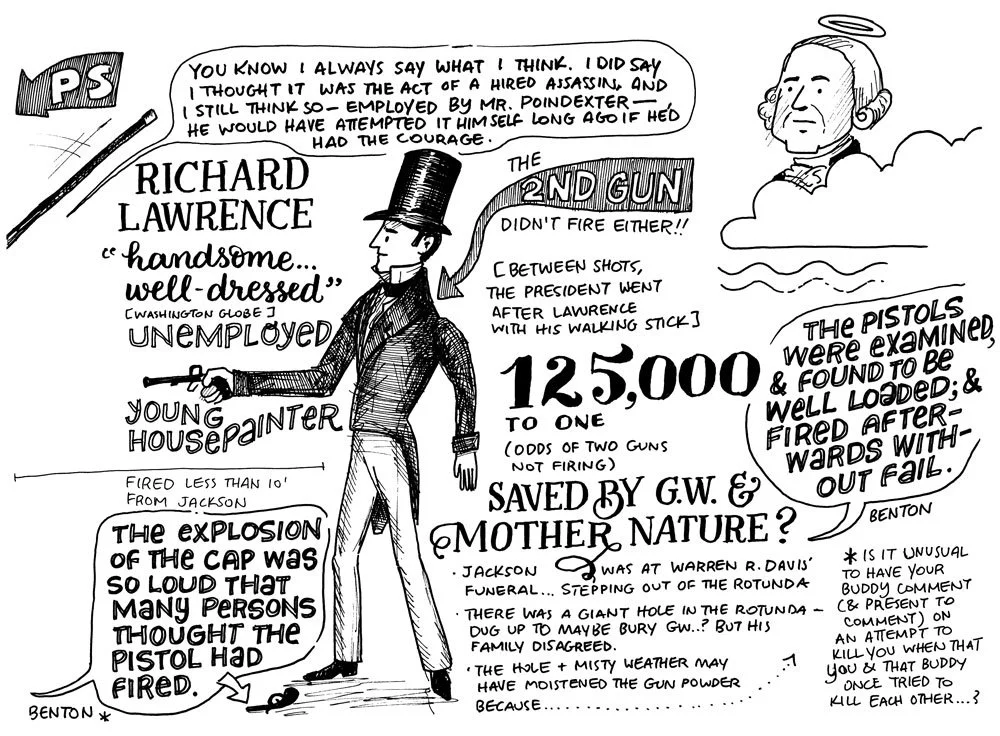
Oh and PS: between the shots (or lack of shots), the president went after Lawrence with his walking stick. Assaulted his own would-be assassin!
ALSO: Jackson believed the would-be assassin was employed by Mr. Poindexter! This was the second time George Poindexter came up in this book, which makes me want to share a tangent I went on with him a while back. I wondered if the etymology of the word “poindexter” came from this guy. When I looked him up, I could tell he was too cool to be the source. It actually came from a character in Felix the Cat.

Poindexter was one of the many men who had “relationships” with women they enslaved. This doodle was inspired by the very eye-opening The Vice President’s Black Wife: The Untold Life of Julia Chinn, by Amrita Chakrabarti Myers.
First equestrian statue of its kind!
The Andrew Jackson Statue in Lafayette Square is the first equestrian statue on two legs! It was the work of self-taught sculptor Clark Mills.
He had help from enslaved apprentice Phillip Reid.
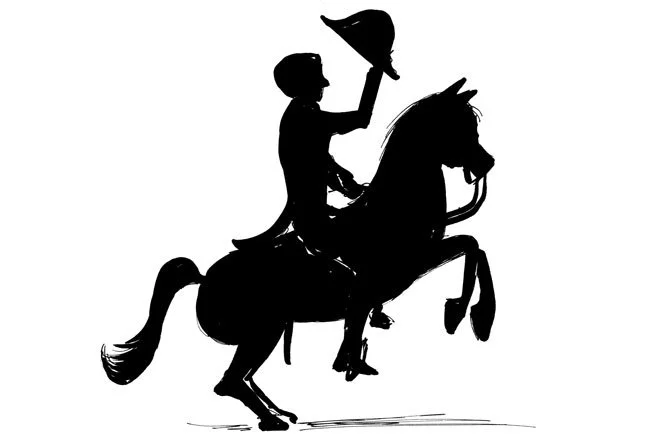
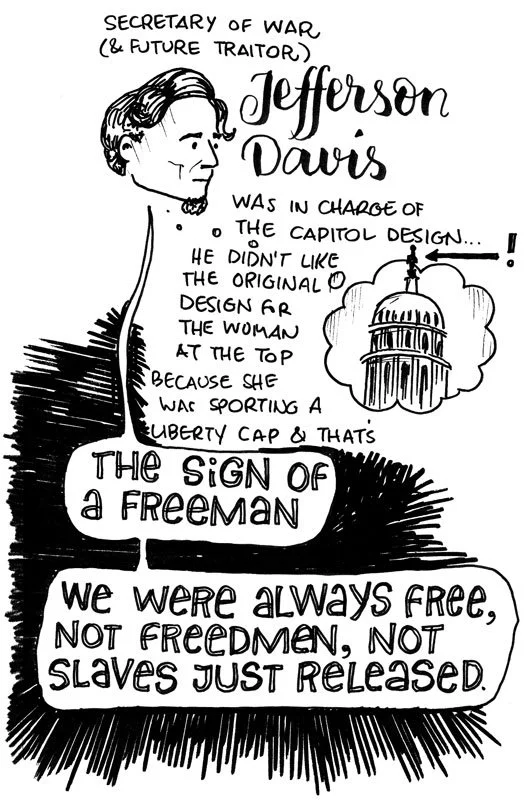
Reid’s contribution to this work isn’t known, but they do know he helped with the Freedom statue on top of the US Capitol Dome… which made me remember I had a doodle about that…
Secretary of War (and future traitor) Jefferson Davis was in charge of the Capital design. He was none-too-pleased (that is to say he freaking lost his mind) when he saw one of the original designs. The statue was wearing a Liberty cap and that’s “the sign of a freeman. We were always free, not freedmen, not slaves just released.”
NEW VOCAB WORD!
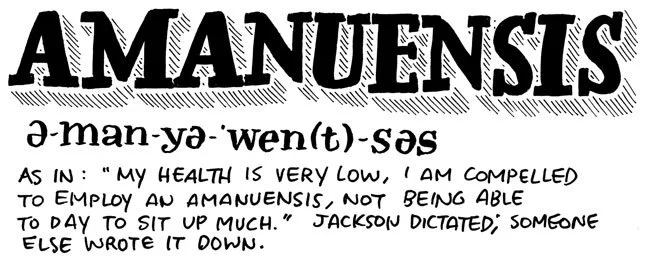
Amanuensis
Like “My health is very low, I am compelled to employ an amanuensis, not being able today to sit up much.” Jackson dictated; someone else wrote it down.
Lookin’ after the little fellow
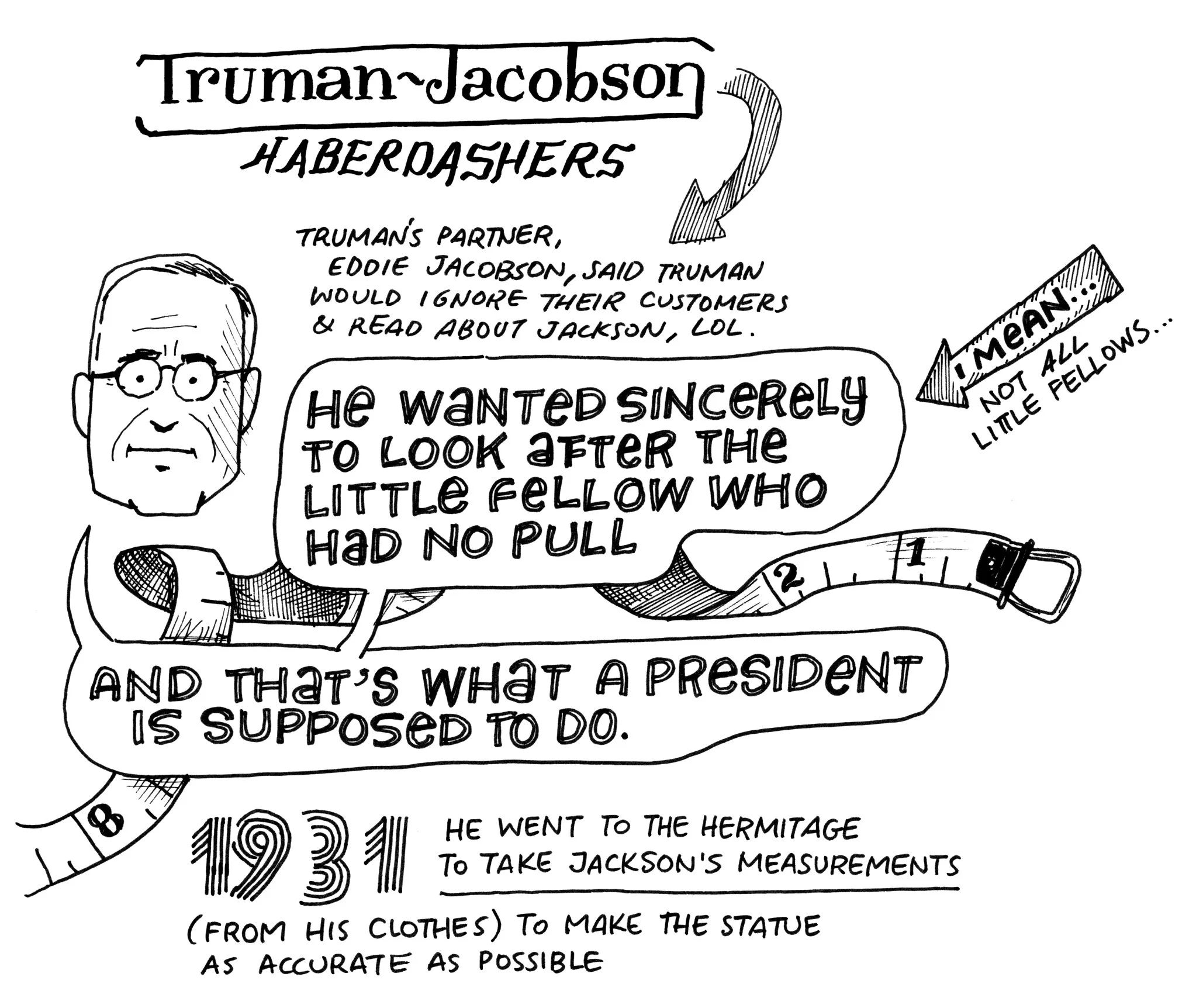
Harry S Truman loved him some Andrew Jackson. His partner at Truman-Jacobson Haberdashers recalled how Truman would hide out in a corner, ignoring customers and reading about Jackson.
He admired Jackson because “he wanted sincerely to look after the little fellow who had no pull and that’s what a president was is supposed to do.”
I mean… not all little fellows
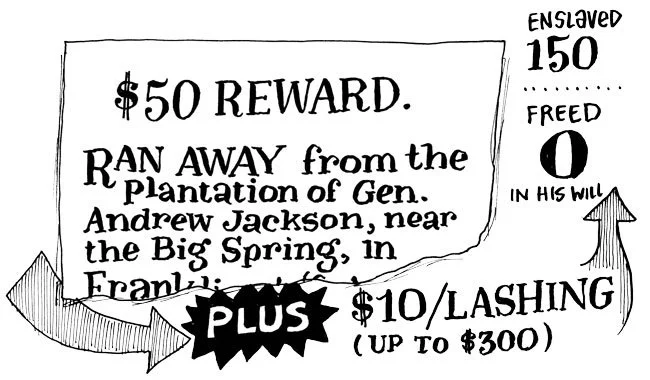
Certainly not “little fellows” who happen to be Black and/or enslaved.
Nor the 16,000 little fellows he targeted for “removal” … 4,000 of whom died en route on the Trail of Tears.
But, like, the other little fellows.
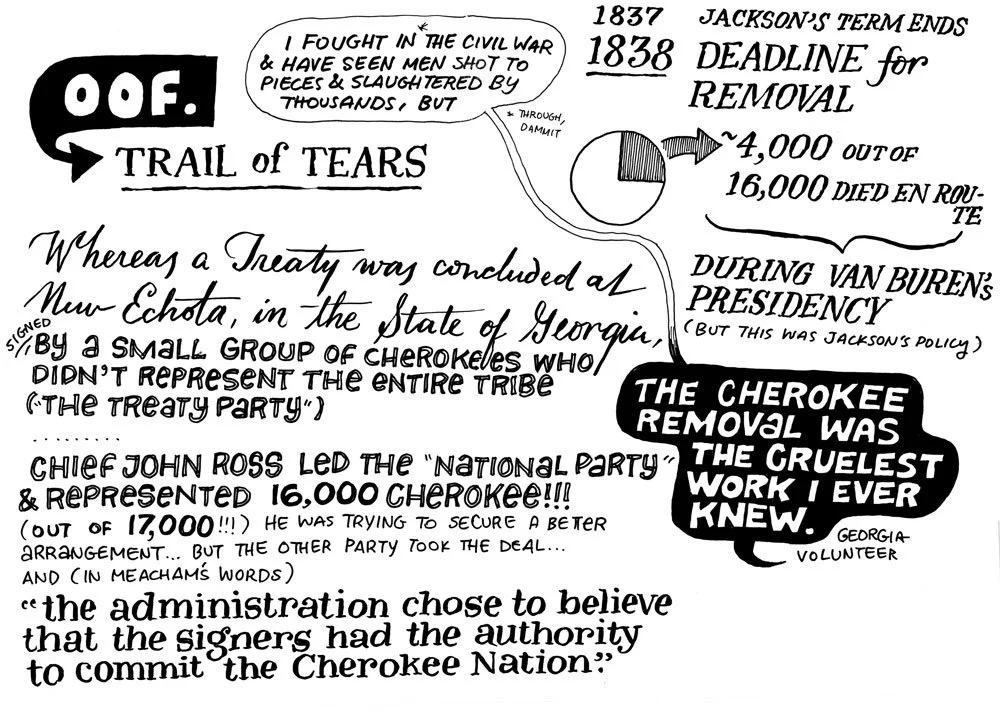
One Georgia volunteer, a Civil War veteran who had “seen men shot to pieces and slaughtered by the thousands” said “the Cherokee removal was the cruelest work” he ever knew.
But back to Truman’s statue for a sec. This was not the equestrian statue we already discussed. He took Jackson’s measurements (from his clothes at The Hermitage) to ensure the accuracy of the statue he’d commissioned using $10k left over from building the Jackson County Courthouse. (He said it’s the only thing he’d done in his political life that he could’ve gone to jail for.)
There’s too much to fit here!
And not enough time to try. In order to have time to focus on prepping my presentation (etc.), I need to cut this post short here. Not that this is short. It’s just there’s a whole cache of fascinating stuff in American Lion: Andrew Jackson in the White House by Jon Meacham and I didn’t even scratch the surface here. You’ll have to read it yourself ooooor … join me later this month!
WANT MORE JACKSON DOODLES?
Join me July 10 at 10:30 EST for a virtual presentation! Register for free here.
More posts like this:





#/media/File:William_Duane.jpg)
Mrs. Ex President T